 Interactive video ad server Innovid has rolled out a programmatic creative tool designed to let agencies and advertisers personalize video messages across devices.
This capability is driven, in part, by Innovid’s experience tackling different ad-serving requirements through a series of connected TV partnerships.
Innovid entered an audience solutions agreement with Roku in the summer, which allowed the company to embed its code directly into Roku’s operating system to serve interactive ads.
The idea is that Innovid can thus bypass the cumbersome process of enabling specific integrations to apps like Crackle or Vevo.
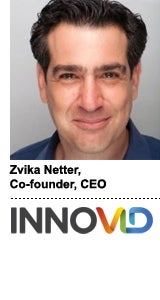
“We have data and advanced segmentation, but why is it that we still see the same automobile ad served to the entire US population?” said Zvika Netter, co-founder and CEO of Innovid. “You can set reach and frequency targets, but there’s disconnect between reaching your audience goals and knowing you reached an individual with relevant creative.”
But creative delivery is only one focus area for the business.
Innovid claims its media agnosticism makes it attractive to agencies. In 2015, its agency and brand ad-serving accounts increased from 40 to 200, according to Netter.

It also clinched a major contract with Starcom Mediavest (SMV) last June to serve as the ad server for the agency’s Content@Scale initiative, which powered interactive video ads for Mondelez. The SMV deal also meant more brand business from P&G, though Netter noted Innovid’s primary focus is on its agency relationships.
Innovid is also benefiting from larger industry demands, like calls for greater transparency.
Netter said it enabled direct integrations to independent verification vendors such as DoubleVerify, Integral Ad Science and Moat, and completed integrations to all third-party data-management platforms so clients could import and export their first-party data.
Although the “programmatic in-house” trend resulted in talk of more brands using media and marketing technology with their own two hands, Netter made no apology for the fact that a majority of his business – 85%, to be exact, on the agency side – comes from managed services.
“Being a technology company, in an ideal world we’d all be self-serve, but the truth is it’s complex,” he said. “Even if a single campaign runs across desktop, Amazon Fire and Apple TV, there are many device-level specificities to meet to ensure an ad is interoperable, even for basic pre-roll.”
Netter claims Innovid’s development efforts around connected TV and deep roots on the creative side position it well in the race against larger incumbents like AOL/Verizon, which also recently rolled out a programmatic creative platform.
“We said early on we’d charge on a fixed rate, not CPM, percentage of audience or volume,” he added. “If you’re a media business and you’re charging based on percentage of media, you have an agenda.”