

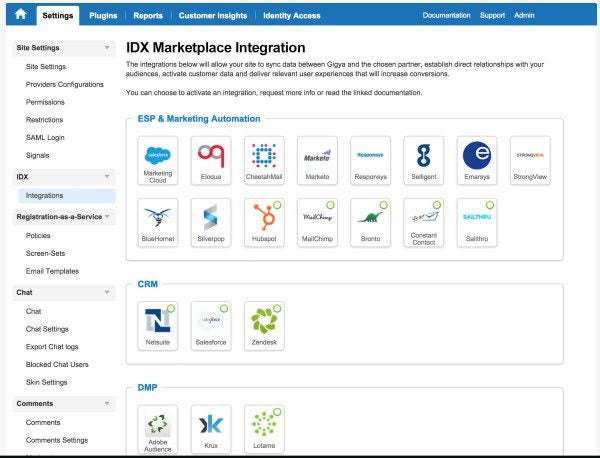
 On Tuesday, Gigya, a company that develops customer identity management solutions for Fortune 500 brands, rolled out IDX Marketplace, a platform anchored by 50-plus marketing and ad-tech partner integrations.
Gigya claims users can activate audiences across a variety of partner tools, including data-management platforms like Krux, Adobe AudienceManager and Lotame; marketing clouds like Oracle and Adobe; as well as email marketing automation systems like IBM Silverpop, StrongView and Experian CheetahMail.
A brand marketer might plug into Gigya’s IDX Marketplace to improve audience activation across enterprise systems from different vendors, although Gigya claims it does not cross-pollinate data from one customer repository to another.
“We are not involved in data brokering at all,” said Patrick Salyer, CEO of Gigya. “For example, we don’t build connections to platforms that might provide data to an ad network, so there is no [data] reselling, and we have built-in compliance rules.”
Gigya says it categorizes consumer identity data. First, traditional profile data encompasses information collected in web registration forms, such as first and last name, email or gender. The second category is identity data stemming from standard social logins on Facebook, Twitter and LinkedIn.

The third category includes on-site behavioral attributes or signals related to purchases, comments or shares tied to email login.
“We built our back-end data platform agnostically to be able to ingest all these forms of data,” Salyer said. “I imagine some marketers will be completely Adobe or Oracle marketing shops, but there will be tons of marketers who will want to use best-of-breed products in different categories, which is where we think there’s advantage in having an application ecosystem.”
Gigya is a VC darling. It raised $35 million last fall from Intel Capital, for a total of $104 million in venture-backed financing to date. The Intel investment spurred a strategic agreement with Intel Security to incubate web and mobile authentication products.
Although Gigya never identified as a DMP, it worked with a number of them to help marketers populate data platforms’ first-party logins and user registration information. This catalyzed numerous investment rounds, and Salyer said no investors took money off the table.
While Saleforce.com built an AppExchange for B2B solutions, Gigya says it hopes to do the same for B2C applications.
“The most demand early on has been from email and marketing automation providers, since that’s sort of the bread and butter of identified marketing,” Salyer said.
“In the last 12 months, we’ve seen DMPs really take off in terms of number of requests we’re getting from brands and customers,” he added. “We’re starting to see maturity in marketers’ understanding of DMPs and how they can begin to activate data and use different kinds of data for media buying.”









