
Marketplaceholders
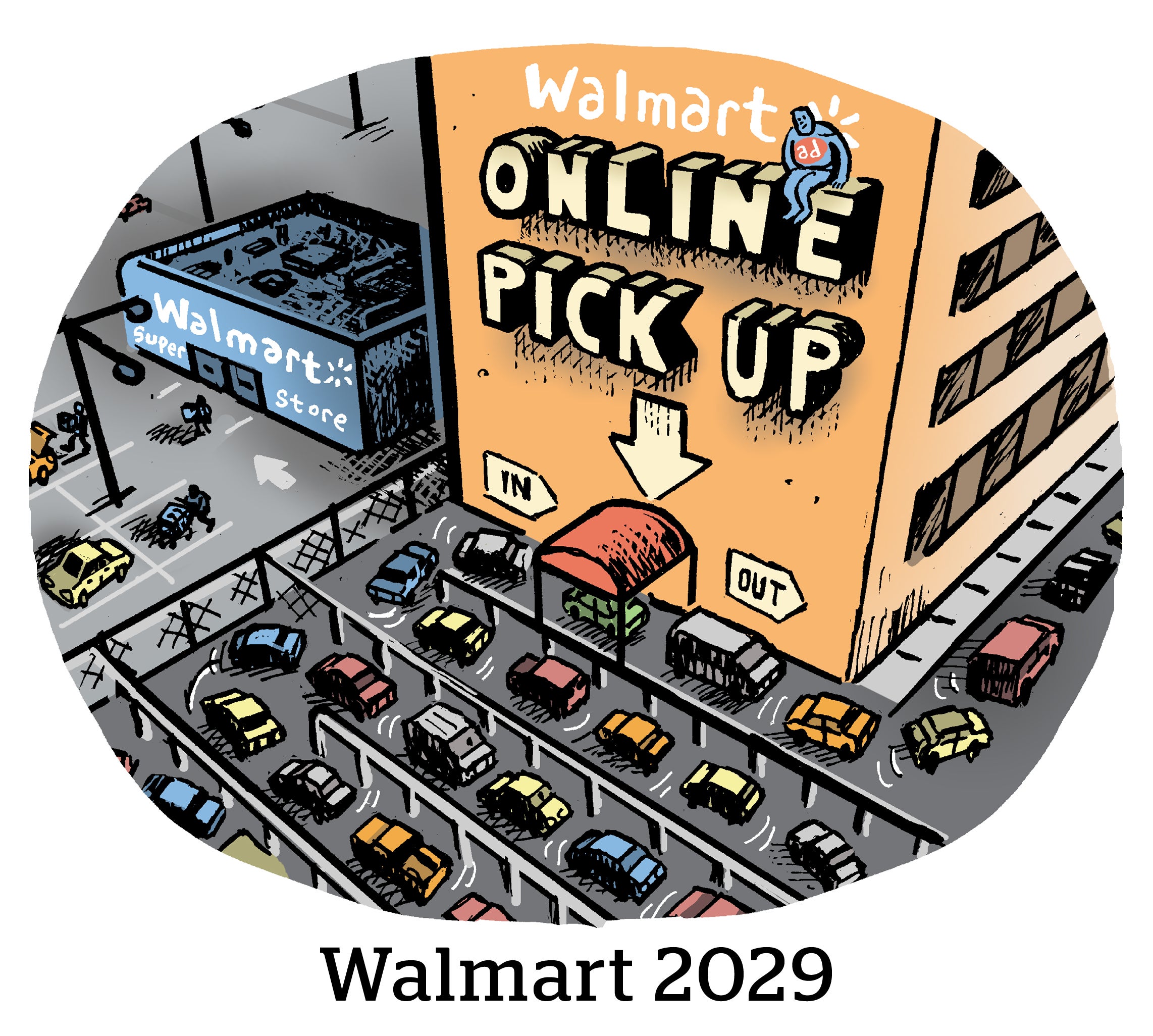
For retailers, the marketplace and retail media business models look like low-hanging, high-margin fruit. But it’s never so easy for those in the thick of things.
Amazon demonstrated the power of an open platform for third-party sellers, with hundreds of random accounts peddling Nike shoes, Cuisinart appliances, Coca-Cola beverages, etc., alongside original brands.

Walmart eventually tacked into Amazon’s wake. And the brick-and-mortar behemoth effectively attracted hundreds of thousands of third-party sellers.
However, Walmart has begun alerting third-party sellers that they won’t be allowed to offer some brand-name products, particularly in health, beauty and personal care, The Information reports. Only “brand owners and authorized distributors” will carry those items, per a note sent to one third-party seller.
Walmart is negotiating a tricky tightrope. It needs to attract new, well-known brands to sell in stores. It’s particularly trying to add premium beauty and personal care products.
Since big brands despise third-party sellers that repackage their stuff, one way to entice blue-chip brands is to shut down third-party sellers.
However, despite being smaller and no-name entities, third-party sellers are the beating heart of the ad business. So pleasing big brands can come at the expense of smaller third-party sellers.
The New Group
WPP Media, newly rebranded from GroupM, reversed a string of losses with the news that it won Mastercard’s $180 million global media account, Adweek reports.
Scoring Mastercard also post-facto justifies WPP’s decision a couple of months ago to allegedly resign the PayPal account. At the time, it seemed like the kind of face-saving announcement that might happen before a big brand departure.
The PayPal media account fell into Publicis Groupe’s lap last month, adding fuel to the narrative of Publicis swiping away marquee GroupM clients.
But that was GroupM. Now it’s WPP Media. And we’re at the start of a whole new ballgame.
This time around, the loser of agency musical chairs is Dentsu’s Carat, which had the Mastercard account for the past 10 years or so.
The IPG-owned McCann agency will remain Mastercard’s creative agency, but the rest of the marketing and business analytics services default to WPP.
A Mastercard spokesperson says that “[WPP’s] connected approach across paid media, social engagement, and business enablement” will increase its impact across the entire marketing ecosystem.
Virtual Influence
Marketers might finally be boarding the VTuber train, Digiday reports.
For the uninitiated, VTubers operate under the guise of a virtual avatar, which is usually synced to the creator’s movements using face- or hand-tracking technology. Like many creators on Twitch and YouTube, they appeal predominantly to younger, digital-native audiences.
VTubers are also among the most popular personalities on both platforms; Ironmouse, a now-independent VTuber (more on that in a sec), was briefly the most-subscribed Twitch streamer of all time in the fall of 2024.
Although VTubers have collaborated with huge restaurant chains like McDonald’s and Kura Sushi in Japan, they’re still considered outside the mainstream in North America. However, they can be a natural fit for brands aligned with gaming, anime and digital-focused aesthetics.
But there are logistical implications. Obviously, a VTuber can’t make in-person appearances without some technical help. Many are also managed by VTuber-specific talent agencies, which causes issues if that agency falls apart in spectacular fashion like North American venture VShojo recently did.
Brands might instead take an alternative approach and create their own VTubers, as some like Suntory, Crunchyroll and Sega have done. (It’s only a matter of time before KFC’s Colonel Sanders starts streaming, too, right?)
But Wait! There’s More!
Is your favorite social media sitcom actually a marketing campaign? [WSJ]
The US is using tariff-related trade negotiations to push the EU to loosen restrictions on Big Tech platforms included in its Digital Services Act. [FT]
MSNBC changes its name to MS Now in advance of its move to publicly traded NBCU spinoff brand Versant. [The Hollywood Reporter]
Only 5% of generative AI pilots at enterprise companies are actually delivering a measurable impact, says a new MIT study. [Fortune]
Rather than taking internal jobs, AI is mostly replacing outsourced contractors … for now. [Axios]
You’re Hired!
Aditude hires Anthony Gonsalves from JWP Connatix as its first CRO. [release]
PMG appoints Matt Dailey as head of analytics and measurement. [Campaign]








