
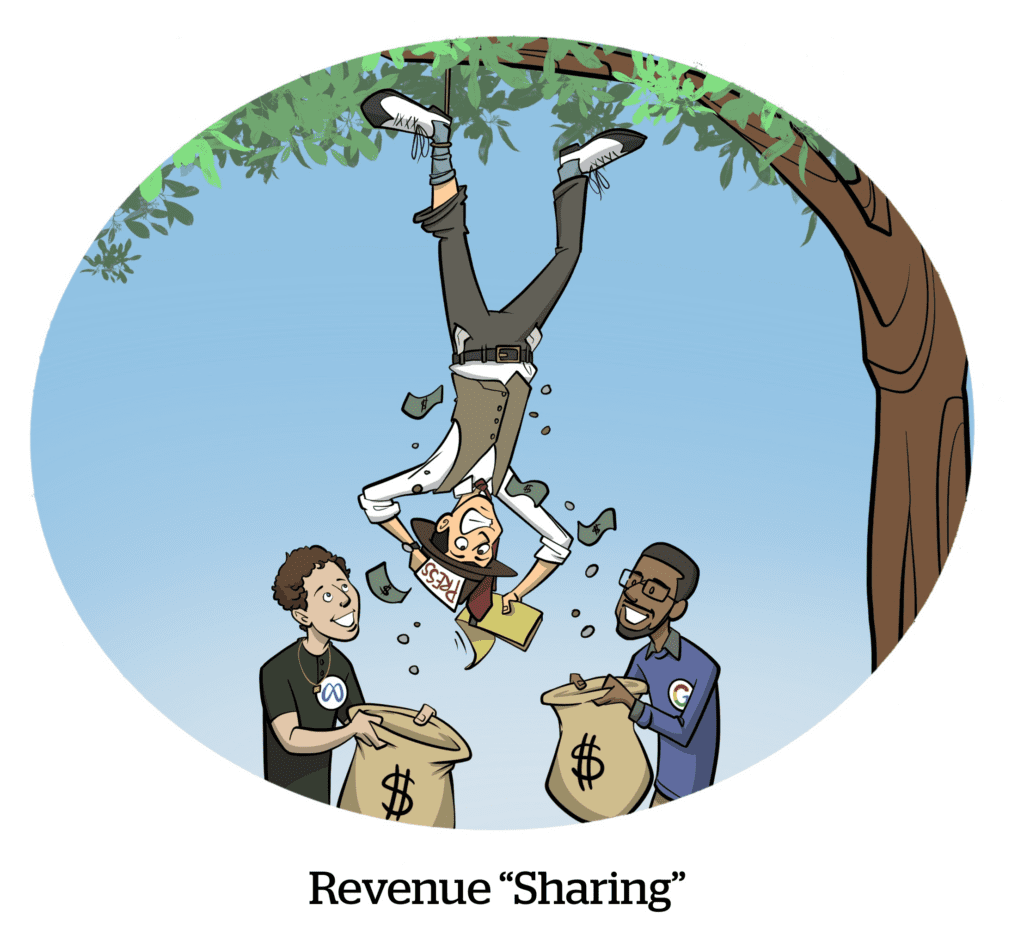
A Change Of Heart
Publishers are hopeful that Meta may have changed its tune at least somewhat when it comes to how – or whether – the platform reimburses publishers for content contributed to its LLM models.
Following up on an IAB Tech Lab event at which Meta and Google participated alongside publishers, Digiday reports on cautious optimism among pubs that Meta’s recent hiring spree of AI engineering leaders has led to a greater appreciation of the value of original written content.

That’s quite a different vibe than Meta was putting out there as recently as last year.
Last September, on The Verge’s Decoder podcast, Meta CEO Mark Zuckerberg said that “creators or publishers tend to overestimate the value of their specific content.”
Reading between the lines, if creators don’t want to participate in feeding AI models because they’re not being properly compensated, then maybe the AI models will just skip over them. Although, not to be a cynic, that might be a moot point, considering all the data scraping that’s been going on.
Also, we’ll believe it when we see it – publicly.
“They [Meta] were very clear that their stance on this has changed,” one anonymous publisher tells Digiday. “Even though it may not have outwardly turned into action yet.”
Data (Fee) Leak
Times are tough for The Trade Desk. Its stock price sank after investors questioned its strategy for competing with walled gardens. Meanwhile, competitors are gunning for their slices of open web advertising and the growing CTV and retail media markets.
Now, a document leak has revealed what advertisers pay for targeting data sourced from TTD’s retail media partners, Adweek reports. The document, which was last updated June 15, also includes the minimum ad spend required to create custom audiences or conduct campaign measurement using retailer data.
When advertisers use retail media data to target ads, they pay the retailer a percentage of the campaign’s CPM capped at a set amount. For example, targeting with Costco’s data might cost 40% of the CPM, but won’t exceed $4 per 1,000 impressions. It’s unclear whether TTD keeps a portion of the data fees for itself.
The hard caps are in place because CPMs are much higher for CTV ad buys than online display campaigns, and retail media data is commonly used for CTV targeting.
The leak also sheds light on TTD’s no-longer-exclusive ad tech partnership with Walmart’s DSP, including a $150,000 spending minimum and a 75-cent CPM fee for sales lift measurement.
However, Walmart says those are old figures, so it’ll be interesting to see what other DSPs will charge for Walmart’s data.
Giving Privacy The Finger
Fingerprinting has a bad reputation. But opinions on the controversial tracking strategy seem to be shifting. The IAB Tech Lab is even defending it.
Audience fingerprinting identifies and tracks devices or users based on unique digital traits like browser settings and software and hardware configurations, without relying on cookies or device IDs.
A fingerprint can include everything from web browser type and version, a device’s operating system, the size of the screen, language settings and many other signals. Platforms combine these data points, none of which alone can specifically identify a person, to create a probabilistic user ID.
Critics say fingerprinting threatens user privacy, since people can’t opt out. Apple, Mozilla, Microsoft and others prohibit the practice.
But Google, which also once banned fingerprinting, reversed course back in January. And now the IAB Tech Lab is also waving away concerns.
At the AdMonsters Sell Side Summit in Nashville last week, Tech Lab CEO Anthony Katsur gave a rundown of the trade org’s recent initiatives, including its new Trusted Server framework.
In describing how the server uses first-party data to create synthetic IDs, Katsur acknowledged, but also diminished, criticisms that the framework promotes fingerprinting – perhaps drawing on his tense exchange with Sincera’s Mike O’Sullivan in March.
“Oh, it’s fingerprinting,” he said in a mocking tone. “Sure, let’s fucking call it fingerprinting.”
You heard the man!
But Wait! There’s More!
Publishers sing the AI scraping blues and detail their diversification efforts at Sell Side Summit Nashville. [AdMonsters]
OpenAI has been using data from Google search results to power ChatGPT. [The Information]
A sign of the times: Digg, once billed as the “front page of the internet,” is relaunching as an app-focused experience. [The Verge]
Y Combinator claims that Apple’s App Store has hindered startup growth. [TechCrunch]
And now for something that anyone with a social media account already knows: AI is bad at moderating online communities. [Bloomberg]
Nostalgia for a simpler, algorithm-free internet is at an all-time high. [Business Insider]
You’re Hired!
Outfront Media hires Nick Brien as CEO and adds two new members to its board: Magnite’s Michael Barrett and Netflix’s Nicolle Pangis. [release]








