The AdExchanger Daily News Roundup will return on Tuesday, January 20, in observance of MLK Day.
Antitrust The Process
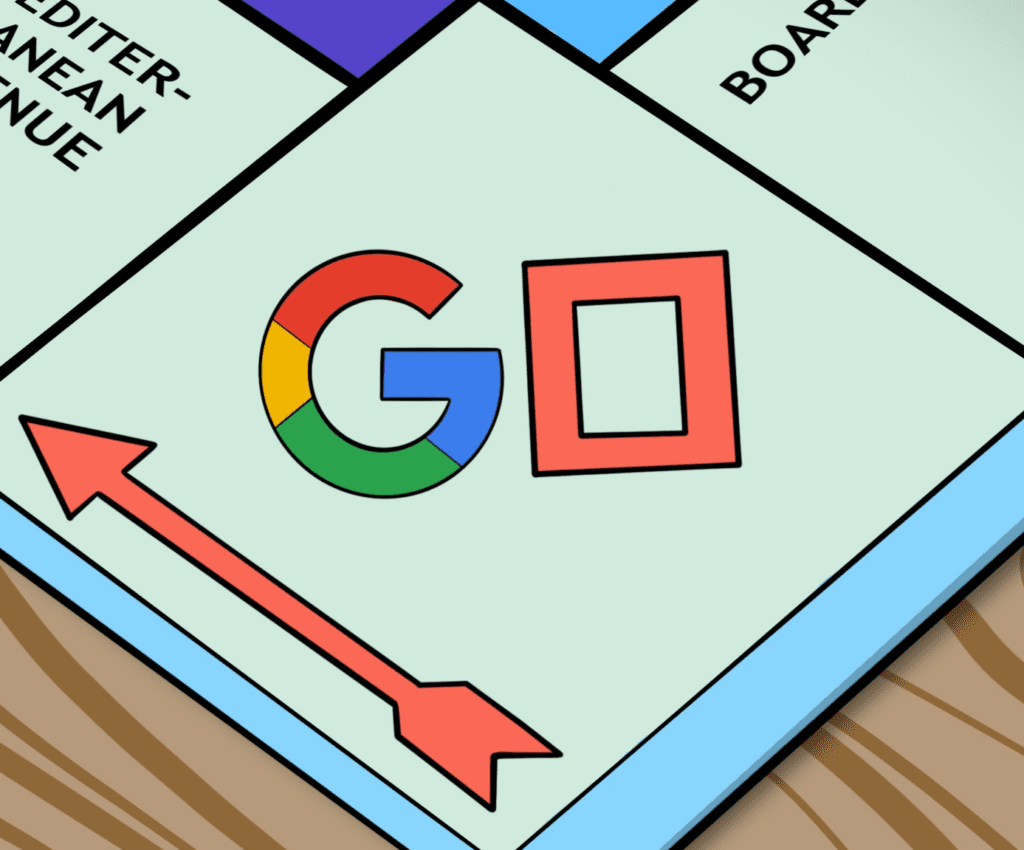
Divestiture diehards hoping for a Google spin-off still have a faint chance.
US District Court Judge Leonie Brinkema, who presided over DOJ v. Google, will publish her decision on the remedy in the next few months or possibly even weeks. Many observers of the case now see the likelihood of a court-ordered structural change – as in, forcing Google to sell part of its publisher ad tech stack – as increasingly remote.
However, the European Commission (EC) might set a precedent prior to Judge Brinkema in its mirror-image antitrust case.
The EC published a provisional decision this week, and h/t to antitrust lawyer Thomas Höppner for flagging. It reaffirms a 2.95 billion euro fine against Google, but doesn’t mandate a breakup – not yet, at least.
Google submitted its own remedies proposal, which the EC will consider over the next quarter. The commission’s provisional decision, which is a cool 363 pages long, warns that “merely discontinuing” the illegal practices documented in the case doesn’t guarantee Google won’t monopolize the market in the future.
“As long as the structural conflicts of interest have not been removed,” according to the decision, “Google’s ability and incentive to favour its own operations would remain.”
Seeing Is Believing
People like to know whether content was made by a human or an AI, but they’re not great at telling the difference – and it’s only going to get more difficult.
That’s why the IAB released an AI Disclosure and Transparency Framework, designed as a blueprint for responsible AI-generated creative.
Instead of disclosing every instance of AI, according to the IAB, platforms and brands should only disclose AI usage when it could mislead consumers about someone’s identity or character. Examples include depictions of deceased persons and instances of AI copying a person’s likeness, such as deepfakes.
The framework also advises that AI disclosures live adjacent to and not atop a creative asset.
The IAB acknowledges that consumers are increasingly distrustful of AI-generated content and apparently hopes that brands can build back consumer trust through an act of omission. If people don’t see a label declaring that a piece of content is AI-generated, it’s because there’s nothing risky that warrants disclosure. Or so the thinking goes.
But a skeptic might say that this effort will encourage companies to sweep their AI usage under the rug. And if that becomes the case, consumer trust will further erode once users realize they’re watching far more AI content than they realized.
Such is the purgatory between AI and reality.
Sweet Spot
Hershey’s, one of America’s most beloved legacy brands, is refreshing its advertising this year.
The 131-year-old chocolate brand is sweet on CTV, TikTok influencer campaigns and major cultural moments. It’s also looking for its own “Barbie”-esque buzz with a feature film about its founder.
To support these efforts, Hershey’s boosted its marketing budget by 20% for 2026, The Wall Street Journal reports. That’s from a base of about $600 million spent on ads in 2024.
Hershey’s is also launching its first new ad campaign in nearly a decade. Instead of the usual marketing pushes around Valentine’s Day and Halloween, the company will remain in the public eye year-round, says Chief Growth Officer Stacy Taffet.
For example, Hershey’s will have a major presence at the 2026 Winter Olympics and at America250 events. Not to mention live experiences, such as sponsoring the Rockefeller Center tree lighting and hosting a limited-edition candy drop in Times Square.
And the candy company is also bullish on social media after a collaboration between its Reese’s brand and Mondelez’s Oreos saw better-than-expected results with Gen Z and millennials.
But as to whether a period piece drama about The Hershey Company’s origins will move the needle with consumers … let’s wait on the brand lift study.
But Wait! There’s More!
JWX acquires Aug X Labs, the company behind AI video editing platform Augie Studio. [release]
A bunch of brands took the opportunity to capitalize on Verizon’s 10-hour cell service outage yesterday with snarky social media posts and free promotions. [Fast Company]
The app that Palantir built for ICE to locate and detain people sounds a lot like the tools that advertisers use for audience targeting, huh? [404 Media]
Paramount Skydance faces another setback in its quest to forcibly acquire Warner Bros. Discovery. [WSJ]
Ad-free Wikipedia celebrates its 25th anniversary and announces new AI partnerships with Amazon, Meta, Microsoft, Mistral AI and Perplexity. [blog]
Here’s an inexhaustive list of the advertisers that are still spending money on X, even as users continue to generate nonconsensual sexualized images via Grok. [Popular Info]
That being said, there are now a few restrictions on what kind of nonconsensual sexualized images Grok can produce! It’s the (really, really) small victories. [NYT]
Microsoft is shutting down parts of its massive physical and digital employee library – including newspaper subscriptions – in favor of an “AI-powered learning experience.” [The Verge]
Next month, Spotify will increase its Premium subscription price for the third time in two and a half years – which hints at a new normal for subscription services. [ArsTechnica]
You’re Hired!
Taz Patel, who (briefly and infamously) led Perplexity’s nascent ad business, joins AI video startup Higgsfield as VP of platform partnerships. [Adweek]
Here’s today’s AdExchanger.com news round-up… Want it by email? Sign up here.