What is award-winning actor and comedian Whoopi Goldberg doing in her free time?
Taking on a new role as a creative leader in the competitive world of streaming, of course.
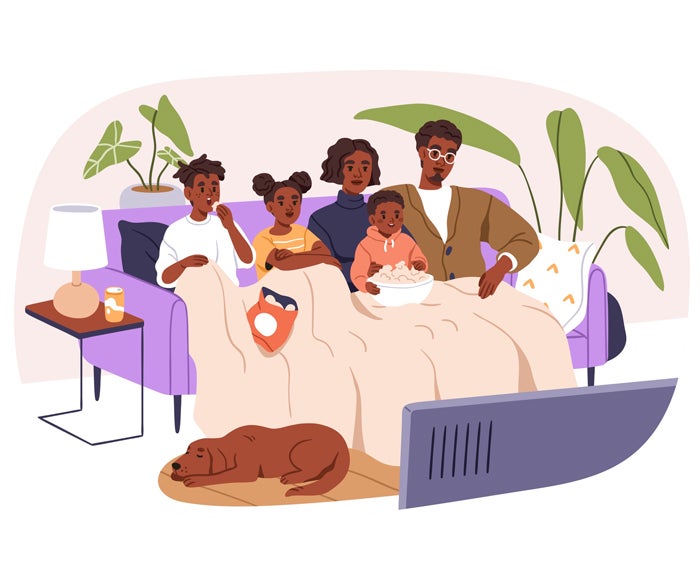
Say hello to Blkfam (pronounced “Black fam”), a new, free ad-supported streaming platform that launched in February with on-demand content curated for Black families. The platform was founded by media vet Larry Adams, who is also the founder and CEO of X_Stereotype, a software company that scores ad creative based on racial diversity and bias.
In addition to providing creative oversight, Goldberg is an equity investor in Blkfam, which is available on iOS and Android for Apple TV, YouTube TV, Roku, Vizio, LG and Samsung smart TVs and on Amazon Prime Video. At launch, Blkfam’s content partners include Playwatch Kids and Candle Media’s ATTN:, which create educational animated series featuring ethnically diverse characters.

But as a brand-new entrant to the streaming space, Blkfam needs more than a high-profile backer to stand out from the crowd and get noticed by viewers and advertisers. Achieving scale is one way to do that; homing in on a specialized content niche is another.
Black families are hardly a niche audience – that’s “a big swath of people,” Adams says. But Black families are an underserved audience.
That said, Black consumers and families are starting to command a greater share of attention and ad dollars from TV advertisers who want to make their media plans more inclusive.
I spoke with Adams to learn more about Blkfam’s plan to close the gap between advertisers and Black consumers.
AdExchanger: What is the market opportunity of advertising to Black families?
LARRY ADAMS: Families are an appealing target for advertisers because they spend more money than households without children, and they also subscribe to more streaming services.
Plus, households make purchase decisions as a family, which often involves parents asking their children what they think of certain brands or products they see on TV.
But when I look on some of the major streaming apps for content to watch with my kids that features the Black experience, I find a noncurated grab bag of stuff that ranges from PG- to R-rated titles.
Platforms aren’t curating content for Black families in particular, and there’s a real market opportunity in the challenge of content discovery for this audience.
Still, will Blkfam have to compete with other streaming platforms that are made for Black audiences, like Mansa and Polaris?
We’re trying to create a new content category in streaming, not more competition.
Partnerships are a big part of our vision. Collaborating with other Black-owned companies that serve a similar audience will help us scale and pursue more ways to monetize, and vice versa – it’s a rising tide that lifts all boats.
We’re partnering with Black production companies, for example, some of which want to recreate TV show ideas that have been bought and subsequently canceled by bigger studios. We’re also licensing content from Black-owned TV channels [such as The Africa Channel].
I’m not against content aggregation – but it has to be curated and intentional.
 How do brands buy ads on your platform?
Our ad offerings will include both brand integrations and traditional commercial spots. Some of the new content we’re developing will include brand and product integrations in addition to commercial breaks.
Is Blkfam selling any inventory programmatically?
For now, we’re not going to make our supply available programmatically.
Direct deals let us vet ad creative more closely compared to programmatic, which is a less controlled environment that carries some risk because there isn’t always enough transparency into which ad is running where.
We have to ensure we not only serve ads that are actually relevant for our target audience but also avoid ads that are inappropriate or biased. For example, although our ads will speak to parents co-viewing with their children, we can’t allow ads from verticals such as alcohol and pharma to run in kid-focused content. We also don’t want to risk running any ads that include stereotypical bias.
What data is available for audience targeting?
We use IP addresses and a household email, which we get when families sign up for an account. [Accounts are required to access content.]
We pair this information with data from third parties to create audience segments based on attributes such as household income and whether they’re in market for a particular product, like a new car. We get some of this data by partnering with Group Black.
How about measurement?
We’re in the finishing stages of selecting an ad server, which will deliver the standard reporting that advertisers are used to: reach, frequency and video completion rates based on the household attributes that were used for targeting.
What’s next on Blkfam’s agenda?
Developing our content slate.
Whoopi Goldberg has a lot of ideas for original content and tons of stand-up material she hopes to bring to life.
There certainly won’t be a lack of content.
This interview has been lightly edited and condensed.
Are you enjoying this newsletter? Let me know what you think. Hit me up at alyssa@adexchanger.com.
For more articles featuring Larry Adams, click here.