Why You Should Know (And Use) The Marketing Efficiency Ratio Metric
The Marketing Efficiency Ratio (MER) is a data-driven advertising metric that’s been around for many years but is now reaching mainstream, or to some at least, revered status.
What’s a CAPI and how does it work? Think of as a direct data pipeline that allow brands to circumvent privacy limitations set by browsers. It’s not a workaround, though. Let us explain.
Talking about outcomes is practically a mandate, especially in the CTV space, where ad buyers and vendors alike are heavily invested in streaming television’s potential as a lower-funnel, performance-driving channel.
A concept known as data minimization – the practice of limiting data collection and retention to only what’s strictly necessary to achieve a specific purpose – is becoming a key tenet of privacy legislation around the world.
It might be surprising to learn the government fights against monopolies the same way now as it did in the late 19th century – partly because the laws haven’t needed to change all that much.
The phaseout of third-party cookies kicked off the sell-side curation trend. But it’s also being driven by advertiser concerns about open web media quality and the need to enhance publisher contextual signals with audience data.
Television commerce, or T-commerce, is similar to shoppable TV: both refer to buying something you see on television. But shoppable TV is far more nascent – and also has different implications on attribution.
As ecommerce adoption has grown, measurement has shifted away from proxies towards metrics that show business results – a move away from clicks and views towards sales and profitable growth.
DCO has been around for a long time, but it’s still popular with marketers. And although upcoming signal loss may challenge all the ways advertisers can optimize their ads, creative remains a key lever that brands can pull to improve performance.
The next wave of privacy regulation revolves around data brokers. And while the term “data broker” may have a negative connotation, its legal definition is fairly straightforward.
Here are the pros and cons of client-side and server-side header bidding, and some typical use cases for each.
Return-path data (RPD) is viewing information processed by a TV device. But it’s still convenient to distinguish data from set-top boxes versus automatic content recognition.
To make sense of changes to mobile campaign reporting, marketers need to understand postbacks – the most essential element of mobile attribution.
“Measurement” and “currency” are often conflated in TV land, but they’re not the same. They have different standards and use cases – and these contrasts matter as the industry looks for a better way to transact TV ads.
Virginia is for lovers – and privacy lawyers. Although California has attracted most of the attention as the first US state to pass and enact comprehensive data privacy legislation, other states, including Virginia, have been swiftly following suit with regulations of their own.
Although there are important nuances between the different laws, businesses that have been working toward compliance with the California Consumer Privacy Act and California Privacy Rights Act are in a good position for complying with other state privacy statutes. But the CPRA has several unique provisions that make it a beast all its own.
For more than a decade, the ad tech industry has tried to replace the term “fingerprinting” with euphemisms, like probabilistic modeling. But too bad for ad tech, because the term stuck.
Lots of people are talking about addressable TV. “Data-driven linear,” though? Not so much. But despite the fact that data-driven linear (DDL) doesn’t get as much attention as its somewhat sexier addressable cousin, it’s becoming an increasingly popular choice for linear advertisers attempting to make more informed media buys.
Some business practices on the internet may not be against the law, but they undermine or manipulate consumer choice. Legal advocates have coined a new name for this practice: dark patterns. And dark patterns are next up on the enforcement docket both for the Federal Trade Commission and state-level data privacy laws.
The European Parliament adopted the Digital Services Act (DSA) and the Digital Markets Act (DMA) in July. Although they were passed as one legislative package, they function as two distinct laws. But there is one common thread: Holding Big Tech providers more accountable for what happens on their platforms.
Rather than looking at one particular data signal, attention metrics include a variety of data points, which are fed into a machine-learning model to predict the likelihood that a given media environment and ad creative will draw attention from a hypothetical audience member.
Contextual targeting laid the foundations of TV advertising – particularly by ensuring that ads were stitched into content marketers considered “brand safe.” With the advent of CTV, buyers put context on the back-burner in favor of more granular, first-party audience targeting. Now, the pendulum is swinging back again. Why? Two words: signal loss.
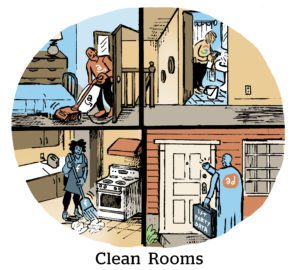
Over the past two years, data clean rooms have exploded onto the programmatic advertising scene, and they’re already at the center of some of the most exciting new partnerships and growth opportunities. But despite their rapid adoption, the definition of what a data clean room is – and all of the related nuance – is not well understood.
One of the most popular technical solutions to streamline campaign flights on connected TV is server-side ad insertion (SSAI). SSAI is technology that stitches together ads within a video stream before the stream loads on a user’s device. Most of the demand is coming from the explosive growth of CTV, but it can be used in any connected or over-the-top (OTT) video environments, including social.
Video games can support intrinsic or native in-game ads, as well as ads that are delivered alongside gameplay but exist outside the game itself, like pause-menu display ads and rewarded video. Marketers can also sponsor and advertise on channels related to gaming, such as at esports events and across online streaming platforms, particularly Twitch and YouTube. And we can’t forget about the metaverse.
Although advanced, addressable and convergent TV might sound like synonyms, they are distinct concepts. Think of advanced TV as the umbrella term for anything that is not traditional, over-the-air broadcast TV, with specific techniques including addressable and convergent TV, data-driven linear and OTT. To make the most of TV’s advancements (get it?), it’s important to understand the nuances.
Although Apple held off on dropping any ad tech industry-shaking privacy news at its Worldwide Developers Conference last week, it did publish documentation about the next version of SKAdNetwork – we’re up to 4.0 now – which includes a handful of new features that developers and mobile measurement providers have been asking for.
You’ve probably heard (dozens of times) by now that first-party data will be the key to post-third-party-cookie ad targeting. But what exactly is first-party data? How does it differ from second-party, third-party and zero-party data? And what makes first-party data more suited to a privacy-centric ad experience?
The word “cookieless” crops up in virtually every conversation about the future of online identity. But what exactly do people mean when they say “cookieless”? Although the definition seems simple enough – the absence of cookies – it lacks the nuance to encompass the true complexity of signal loss. It’s also a misnomer.
AVOD is the same thing as FAST … right? Not so fast. Despite dozens of streamers, programmers and publishers crowding the space, AVOD and FAST are the only two ways to watch ad-supported TV beyond the set-top box, and the core difference between them comes down to content distribution.