


A Million Ads might more aptly be called A Billion Ads soon.
The dynamic creative company A Million Ads (AMA), which focuses on the audio market, launched a new personalization product Wednesday that changes creative elements like voice, sound effects and companion images based on who the customer is.
The product, dubbed Studio.AI, attracted launch partners, including Target, Walmart, Google and Booking.com.
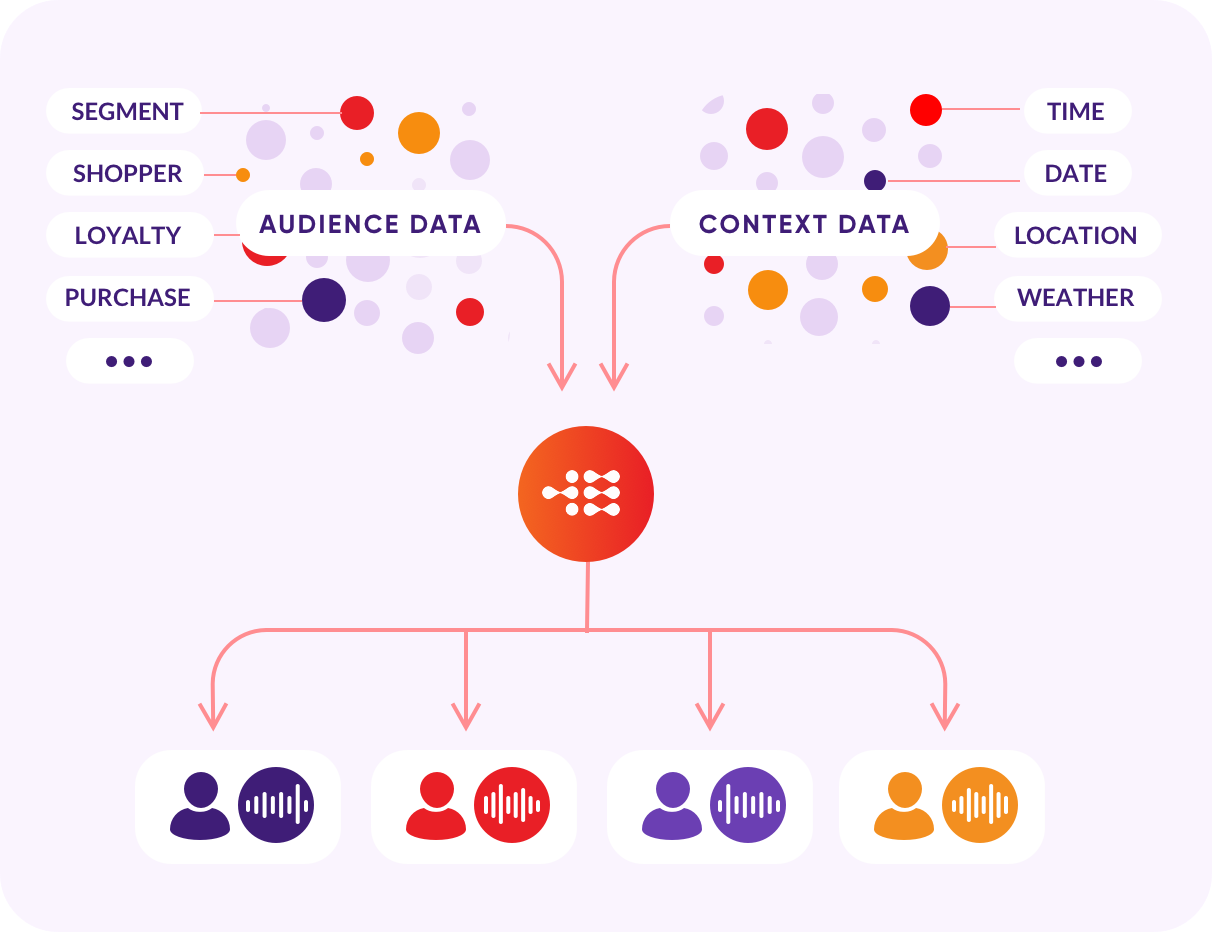
Advertisers can use Studio.AI to run personalized ads on audio platforms like Spotify, Pandora, Acast and iHeart. The tech picks up on contextual signals like date, time, location, weather and device type or pulls in first- or third-party customer data to personalize the audio ads.

An AI transcription service in Studio.AI automatically matches a human voice actor into the script, according to Founder and CEO Steve Dunlop, “saving hours of work.”
Studio.AI can also detect all the different variations of an ad, Dunlop said. For instance, it can populate a list of all Targets that have a Starbucks or Sephora inside so marketers don’t have to go through a list of 20,000 Target stores to personalize ads.
Signal boost
Since CPMs for national ads are cheaper than local ads, advertisers can save money. They can also traffic a single VAST tag to manage all the creative, said CRO Paul Kelly. The tag works with any publisher, programmatic or direct.
“Millions of versions can be played through that one asset so that every individual hears the most relevant message for that listener based on the data that’s available,” Kelly said.
Chevron, one of AMA’s clients, operates 10,000 gas stations across the country. If customers are within a certain distance of a particular gas station, an audio ad specific to that location will play.
Location also plays a role in the audio ads that food delivery app customers hear. For instance, Kelly, who has no Chick-fil-A outposts near his home, doesn’t hear mention of the chain in any Grubhub or UberEats ads.
With Starbucks, another client, “we match previous preferences so that we can select the right products,” he said. Meaning a vegan who likes oat milk will hear a different ad than someone who prefers ordering pastries.
AMA clients can target different audience segments as well. During back-to-school season, parents, who are focused on preparing their kids for the school year, hear different Office Depot ads from teachers, who are thinking about their whole classrooms.
“It’s using a bit of consumer psychology to make the message more resonant,” Kelly said.
As the world of audio turns
The podcasting space remains comparatively tiny from an ad revenue standpoint, in part because of its reluctance to move away from host-read custom ads.
“If podcasting wants to grow beyond a single-digit billion-dollar market, it needs to monetize the longer tail of podcasts,” Dunlop said, “not just have these golden nuggets of content at the top.”
Though premium podcasts with celebrity hosts who want to do host-read ads have a secure spot in the podcast ecosystem, they are also logistically difficult to manage and monetize. Brands want their scripts and reads approved, which quickly adds up to a headache, according to Dunlop.
Programmatic offers automation, but brands are often hesitant because of the historic misconception that audio creative is “a heavier lift” in programmatic.
But audio publishers are the real reason programmatic has been slow to grow in audio, according to Kelly. “You need to make that inventory available,” he said. Once more inventory becomes available, “you’ll see spend follow.”








