

The Great Resignation has hit digital and media agencies hard.
Organizations are understaffed; employees are overworked; people burn out and leave for the client side or other opportunities; the hiring net is cast again – lather, rinse, repeat.
While that’s a common tale across industries during the pandemic, agencies feel the impact more acutely because their talent is easily poachable by marketers and ad tech companies.
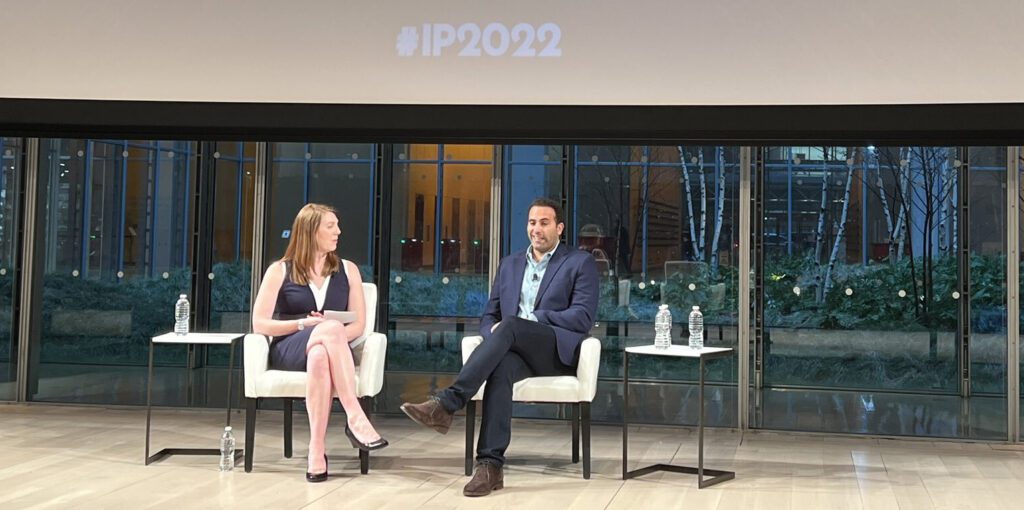
But there are some things agencies can do to stop the not-so-virtuous cycle, said Ralph Pardo, US CEO of Omnicom agency Hearts & Science, speaking at AdExchanger’s Industry Preview event in New York City on Tuesday.
Flexible flex
Beyond the obvious – giving people the ability to work from anywhere, for example, and focusing more on mental well-being – Hearts & Science opened more offices in other countries to service US clients as a way to take the pressure off.

“It may not seem novel, because we’re all building offshore and near-shore shops, but this is really the notion of having a borderless office,” said Pardo, who knows what it’s like to start a job remotely.
A longtime Omnicom executive, Pardo was elevated to US CEO at Hearts in September 2020, smack dab in the middle of the pandemic, replacing Erin Matts, who took on a new global chief experience officer role at the holding-company level.
In addition to growing operations globally in urban centers like Mexico City and Bogotá, Hearts & Science also hired more employees in US cities that are “perhaps less competitive, but with a great sense of talent,” Pardo said.
Today, roughly 25% to 30% of Hearts & Science’s workforce comes from areas that previously “were not part of the equation,” he said. “And that’s helped us improve retention, our ability to provide services for clients and the cost structure of our business.”
At your services
But there’s another force at play when it comes to improving cost structure: automation. And it’s a double-edged sword.
Agencies are generally paid based on how many people they have working on a client’s account and on hours billed, which is an incentive to hire as many people as possible (until they burn out). At the same time, AI technology is set to trigger an 11% decline in the agency workforce by as soon as next year, according to recent research from Forrester. That’s nearly one in 10 agency jobs.
By 2030, Forrester predicts a 30% decline in the agency workforce as a result of automation.
But there is a way to make this dynamic work in the agency’s favor, Pardo said.
For example, Hearts & Science is working on automating processes related to media planning and activation, because it’s more efficient. There’s no avoiding that change, so might as well embrace it.
“The goal is not always to get clients to pay more – our goal is to help clients achieve business outcomes,” he said.
Pardo said he challenges Forrester’s assumption, because it rests on the idea that agencies will stand still and simply shed jobs as the world changes around them.
“The agency value proposition and the services you get change over time; they don’t always stay static,” Pardo said, pointing to increased investments in ad tech consulting, technology implementation expertise and commerce capabilities.
It’ll take time to lead clients down this path, he said, but, eventually, they’ll see the value and adjust how they pay for services accordingly.
“I can tell you, a few clients already work with us on outcome-based models,” Pardo said. “Putting skin in the game and sharing in their business success opens up other compensation avenues.”
Changing the tires while you’re driving the bus isn’t easy, but that’s also part of what makes agencies a good place for young people to start a career in media, he said, regardless of whether they eventually leave for other pastures.
“We’re in an area where we’re constantly poached and people go off to ad tech, to mar tech, to the client side, but that’s because the value prop of an agency still holds true as a learning ground and a proving ground,” Pardo said. “Some people will always want to go and have a specialist focus – and some will want to stay on the agency path.”








