

The in-housing trend continues to reshape agency and ad tech relationships.
CPG giant Unilever announced on Wednesday that along with WPP it will invest $15 million in mobile creative management platform Celtra.
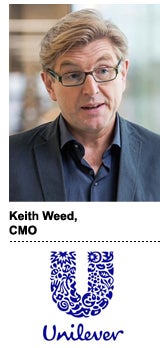
The move aligns with Unilever CMO Keith Weed’s rather blunt approach to marketing strategy.
“Get out of marketing if you’re not going to be a great digital marketer,” Weed told press at a roundtable in Cannes on Wednesday. “We’re doing quite a lot in-house. I think marketers are going to have to be much more data-savvy.”
Celtra has been gaining traction over the past year with several top brands that are hot on connecting operational data, creative, advertising and analytics in partnership with newly consolidated agency clients, said company founder and CEO Mihael Mikek.
“We want to replicate and build on the success we’ve had with brands like Unilever, where we’re licensing the software directly to brands,” he said. “But agencies are a crucial part of making that work because they’re going to be the ones operating the software and advising brands on how or what to implement.”

Celtra has worked for several years with Unilever and with WPP’s Mindshare, which operates Unilever’s ULTRA programmatic trading desk, Mikek said. “There’s a lot of powerful synergies for technology companies in those places where brands and agencies are coming together.”
Unilever’s Celtra investment isn’t its first foray into creative tech innovation.
Although programmatic creative and individual messaging is largely still what Weed referred to as “sci-fi,” Unilever is inching its way toward that dynamic dream. For example, a campaign for AXE in Latin America experimented with swapping different product images based on audio microsegments.
“We created vignettes of different music, cars, drinks or films,” Weed said. “Surprise, surprise: People responded better to what they like.”
But getting more directly involved in data and ad tech is forcing Unilever to adapt its agency relationships. The CPG titan is looking to cut the costs and complexities related to advertising across its more than 400 brands.
Like competitor Procter & Gamble, Unilever has cut its agency roster in half.
“[With] the fragmentation of media, brands were working with 10 to 14 agencies,” Weed said. “I’m keen to have more clarity and consistency – and one way of doing that is to have fewer agencies.”
Unilever has also reduced the amount of creative work it produces by 30%. Through a tool it built in-house to measure creative fatigue, the company found that 60% of its ads weren’t online long enough for consumers to even see them.
“We were putting those assets online and whisking them off before they had time to embed,” Weed said. “If we’re producing fewer assets, we’ll have more speed.”
Cutting creative costs also cuts agency fees by around 30%.
In addition to Celta, Unilever has begun partnering directly with tech platforms like Amazon, Facebook, Google and Snap. The scale and pervasiveness of these platforms in the marketing ecosystem make it easier to box the agency out.
“The nature of big digital companies and their scale [means] we can have meaningful relationships with them,” Weed said. “It wouldn’t have been possible to have the same depth of relationship with [TV networks].”
But as processes change, keeping pace is tough.
“Some companies have moved media buying into procurement, and they’re buying it like you would buy soil or any raw material,” Weed said. “It’s moving and changing so much, you really have to keep up with it. That can be challenging.”
And agencies that don’t bring value – whether that’s buying power, great creative or access to data – will get squeezed out.
“Of course, we’re going to continue to work with WPP, Omnicom, Publicis and IPG, but there are a group of agencies in the middle that don’t have any added distinction,” Weed said. “As far as I’m concerned, I’ll pick and choose and go wherever’s best.”
James Hercher contributed.









