Topic

AdExplainer

AdExchanger’s deep dive into the acronyms and terms on the rise in marketing and ad tech. If you don't know it, AdExplainer has you covered.
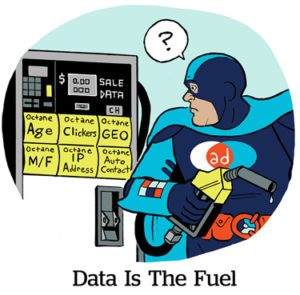
  • Comic: Shopper Marketing Data

    The Rise Of Ecommerce Ad Metrics

    As ecommerce adoption has grown, measurement has shifted away from proxies towards metrics that show business results – a move away from clicks and views towards sales and profitable growth.

  • What Is The Future Of Dynamic Creative Optimization (DCO)?

    DCO has been around for a long time, but it’s still popular with marketers. And although upcoming signal loss may challenge all the ways advertisers can optimize their ads, creative remains a key lever that brands can pull to improve performance.

  • What Is A Data Broker?

    The next wave of privacy regulation revolves around data brokers. And while the term “data broker” may have a negative connotation, its legal definition is fairly straightforward.

  • AdExplainer: Client-Side vs. Server-Side Header Bidding: What’s The Difference?

    Here are the pros and cons of client-side and server-side header bidding, and some typical use cases for each.

  • AdExplainer: What Is Return-Path Data (RPD)?

    Return-path data (RPD) is viewing information processed by a TV device. But it’s still convenient to distinguish data from set-top boxes versus automatic content recognition.

  • Ask app not to track?

    AdExplainer: What Are Mobile Postbacks, And How Are They Used?

    To make sense of changes to mobile campaign reporting, marketers need to understand postbacks ­– the most essential element of mobile attribution.

  • Comic: Alternative Currencies

    AdExplainer: TV Measurement vs. TV Currency

    “Measurement” and “currency” are often conflated in TV land, but they’re not the same. They have different standards and use cases – and these contrasts matter as the industry looks for a better way to transact TV ads.

  • Comic: Virginians need a privacy law!

    AdExplainer: The TL;DR On Virginia’s Consumer Data Protection Act

    Virginia is for lovers – and privacy lawyers. Although California has attracted most of the attention as the first US state to pass and enact comprehensive data privacy legislation, other states, including Virginia, have been swiftly following suit with regulations of their own.

  • Comic: Excellent Value Exchange!

    AdExplainer: Your CPRA Download

    Although there are important nuances between the different laws, businesses that have been working toward compliance with the California Consumer Privacy Act and California Privacy Rights Act are in a good position for complying with other state privacy statutes. But the CPRA has several unique provisions that make it a beast all its own.

  • fingerprinting crackdown?

    AdExplainer: What You Need To Know About Device Fingerprinting

    For more than a decade, the ad tech industry has tried to replace the term “fingerprinting” with euphemisms, like probabilistic modeling. But too bad for ad tech, because the term stuck.

  • AdExplainer: Data-Driven Linear Vs. Addressable TV

    Lots of people are talking about addressable TV. “Data-driven linear,” though? Not so much. But despite the fact that data-driven linear (DDL) doesn’t get as much attention as its somewhat sexier addressable cousin, it’s becoming an increasingly popular choice for linear advertisers attempting to make more informed media buys.

  • Comic: Bark Patterns

    AdExplainer: What Are Dark Patterns?

    Some business practices on the internet may not be against the law, but they undermine or manipulate consumer choice. Legal advocates have coined a new name for this practice: dark patterns. And dark patterns are next up on the enforcement docket both for the Federal Trade Commission and state-level data privacy laws.

  • AdExplainer: The Digital Services Act Vs. The Digital Markets Act

    The European Parliament adopted the Digital Services Act (DSA) and the Digital Markets Act (DMA) in July. Although they were passed as one legislative package, they function as two distinct laws. But there is one common thread: Holding Big Tech providers more accountable for what happens on their platforms.

  • eyes on stalks

    AdExplainer: How To Use Attention Metrics

    Rather than looking at one particular data signal, attention metrics include a variety of data points, which are fed into a machine-learning model to predict the likelihood that a given media environment and ad creative will draw attention from a hypothetical audience member.
  • AdExplainer: Can Contextual Targeting Work On Streaming TV?

    Contextual targeting laid the foundations of TV advertising – particularly by ensuring that ads were stitched into content marketers considered “brand safe.” With the advent of CTV, buyers put context on the back-burner in favor of more granular, first-party audience targeting. Now, the pendulum is swinging back again. Why? Two words: signal loss.

  • AdExplainer: Data Clean Rooms

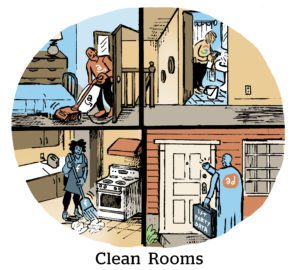
    Over the past two years, data clean rooms have exploded onto the programmatic advertising scene, and they’re already at the center of some of the most exciting new partnerships and growth opportunities. But despite their rapid adoption, the definition of what a data clean room is – and all of the related nuance – is not well understood.

  • AdExplainer: What Is Server-Side Ad Insertion (SSAI)?

    One of the most popular technical solutions to streamline campaign flights on connected TV is server-side ad insertion (SSAI). SSAI is technology that stitches together ads within a video stream before the stream loads on a user’s device. Most of the demand is coming from the explosive growth of CTV, but it can be used in any connected or over-the-top (OTT) video environments, including social.

  • Comic: In-game advertising

    AdExplainer: What Are The Different Types Of Video Game Ads?

    Video games can support intrinsic or native in-game ads, as well as ads that are delivered alongside gameplay but exist outside the game itself, like pause-menu display ads and rewarded video. Marketers can also sponsor and advertise on channels related to gaming, such as at esports events and across online streaming platforms, particularly Twitch and YouTube. And we can’t forget about the metaverse.

  • AdExplainer: What Is Advanced TV?

    Although advanced, addressable and convergent TV might sound like synonyms, they are distinct concepts. Think of advanced TV as the umbrella term for anything that is not traditional, over-the-air broadcast TV, with specific techniques including addressable and convergent TV, data-driven linear and OTT. To make the most of TV’s advancements (get it?), it’s important to understand the nuances.

  • Apple's AppTrackingTransparency

    AdExplainer: Meet SKAdNetwork 4.0, Apple’s Updated Attribution API That’s No Longer ‘Actively Painful’ To Use

    Although Apple held off on dropping any ad tech industry-shaking privacy news at its Worldwide Developers Conference last week, it did publish documentation about the next version of SKAdNetwork – we’re up to 4.0 now – which includes a handful of new features that developers and mobile measurement providers have been asking for.

  • AdExplainer: What Is First-Party Data?

    You’ve probably heard (dozens of times) by now that first-party data will be the key to post-third-party-cookie ad targeting. But what exactly is first-party data? How does it differ from second-party, third-party and zero-party data? And what makes first-party data more suited to a privacy-centric ad experience?

  • Comic: "So, what was the point?"

    AdExplainer: Defining (And Refining) The Meaning Of Cookieless

    The word “cookieless” crops up in virtually every conversation about the future of online identity. But what exactly do people mean when they say “cookieless”? Although the definition seems simple enough – the absence of cookies – it lacks the nuance to encompass the true complexity of signal loss. It’s also a misnomer.

  • AdExplainer: The Difference Between AVOD and FAST

    AVOD is the same thing as FAST … right? Not so fast. Despite dozens of streamers, programmers and publishers crowding the space, AVOD and FAST are the only two ways to watch ad-supported TV beyond the set-top box, and the core difference between them comes down to content distribution.

  • AdExplainer: The Evolution Of Retail Media

    Retail media is the hottest thing in online advertising and one of the most important categories for the future of programmatic growth. And the most important thing about retail media 2.0, a catchall for retailers using first-party data to target and monetize their audiences, is that the real value doesn’t come from the inventory or even who’s making the buy. It’s all about the data.

  • Supply Path Optimization

    AdExplainer: What Is Supply-Path Optimization (SPO)?

    The complexity and lack of transparency in the programmatic ad buying ecosystem makes it hard to understand who you’re buying from and how big of a bite they’re taking out of a buyer’s ad spend. Hence the need for supply path optimization (SPO). Simply put, SPO is about buyers identifying the most efficient connections and using them to transact with sellers. The goal is to stop buying through inefficient or expensive paths to supply.

  • Comic: The Privacy Sandbox Naming Committee

    AdExplainer: Meet The FLEDGE API

    With FLEDGE origin trials just begun – they finally kicked off on March 31 after multiple delays – publishers and advertisers need to get up to speed. But how is FLEDGE different from other targeting-focused proposals within the Chrome Privacy Sandbox, what use cases does it support and – most importantly – is FLEDGE a viable and privacy-safe alternative to third-party cookies?

  • AdExplainer: CTV Or OTT: What’s The Difference?

    Connected TV has been a buzzword for years, but its categorization distinct from other over-the-top (OTT) media was only made official last summer. In August, the Media Rating Council (MRC) revised its official definitions to draw the line between CTV and OTT based on critical differences in measurement, viewability and attribution.

Must Read

John Gentry, CEO, OpenX

‘I Am A Lucky And Thankful Man’: Remembering OpenX CEO John ‘JG’ Gentry

To those who knew him, John “JG” Gentry wasn’t just a CEO. He was a colleague who showed up with genuine care and curiosity.

Prebid Takes Over AdCP’s Code For Creating Sell-Side AI Agents

The group that turned header bidding software into an open standard is bringing the same approach to publisher-side AI agents.

Meta logo seen on smartphone and AI letters on the background. Concept for Meta Facebook Artificial Intelligence. Stafford, UK, May 2, 2023

Meta Bets That Its Ad Machine Can Fund Its AI Dreams

Meta is channeling its booming ad revenue into a $135 billion AI drive to power its “personal superintelligence” future.

Privacy! Commerce! Connected TV! Read all about it. Subscribe to AdExchanger Newsletters
Comic: Header Bidding Rapper (Wrapper!)

Microsoft To Stop Caching Prebid Video Files, Leaving Publishers With A Major Ad Serving Problem

Most publishers have no idea that a major part of their video ad delivery will stop working on April 30, shortly after Microsoft shuts down the Xandr DSP.

AdExchanger's Big Story podcast with journalistic insights on advertising, marketing and ad tech

Guess Its AdsGPT Now?

Ads were going to be a “last resort” for ChatGPT, OpenAI CEO Sam Altman promised two years ago. Now, they’re finally here. Omnicom Digital CEO Jonathan Nelson joins the AdExchanger editorial team to talk through what comes next.

Comic: Marketer Resolutions

Hershey’s Undergoes A Brand Update As It Rethinks Paid, Earned And Owned Media

This Wednesday marks the beginning of Hershey’s first major brand marketing campaign since 2018