
Here’s today’s AdExchanger.com news round-up… Want it by email? Sign up here.
Primed For Peacock
Comcast is zeroing in on NBCUniversal’s Peacock to buoy revenues while cable declines.
Broadband subscriptions are still evaporating – Comcast lost 19,000 US customers last quarter – but revenue is up thanks to Peacock subscriptions and ad revenue to offset linear TV losses, CFO Jason Armstrong told shareholders during Wednesday’s earnings conference call.
Peacock doubled its paid subscriptions to 24 million YOY, which makes sense considering the platform nixed its free offering in January.
And if more viewers are there, more advertiser interest will follow.

Comcast’s domestic cable ad revenue dipped 5% since Q2 2022, while Peacock’s surged 75%.
On the broadband side, Comcast has been pushing customers over to a subscription bundle that includes a fee for ad-free Peacock. Until June, Peacock was included in Comcast Xfinity bundles at no extra cost, but offering free trials and discounts attracted sign-ups for it this past quarter.
The offering has a more advantageous subscription-and-advertising revenue mix for Comcast. As a result, average revenue per US broadband account rose 4.5%.
The Social Actors Guild
Social media influencers, who mostly aren’t union members, are still caught up in the Hollywood writers’ and actors’ strikes.
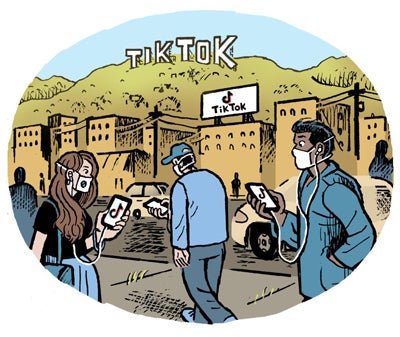
One TikTok creator, Deanna Giulietti, tells The New York Times she was offered $28,000 to promote “Only Murders in the Building,” a Disney-owned Hulu show. But Disney is struck.
And the union has a long memory.
The actors’ guild published new rules (threats, really, since they’re directed at nonunion civilians) for influencers who promote or work with struck studios, promising they’ll be ineligible for membership.
The rules are murky, but influencers don’t want to risk future membership or potential opportunities in entertainment or show biz. For instance, many influencers are gaming livestreamers – is Amazon’s Twitch struck just like Amazon Studios?
Influencers who cover celebs and entertainment can’t even post unsponsored reviews or trailers.
Watching “Barbie” and new Marvel trailers come out while maintaining radio silence has been painful, says Simone Umba, one such TikTok creator. “Please, please, don’t let it get to Christmas.”
Searching For Scams
SEO manipulation isn’t the only way bad actors hijack Google Search results. Scammers also purchase fraudulent search ads that redirect to malware or scam sites.
And critics say it’s time Google does something serious to prevent this, Bloomberg reports.
In one instance, a Google search for the AI art generator Midjourney returned sponsored results that directed users to a lookalike page to download Midjourney’s software.
The problem? Midjourney isn’t a downloadable program, and the download actually opens a backdoor to personal and financial information.
Google took the fraudulent ads down after being contacted by Bloomberg, but it missed some red flags that should have led to a takedown much sooner. The fake website’s URL replaced the letter “o” in Midjourney with a zero, a common tactic. Reddit users identified the scheme before it landed on Google’s radar.
Google says it removed 5.2 billion ads last year that violated company policies. But the fact that shoddy search ads still slip by bodes ill for Google’s nascent AI-powered search offerings, according to Bloomberg, since those could be more susceptible to scams.
But Wait, There’s More!
Google may face a class-action suit over alleged video ad metric inflation stemming from the Adalytics TrueView report. [The Hollywood Reporter]
Advertisers further probe ad buying transparency on YouTube, despite platform’s protestations. [Digiday]
Digital ads remain weak for publishers like BuzzFeed, Vox Media and Bustle, putting the revenue spotlight on live events. [The Information]
The Gwyneth Paltrow-backed vegan food startup Daily Harvest was built on a network of influencers. Then they started getting sick. [Bloomberg]
Twitter monetized a neo-Nazi organization’s account with ads from major brands. [Media Matters]
You’re Hired!
Big shake-ups in Adweek’s leadership as former NPR COO Will Lee becomes new CEO. [tweet ok]
Data scientist Leslie Wood joins iSpot as chief research officer. [Adweek]
AnalyticsIQ appoints Scarlett Shipp as CEO upon founder Dave Kelly’s retirement. [release]
Lexipol Media Group names Mark Wildman as VP, head of revenue. [release]








