

Safari is cracking down on identity vendors, DSPs are going direct to publishers, Google gets to keep AdX, agents are threatening to cut out the middlemen, the walled gardens keep winning and the open web is under pressure.
Happy first week, Robert.
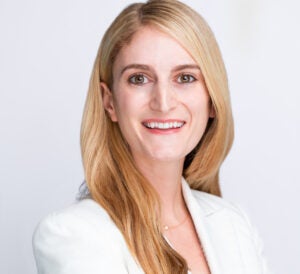
In early November, OpenX named Robert Horler as its new CEO, taking the reins from interim chief Joshua Metzger, who returned to his role as chief legal officer.
Horler joins at a time of upheaval for the ad industry and one of readjustment for OpenX. In January, the company lost John “JG” Gentry, its CEO for nearly 15 years, after a long battle with cancer.
A 30-year veteran of agencies, advertising and ad tech, Horler previously ran Dentsu Aegis Network in the US and Northern Europe, was COO of Quantcast and, most recently, led creator agency Whalar as chief exec before it was acquired by Accenture earlier this year. He’s still on the Whalar board.

But, given the state of the industry, how was Horler feeling roughly a week in at OpenX? Not too bad. He’s a glass-half-full kinda guy, but he’s also a pragmatist.
“Everybody’s being disrupted,” Horler said. “You can pull the blanket over your head and say, ‘No thanks,’ or you can see an amazing amount of opportunity for companies that are agile and ambitious. I fancy our chances.”
Horler spoke with AdExchanger about Apple’s latest move, whether the sell side has the upper hand right now and the big boots he has to fill.
AdExchanger: Let’s start with the state of play. The assumption for a long time was that as the line blurred between the buy side and sell side, DSPs would come out on top. Now it feels like the sell side has the power. Is that how you see it?
ROBERT HORLER: I’d agree, but it’s complicated. The pendulum has swung toward supply because advertisers want to get closer to the data and the publisher.
For the first time in about 30 years, the bigger agencies are pursuing divergent strategies for how they work with SSPs and DSPs. They all want more control, more orchestration and more influence over the revenue they drive, and I’d hypothesize that SSPs are well placed to deliver that.
Also, no slight to The Trade Desk, but if the biggest cat in the jungle is having this many existential challenges, that tells you something’s going on.
Speaking of big cats, OpenX is suing Google, as is Magnite, PubMatic and Index Exchange. I know there’s not much you can say about OpenX’s lawsuit, if anything, but as an industry observer, what did you think of the fact that Google didn’t have to divest AdX in the federal ad tech antitrust case?
You know, it’s a shame. It’s tough for everybody who thought there would be one, but I can’t say that I’m surprised there wasn’t.
A lot of sell-side players are going buyer-direct. So is everything just everything now? Are the distinctions between buy-side and the sell-side tech no longer meaningful?
For the people who aren’t in it, who don’t work in ad tech or programmatic advertising – and that includes some clients – the lines have always felt quite blurred. That’s not new.
There’s probably not as much difference now as there was, though. Things are converging and overlapping and people are encroaching a bit into each other’s territories as they figure out the brave new agentic landscape. And, of course, there are also pressures that exist within their own businesses.
But what will always be true is that publishers want to generate as much yield as possible and advertisers want to pay as little as possible, as long as it’s still effective, of course. So, yes, perhaps those lines are blurring a bit, but this natural tension will always exist.
I know you’re still settling in, but how about you approaching Apple’s move to block identity vendors in iOS 27?
This is a major question that needs to be considered, and it’s not about workarounds; it’s about understanding it. I’m sure Joel [Meyer, OpenX’s CTO] and his team are all over it. But I don’t think it’s an existential challenge or that it represents a massively different challenge to other challenges we’ve had to navigate in the past in terms of privacy, control and all those good things.
That’s all I can say right now other than that no one here is walking around and behaving like it’s an extinction event or something.
You spent the better part of a decade on the buy side, including as the US CEO of Dentsu. What do buyers get wrong about the sell side?
I’d flip it, actually. The sell side needs to be simpler to partner with and more able to adapt, and sometimes they forget that. The sell side also underestimates how overwhelmed buyers are with choices.
If you show up with an overly complex sell or a raft of products that you can’t explain in simple language, you’ll just sound like everyone else. Also, don’t underestimate the importance of humanity. Trust is built around people, not just technology.
I wanted to ask about John. He was such a lovely man, and his death was such a loss. How will you keep his legacy alive?
I never got to meet him, and I really wish I had. He was clearly beloved. When I came in for my board interview, I read the remembrance book here and it was really moving. It made me think, “If I get this job, those are big boots to fill.”
The best way to honor him is to continue the mission and build a valuable company where people enjoy coming into work. John clearly believed culture is preeminent and that it’s the people who make a great company, and I want to lead with that in mind.
This interview has been lightly edited and condensed.