OpenAI Gets Over Its Ad-bivalence
Finally, the long-awaited day is almost here.
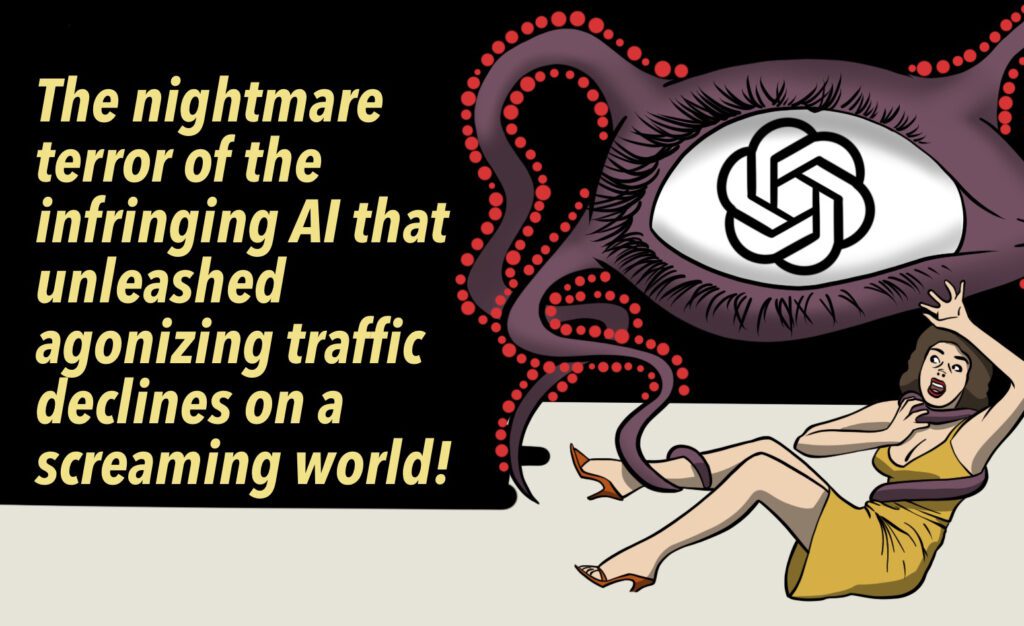
After years of hedging and will-they-won’t-they speculation regarding the launch of a ChatGPT ads model, OpenAI announced on Friday that it’s going to begin testing ads within its main AI chatbot for users in the US. The ads will only appear in ChatGPT’s free and Go tiers (the latter being its lowest-cost subscription option, introduced as an option for US customers the same day).
Fidji Simo, CEO of Applications at OpenAI, is adamant that paid ads won’t affect product recommendations that ChatGPT deems “objectively useful,” nor will users’ data and conversations be sold to advertisers, per the announcement.
Simply put, OpenAI wants to assure users that “ads do not influence the answers ChatGPT gives [them].”
There’s a lot of certainty about what the ad business won’t look like.
But what, exactly, it will look like isn’t set in stone. (And we all know Sam Altman’s take on ads is famously inconsistent.)
For now, ads will exist at the bottom of ChatGPT feed and be clearly identified and separate from the organic recommendation. And the first ads will be part of a test, not a national rollout.
Still, whether you frame it as OpenAI stepping aboard its rocket ship or beginning a descent down the world’s slipperiest slope, it’s the beginning of something important.
Want to share your reaction to this news for an upcoming story on AdExchanger? Email us your take at tips@adexchanger.com
Riding The Tube
OpenAI isn’t the only company with earth-moving advertising news from late last week.
Soon, the BBC will announce a content deal with YouTube to produce bespoke programs for the Google platform, the Financial Times reports. According to the FT, the content BBC will be producing for YouTube will counter misinformation and disinformation on the platform.
But the announcement (when it comes) is a major departure for the BBC, which in the UK does not collect ad revenue, even from content it distributes on third-party platforms.
The broadcaster also has a reputation for prioritizing its first-party assets, the iPlayer streaming platform and two traditional TV channels.
Some older BBC series may be available now on YouTube, too, though that wasn’t central to the deal, one source tells the FT.
On Principal
The times, they are a-changing.
Because ways of doing business that once would have crossed a line in the sand for marketers are now standard, accepted ways of working together.
For one, there’s the old marketing mantra that an agency or media company shouldn’t “grade its own homework.”
Some marketers still repeat the line. But when they speak with their budgets, which accrue to walled gardens, it’s clearly an antiquated notion.
Last week, the CPG data seller SPINS, which has in-store sales and share-of-shelf info, acquired the commerce-focused ad tech company MikMak. Not so long ago, these marketing functions were supposed to be separate. Now, marketers want those functions under one roof.
Another example is principal-based buying, which involves agencies buying and repackaging inventory to clients at undisclosed margins. Principal-based buying has in a few short years gone from an illicit practice discussed in hushed, abashed whispers to a de facto part of how big agencies operate.
“Marketers are looking for cost relief, agencies are looking for margin, and publishers are looking for sales and revenue,” Forrester’s VP and senior agency analyst Jay Pattisall tells Digiday. “The mechanism of arbitrage and principal media enables you to meet all of those considerations.”
But Wait! There’s More!
The math behind combining Hulu and Disney+. [Puck]
Reporter Nicole Carpenter goes down a syndicated media content rabbit hole after being mistaken for another writer who – spoiler alert! – might not even exist. [Aftermath]
YouTube relaxes its monetization guidelines for content related to suicide, domestic and sexual abuse, self-harm and other controversial topics. [TechCrunch]
FTC Chair Andrew Ferguson wants to put more scrutiny on companies that hire employees away from a startup instead of acquiring it outright, arguing that it’s a way to avoid antitrust review. [Bloomberg]
Disney already locked in 11 new advertising clients for ABC’s Oscars broadcast in March. [Variety]
The future of retail is AI, whether shoppers want it or not. [The Verge]
TikTok quietly launched its own microdrama app. [Business Insider]