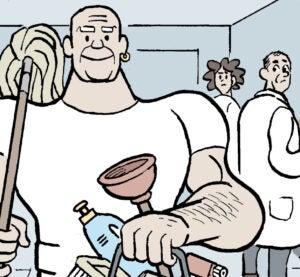
A few years ago, “data clean rooms” were all the ad tech trades could talk about. The relatively new technology was one that everybody in data-driven marketing would need to know.
Fast-forward to the end of 2025, and maybe advertisers don’t need to know what a data clean room is at all, like how drivers don’t really need to understand how an engine works to operate a car.
Instead, perhaps, data clean room tech has simply become part of the anonymous background that is how things work.

Cloud jargon
No brand marketer or agency buyer starts with the idea that they want a clean room, said Adam Solomon, LiveRamp’s new VP and head of solutions product management. Clean rooms are one tool in the tool kit, he said, “but not the thing that you lead with or the thing that you’re looking to accomplish.” LiveRamp is, of course, one of three companies in the data clean room category that garnered most of the attention and investment. Except LiveRamp acquired Habu, one data clean room startup, and WPP acquired InfoSum in 2024.
There was a big industry educational push early on that focused on clean rooms, Solomon said.
But the actual term “data clean room” has been absorbed into broader discussions about “platform interoperability” and “data collaboration.” (Pretty much just fancy ways to say “secure data sharing.”)
Another term that’s come up is “composability,” according to Solomon. The term is used to describe when a tech vendor or product might operate seamlessly or natively in different data warehouses or cloud systems. For media buyers, “composability” comes into play when they create audiences to activate on social channels. People aren’t really talking about “data clean rooms,” he said, because they don’t need to. The conversation has focused to what they actually want to achieve.
Solomon has a unique perspective on the category. In 2020, he was hired by AWS as global head of data collaboration and interoperability solutions for advertising and marketing. He thus oversaw the launch of AWS Clean Rooms in late 2022. This was an ominous moment for the third-party clean room category, as cloud platforms like AWS, Snowflake and Google Cloud offered free out-of-the-box versions of the tech.
The silver lining
After a respectable run of a few years, this might be the last annual update on the goings-on of the data clean room market. There may not be a point by this time next year.

But is that a bad thing?
Most brand marketers steadfastly refused for years to understand the jargon or basics behind how third-party cookies work. So, who knows what happened when the same people were presented with terminology like “federated data” or “differential privacy.”
The big platforms – Google, Amazon and Meta, as well as cloud infrastructure platforms like Snowflake – accrue most of the actual revenue gains from data clean rooms and CDPs.
“Data sharing is the choke point the platforms keep for the price of inventing this s**t,” wrote Jonathan Mendez, founder and CEO of the audience segmentation startup Neuralift AI and a longtime consultant and observer of the data collaboration vendor category, in a blog post from October.
In other words, the big platforms will squeeze gains from brands or vendors that benefit from this “composability” or flow of data between different systems. But the opportunity is vast because so many more companies will realize the value, and even direct profit, that can be derived from their own data.
Right now, marketers and ad tech execs might grumble about Google, Amazon and Meta making them or their business irrelevant. “But the takeaway shouldn’t be resentment,” Mendez writes. “It should be recognition. And action.”
Another opportunity for data clean room tech is retail media. The entire retail media category isn’t even just “retail” anymore, Solomon noted. Many different types of companies across travel, finance, credit cards and mobile apps have taken up the same data monetization playbook. Clean rooms are “under the hood” in these arrangements, he said, but not a tool that advertisers may even be aware of.
So, there may be great investments in the technology, even if the term “data clean room” fades to dust.