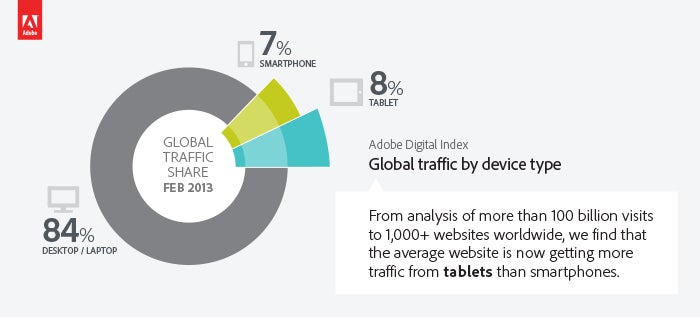
 Tablet usage is growing at an impressive speed, with traffic from tablet devices doubling over the past year, according to new data from Adobe’s Digital Index. Additionally, tablets surpassed smartphones for the first time in February 2013, when looking at global traffic share.
Adobe looked at more than 100 billion visits to more than 1,000 websites worldwide, and found that 8% of visits came from tablets in February, slightly more than the 7% of visits that came from smartphones.

Smartphones continue to be more common among consumers, but tablets offer a better format for browsing, shopping, and engaging with content, and a more in-depth experience overall. Adobe found that tablet users visit 70% more pages per visit while using a tablet compared with a smartphone.
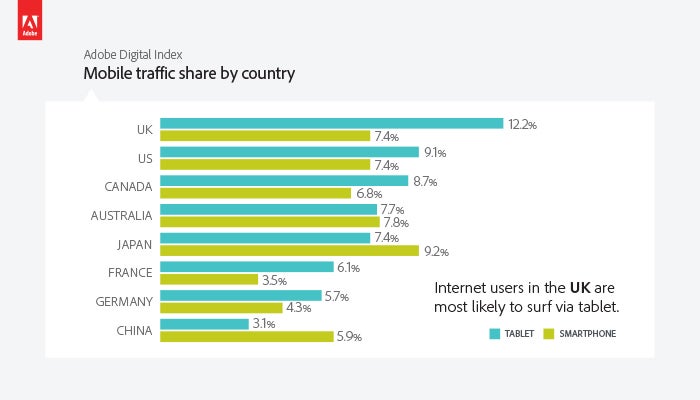
Adobe found that, in every country analyzed, traffic from tablets doubled between January 2012 and January 2013. The U.K. saw the most tablet usage, with 12.2% of traffic share. In the U.S., tablet share was 9.1%, while China saw the least amount of traffic from tablets, at 3.1%.
This increase in tablet usage and interest is backed up by data from mobile advertising and data platform Millennial Media. Millennial announced new tablet-specific rich media features because tablet impressions on its network have grown so much. In 2011, 15% of impressions on its platform came from tablets or e-readers, and that rose to 20% of total impressions in 2012.
Additionally, mobile ad network Mojiva, which has a tablet-specific ad network Mojiva Tab, reported there were 31 billion tablet ad requests in 2012, a 600% increase over 2011.
“Consumers all over the world are trying out their tablets for the first time and it only takes one bad website experience for them to decide to go elsewhere,” wrote Tyler White, manager and primary analyst for Adobe Digital Index, in a blog post about the new Adobe data. “A smartphone-optimized site is not the same as a tablet-optimized site. Marketers should keep in mind that consumers use their various mobile devices differently.”