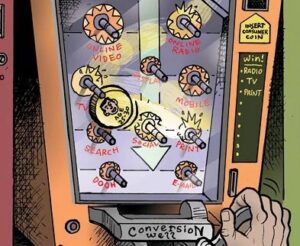
 Is big data “too big” a challenge for marketers?
This was a question posed to panelists today at the Financial Times’ Future of Marketing Summit, where a crowd of brand advertisers, agency execs and marketing and ad-tech vendors converged at The Metropolitan Club in New York to talk industry trends.
“There’s never too much data available,” answered Richard Harris, co-founder and CEO of Intent Media, a company that helps ecommerce sites and publishers get to the bottom of consumer intent based on search data. “You can have insufficient skills and tools to accomplish your goals with it, but [by and large] the most innovation in media has really been data-driven.”
Brian Lesser, CEO of WPP’s Xaxis, agreed to an extent, saying that “we’ve solved a lot of the real issues on the paid side,” but noted that high volumes of data stemming from social media remains a gray area for some marketers looking to prove out hard ROI of earned media campaigns.
This segued into a discussion around the mix of online and offline data and the growing clout of first-party and CRM data in paid media campaigns.

On the type of data collected, Lesser said, “We do have IDs in our system [where we] have a good idea of where they shop, what car they drive.” Last holiday season, “we had a luxury chocolate brand [client] that decided to forgo television and, instead, did an online video campaign.” By synching up Xaxis’ cookie ID with IDs from the clients’ CRM database, “we were able to see which people saw an ad, walked in a store and bought chocolate.”
Another hot topic was redefining the view of the marketing funnel because of the proliferation of data that maps out a less linear and more fragmented journey. “It’s not a bad thing to tell a story” about ways consumers are coming into contact with a brand, “but 10 years ago, we weren’t using predictive linkages” the way we are today to connect the dots between data and campaign execution, noted Dave Morgan, founder and CEO of Simulmedia. While everyone agreed that using data to improve messaging (going back to direct mail) is not new, predictive analytics is “getting better” in totality.
Another question panelists fielded had to do with “how much is too much” for the consumer when it comes to a general sense of ad fatigue and privacy concerns, especially as marketers have set their sights on mobile.
“We try to use data to drive advertising into a world of utility and help you do something you’re already doing now,” Harris said. But, on a personal note, he noted, “when you overlay mobile, and you see those display ads in your paid New York Times app, there’s a paradigm shift. The tolerance will go way down.” Lesser agreed: “There need to be fewer impressions served to a user and the [content] needs to be more relevant.”
So how can marketers , their business teams and upper management become more datacentric?
“Brand advertisers should be armed with information,” Lesser said. “Having tag [management solutions] and DMPs is great, but big marketers should have people on their side who understand” the terminology and inner workings of what vendors are pitching. “There is a lot of VC money out there and a lot of big sales forces.”
Harris concurred. “We need intelligent consumers of data we’re producing on a business-user level.”