The watchword at entertainment and sports media company Whistle is distribution.
“We go direct-to-consumer on whichever platforms our audience prefers to do their watching,” said Alison Meyer, who leads brand marketing solutions at Whistle.
Originally known for its influencer-led sports content, Whistle has since branched out into lifestyle, humor and general entertainment – anything “positive and relatable,” Meyer said.
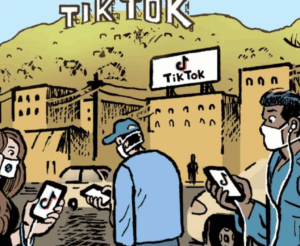
Whistle distributes across YouTube, Snapchat, IGTV, Instagram, Facebook and TikTok, a recent addition.
For most traditional media companies, not having an owned-and-operated distribution channel would represent a lack of control. But for Whistle, whose audience is dominated by Gen Zers and younger millennials, it’s the only distribution method that makes sense.
“We always try to make sure that any piece of content we put up is curated and in line with the consumption habits of the different channels,” said Meyer, who spent nearly seven years in multiple marketing exec roles at Refinery29 before joining Whistle in February.
Whistle says its total aggregates social reach is around 629 million globally across platforms, and that its channels generate more than 4 billion video views every month, 1.8 billion of which come from the United States. The company has raised just over $100 million from high-profile investors, including NBC Sports, Sky Sports, Tegna and Jeffrey Katzenberg’s WndrCo.
AdExchanger spoke with Meyer.

AdExchanger: Why the name change this year from “Whistle Sports” to just Whistle, and what does the change mean for your strategy?
ALISON MEYER: Our evolution from sports to a broader focus on entertainment and lifestyle was driven by our research. Gen Z, and especially young men, have a broader range of interests beyond sports. The expansion of our brand allows us to have an even bigger future as a distributed media and entertainment platform, and it allows us to help advertisers who want to connect with these young audiences in a brand-safe way.
How does that tie into the rationale behind Whistle’s recent acquisitions of New Form and Vertical Networks?
We were looking for companies with a non-sports focus that have proven success on the platforms where we already have a presence. New Form is great at scripted content, almost like what you’d see on The CW, but in a vertical format, while Vertical Networks can bring non-scripted, raw programming – the sort of content that is native to social platforms.
What makes Whistle different from other digital media companies?
A point of distinction for us is that we know how to connect with our audience through their passion points in a way they’re not used to seeing. With sports, for example, our MO was to tap into that passion without having to actually show people a live sporting event. We’re trying to reinvent how this generation is entertained.
We’re also nimble in terms of distribution, which allows us to monetize our series in multiple ways on top of creating consumer products and extensions into OTT.
Right, WhistleTV. You guys recently launched your own OTT service. Why toss your hat into that ring?
We launched OTT because it’s not enough for us to only be on social platforms. Our content also needs to exist in a world where people are streaming longer series, often on mobile. Our research shows that mobile is Gen Z’s preferred viewing platform for Netflix, for example.
Even so, OTT is very preliminary and we’re still talking to distributors. We’ll hopefully have a formal advertising product sometime in 2020/2021.
How is Whistle making sure its revenue is diversified?
The biggest challenge for a content-based company with its own audience is to monetize that audience directly through advertising at a time when advertisers are increasingly buying programmatically or through the platforms directly. Publishers need to show advertisers how effective it can be to connect with an audience through their content.
What’s interesting about us is that our different revenue streams are so interconnected. We partner directly with advertisers to create branded content or on show sponsorships; we distribute our content through platform channels; and we have merchandising, which is new, but expanding.
We also create series for many different types of entertainment channels, including The CW and Quibi, and we help brands looking to expand their own presence on Facebook, YouTube or other platforms.
How do you use insights to drive your content creation strategy?
We formalized our research and insights practice this year, called Whistle Wise. The mission is to code the needs and behaviors of our young audience so that we can get smarter about how to connect with them.
We use the research we conduct to de-risk our content investments. Insights inform the content we create, and if our editorial team comes up with an idea for a show, we test different approaches, hosts and formats with our audience first.
Do you monetize the research you conduct or license the data?
There’s potential for Whistle Wise to be a source of revenue and a solution for advertisers, but for now we use it to inform our own content strategy and our strategy overall.
How does Whistle work with influencers, and how do you measure the ROI for that investment?
Because we started out in the MCN [multichannel network] world, we have lots of relationships with influencers and a casting department that understands both the strengths and weaknesses of the different influencers we work with.
Measuring the value is hard, but as we do with any new show we launch editorially, we do a lot of testing with our Whistle Wise panel to find out: Are they relating to the content? Are they interested in this influencer? Do they want to watch more?
What are some of the most salient insights you’ve gathered on your audience?
Most young men believe that a lot of the entertainment and advertising out there doesn’t address how they feel about being a man today. There’s a white space opportunity for us to show traditional masculinity in a different way by being more positive and relatable.
Another is that 61% of Gen Z say that watching videos on their phone is just as good as watching television. That means our content needs to be as compelling on a small screen as content that’s traditionally been consumed on a big one.
This interview has been edited and condensed.