Why ads.txt Needs To Evolve For Connected TV
Complexity hasn’t made the CTV supply chain difficult to trust. This is a transparency problem and, more specifically, an ads.txt problem.
The US government wants to use digital ad infrastructure for the exact type of surveillance the industry’s critics have long warned about. We should have seen this coming.
The OAAA’s new content taxonomy introduces new subcategories that OOH media owners can use to classify their inventory in OpenRTB bid requests.
The MRC’s auction transparency standards aren’t intended to force every programmatic platform to use the same auction playbook – but platforms do have to adopt some controversial OpenRTB specs to get certified.
Ripping out battle-tested infrastructure and starting from scratch – as some emerging agentic protocols propose – is the slowest and most painful path to advertising’s agentic future.
Gamera, a media quality measurement startup for publishers, announced on Tuesday it raised $1.6 million to promote its service that combines data about a site’s ad experience with data about how its ads perform.
Unauthorized ID stuffing, rampant reselling and misaligned signals inflict incredible damage on the programmatic ecosystem. If publishers want to compete with the walled gardens, we must raise our standards.
Spencer has exited The Trade Desk after 12 years, marking another major leadership change amid friction with ad tech trade groups and intensifying competition across the DSP landscape.
After pulling back on moderation, Instagram gets flooded with antisemites; BidSwitch builds a programmatic way for AI bots to pay to crawl websites; and nearly half of Gen Z dislikes AI content.
The IAB Tech Lab’s latest framework proposes new standards for containerization and sets the stage for a fully agentic media buying process.
It won’t fail because the protocol is bad; it will fail because you’ve been sold a simplistic dream – a “universal API” for ad tech – and that’s what you’re budgeting for.
Rather than sharing universal TIDs that any DSP or curator can access, Raptive says publishers should instead share encrypted TIDs with an encryption key provided only to trusted demand-side partners.
Can the IAB Tech Lab’s Trusted Server initiative really help restore publishers’ ownership of monetization and wrestle back control from Big Tech and walled gardens?
The wave of ad tech headlines in recent weeks represents a long overdue moment of reckoning for companies who (still) hold disproportionate control over publishers’ website traffic and revenue potential.
Many well-intentioned advertising standards efforts gather digital dust thanks to industry politics and competing interests. Here’s how the industry can stop sabotaging its own progress.
CTV advertising has made great strides, but it still lags behind social platforms in one critical area: optimizing campaigns based on outcome data. Here’s how standardized conversion API integrations for CTV can help.
Industry experts agree that the bot activity analyzed in the latest Adalytics report is among the easiest type of invalid traffic to spot.
An Adalytics report released Friday details numerous instances of brands serving ads to known bots that appear on the IAB Tech Lab’s International Spiders and Bots list and TAG’s Data Center IP List.
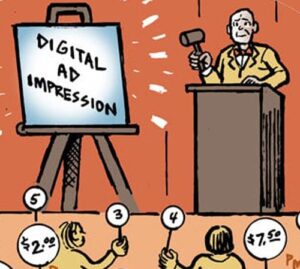
Enjoy this weekly comic strip from AdExchanger.com that highlights the digital advertising ecosystem …
AdExchanger reached out to a number of major DSPs to gauge the current state of adoption of the IAB Tech Lab’s new video ad standard.
CTV transparency remains a flashpoint between advertisers who want it and broadcasters who won’t provide it. Our special guest, Jounce Media’s Chris Kane, weighs in. Plus, we examine a persistent issue in ad tech: the chronic mislabeling of instream video.
The IAB predicts what privacy laws might be passed by the new congress; AI-generated newsletters are competing with local news; and the IAB Tech Lab ramps up production of new OpenRTB specs.
DSPs have been slow to adopt the Tech Lab’s new signal for classifying online video, causing confusion about which placement signal should be prioritized.
The first half of this decade has left publishers reeling from a pandemic jab and an AI uppercut that rearranged our reality and knocked us to our knees. Here’s how pubs and their ad tech partners can punch back in the years ahead.
The IAB Tech Lab is officially rebranding its Seller Defined Audiences spec as “Curated Audiences” to spur adoption in response to this year’s sell-side curation trend.
Curation is a reaction to programmatic’s worsening queries-per-second problem, says Permutive’s Joe Root. DSPs are biased toward impressions that have an identifier attached, so SSPs are using curated deal IDs as a stand-in for third-party cookies.
It’s a wrap on the US v. Google antitrust case, at least for now. Then, behind the IP infringement claim on the OpenRTB spec that ruffled feathers at the IAB Tech Lab.
Enjoy this weekly comic strip from AdExchanger.com that highlights the digital advertising ecosystem …
PubMatic’s $5 million loss from DV360’s bidding algorithm fix earlier this year suggests second-price auctions aren’t completely a thing of the past.
Publishers and SSPs aren’t incentivized to accurately label their video inventory. But increased pressure from the buy side could correct the skewed pricing dynamics that result from outstream being sold as instream.