
OPINION: The Sell Sider
Publishers Don’t Need A Reset Button. They Need Stability.
Traffic didn’t drip. It dropped. In 2026, publishers are prioritizing stability over scale as AI, automation and curation reshape the sell side.

Traffic didn’t drip. It dropped. In 2026, publishers are prioritizing stability over scale as AI, automation and curation reshape the sell side.

The Trade Desk has won the battle for supremacy on the open internet, says Needham & Company’s Laura Martin. But it might just be losing the war for the future of the web to walled gardens and AI search.

Classify is entering a crowded space of AI-powered contextual curation offerings. But the company is already teasing some high-profile integrations thanks to its network of well-connected advisors.

Programmatic promised clarity: automation, efficiency and measurable outcomes. What we got instead is complexity dressed up as optimization: a stack of acronyms performing trust theater.
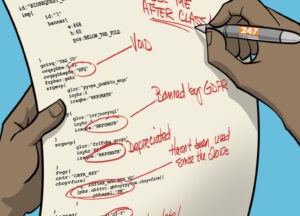
The open web is dead; long live the open web. It’s healthy; it’s full of opportunity; it’s doomed; it’s a mess. Also, what even is the open web, and do consumers care about the definition?

Based on the way advertisers deal with publishers, you’d think they were sworn enemies. Our failure to prioritize collaboration on the open web and build a positive value chain has been our collective downfall.

Curation is a reaction to programmatic’s worsening queries-per-second problem, says Permutive’s Joe Root. DSPs are biased toward impressions that have an identifier attached, so SSPs are using curated deal IDs as a stand-in for third-party cookies.

The programmatic open marketplace is designed to sustain the business models of ad tech, agencies and consultancies, rather than serving the interests of advertisers, audiences and media owners. It cannot be fixed. It must be rebuilt.
Many in the digital advertising industry truly want to do better. But there are imminent obstacles that need to be tackled if we want to move from words to deeds.

Who gets to decide what is premium? Is it dangerous to outsource that decision to The Trade Desk (or any one DSP)? And how should publishers position themselves within the future of this so-called premium internet?

Enjoy this weekly comic strip from AdExchanger.com that highlights the digital advertising ecosystem …
The open web is getting smaller, with the squeeze happening in two directions: Curated deals are skimming the cream off the open web, and exposed made-for-advertising websites are shuttering.

Pivoting to a “premium internet” is like avoiding the parts of town that have been blighted by illicit activity. The only real solution to MFA is for the dollars to dry up.

The phaseout of third-party cookies kicked off the sell-side curation trend. But it’s also being driven by advertiser concerns about open web media quality and the need to enhance publisher contextual signals with audience data.

Advertisers worried about MFA could take a cue from the mobile app ecosystem and focus on performance instead of viewability.

The Trade Desk is focusing beyond the overall “open internet” and on what CEO Jeff Green calls the “premium internet.”

Ad revenue in the US is set to grow in 2024. So pour one out for 2023 – and try not to make the same mistake as last year. Despite a more-than-decent ad market in 2023, media executives nearly manifested a recession out of fear that one was coming, according to professional advertising prognosticator Brian Wieser.

According to the ANA, brands could save at least $20 billion a year by cutting out low-quality programmatic inventory on the open web.

Let’s face it: The “open internet” includes a lot of good things, but also a lot of crap. And it’s a disservice to responsible media owners and content creators to bundle them in with nefarious operators that pirate content and operate solely to siphon legitimate ad dollars away through arbitrage, writes Ruben Schreurs, group chief product officer at Ebiquity.

Lots of first-time advertisers are heading to the Super Bowl this year: electric vehicle makers, crypto brands … and Criteo? It’s hard to imagine a bigger stage for a company that usually operates behind the scenes.

“The Sell Sider” is a column written by the sell side of the digital media community. Today’s column is written by Jay Stocki, the data practice lead at Prohaska Consulting. When consumer data goes into a walled garden, it never comes out. Ad dollars go in, but the true measurement of the results never come out. […]

“Data-Driven Thinking” is written by members of the media community and contains fresh ideas on the digital revolution in media. Today’s column is written by Joshua Koran, head of innovation labs at Zeta Global. Google’s recent blog posts (one by David Temkin and another by Deepti Bhatnagar) created even more confusion regarding the future of […]
“Data-Driven Thinking” is written by members of the media community and contains fresh ideas on the digital revolution in media. Today’s column is written by Joshua Koran, head of innovation labs at Zeta Global. How would you feel if a proverbial Big Brother controlled all data access and processing on the web? There are certain […]

Here’s today’s AdExchanger.com news round-up… Want it by email? Sign up here. Built On Sand? The UK’s Competition and Markets Authority (CMA) is launching an investigation into Google’s plan to phase out third-party cookies in Chrome, CNBC reports. The CMA says it’s received several complaints about how Google’s Privacy Sandbox proposals will impact competition. One of […]