
America’s Test Kitchen Puts Direct And Programmatic Access On Its Menu
America’s Test Kitchen introduced direct and programmatic buying for its free ad-supported TV channels – marking the first time it’s selling ad inventory as a standalone package.

America’s Test Kitchen introduced direct and programmatic buying for its free ad-supported TV channels – marking the first time it’s selling ad inventory as a standalone package.

Despite deepening consumer distrust of AI content, marketers and streamers are embracing AI-powered products. Now, generative AI is complicating the already rather bloody streaming wars.
TV programmers and streamers are sharing their financial report cards for last quarter – and the results are quite a mixed bag.

How, exactly, do campaigns know what issues to focus on? Companies like contextual ad platform GumGum are trying to help political buyers answer that question.

Getting an approved CTV ad creative ready for delivery is still a mostly manual process. Which is why NBCU is launching a new product to centralize different quality assurance checks and creative ad tech partners.

Netflix shared no specifics regarding the spend commitments that came out of this year’s upfronts. The TV ad industry wants more.

Disney and Netflix report streaming profitability, while WBD continues to suffer revenue losses. What Disney and WBD have in common, however, is a desire to copy Netflix.

To some degree, the digitization of TV marketing is inevitable. But there’s a limit to how much TV ad buying should digitize, according to Needham’s Laura Martin.
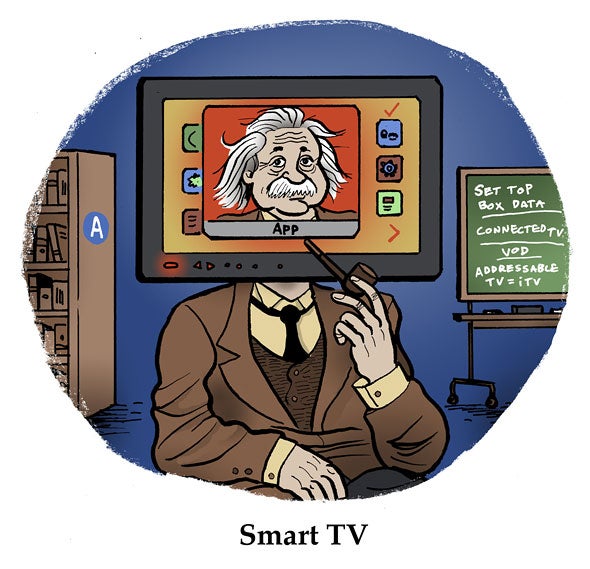
In recent years, Vizio has undergone a metamorphosis, transitioning from a hardware company to primarily a connected TV ad platform. Now, its biggest growth opportunities lie in programmatic ad sales and home screen monetization to sell more supply.

AdExchanger will lift the hood on the hottest topics in CTV live onstage at the inaugural CTV Connect event in New York City on March 13 and March 14.

To relate with Gen Z, advertisers have to do more than just spend millions on a 30- or 60-second Super Bowl spot. They need to keep up online and social marketing before, during and after the game – and using influencers will help, too.

The ad industry’s lofty ambitions for alternative currencies has come back down to planet Earth. Alt currencies struggle to gain market share because most buyers and sellers still transact on Nielsen numbers, while audience panels are back on the measurement menu.

CES this year was a petri dish of news and gossip (and hopefully not COVID) among the CTV ad industry.

CTV advertising is evolving from prepubescent into a profitable industry, so expect the nascent trends of last year – namely, a focus on measurement and data, transparency, targeting and programmatic – to shape CTV’s next phase of life.

This was such a busy year in CTV land that we had to launch a dedicated newsletter just to keep up with all the trends, from measurement, currency, targeting and attribution to streaming data, identity, supply-path optimization and new ad formats – just to name a few.

2023 was the year live sports entered the streaming arena in full force, creating a new form of fragmentation in the process.

Recent conversations in the connected TV industry make much ado about performance. But what does it really mean for CTV to be a “performance channel”?

Estate Media hopes to hook viewers with content featuring influencers in the real estate industry who have a strong online following but lack the scale or resources to produce profitable content on their own.

ClashTV, an online and mobile livestreaming platform, wants to be a home for high-action, clippable sports such as streetball (a type of basketball played outdoors) and mixed martial arts.
TV programmers have been fighting against macroeconomic constraints and the Hollywood writers’ and actors’ strikes, both of which reduced ad revenue growth over the course of this year. Now, programmers are starting to recover some of their losses.

HP is using The Trade Desk’s UID2 product to improve targeting for CTV buys in a way that passes the privacy sniff test.

Subscriber retention is trending on Netflix right now. Ads have become a key aspect of Netflix’s strategy to retain users by offering a lower-cost option – and, so far, the approach seems to be working.

The TV industry still can’t agree on the point of panels. They’re a necessary resource for measurement, but there’s no consensus about how to actually build or use them.

Linear and streaming TV still seem to be operating on two different wavelengths. Which is why more advertisers are turning to outcomes-based measurement to figure out whether their TV campaigns drive incremental results.

Banning password sharing is No. 1 on Netflix right now, and other streaming services are taking notice. But the strategy is a risky one: It’s very difficult to enforce, and the timing needs to be just right.

Philo is a streaming content aggregator that distributes content from major broadcasters, some of which also happen to be co-owners of the service. But programming distributors don’t always have optimal ad experiences.

Nielsen finalizes its plan to add big data to its measurement currency offering for national TV. Here’s what it means for advertisers.
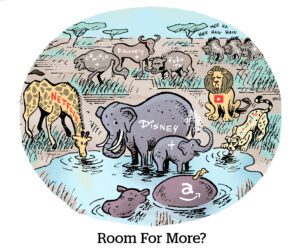
While it might feel a little late in the game for a brand-new streaming service to hit the ground running – especially as big-name streaming platforms struggle to grow subscriptions and ad revenue – free services have an easier time gaining traction.

Streaming services still need new subscribers, but account growth alone isn’t enough to achieve profitability. Which may explain why they’re struggling to grow accounts and advertising revenue at the same time.

INSP is an example of a TV network that’s more comfortable with linear because it has an older audience. But that doesn’t mean streaming is off the table.