

Colgate-Palmolive is eager to move away from last-click attribution.
But similar to most traditional brands, the CFO is being cautious. Moving to more advanced attribution tactics, such as multitouch, isn’t cheap, in terms of vendor fees and internal human capital.
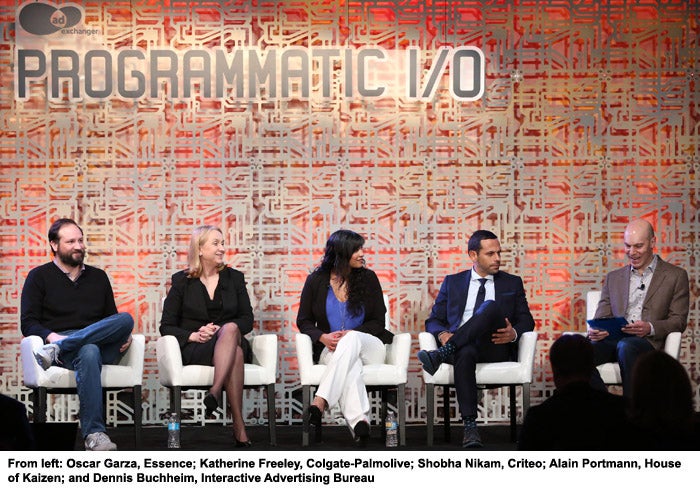
“We would have to sell a lot of toothpaste to get return on investment in sophisticated attribution models,” Katherine Freeley, the brand’s associate director for media, said Wednesday at Programmatic I/O in San Francisco.
Colgate-Palmolive is realistic about its situation. It’s a 200-year-old CPG company that primarily sells low-affinity oral hygiene products in an disloyal world.
“How into your toothpaste can you possibly be?” Freeley said. “All of our research and data shows us that people buy what’s on sale.”
But Colgate is working with what it’s got, investing in closed-loop attribution studies and running lift studies with multiple vendors to measure what it can. Although Colgate does sell online, that’s not where most of its sales happen, so the brand relies on proxies for purchase intent in its quest to measure incrementality.
It hasn’t been easy, and the process is ongoing. The fact is, out-of-the-box attribution doesn’t exist, said Alain Portmann, founding partner and head of strategy and insights at the performance agency House of Kaizen.

“There is no magical bullet to turn attribution into something that will suddenly generate incremental return on advertising dollars,” Portmann said. “A perfect attribution model doesn’t exist, [but it can be] perfect for your brand, your company.”
In other words, brands can get better results if they and their partners make an effort to devise an attribution model that takes their particular business needs into account.
“A good attribution model has to be based on a solid business logic, and that logic can only come from your organization,” Portmann said.
But a brand like Colgate needs external help to get there – and it has to be the right kind of help, otherwise it’s no help at all. Colgate was actually forced to walk away from several vendors that were too sophisticated and not service-friendly, Freeley said.
“We need someone to hold our hand,” she said. “When we graduate from high school, we’ll come back and hire you, but right now we need someone to take us to nursery school. We need full-service support like an agency model to assist us on our journey to learn.”
But agencies aren’t necessarily set up to be the best shepherds in this case, said Oscar Garza, global head of media activation at the GroupM agency Essence. Agencies typically are incentivized to spend budget, whereas the point of most good attribution models is to help brands be more efficient and spend less cash.
“The incentives are not in the right place for getting a true, really good recommendation from an agent or vendor,” Garza said. “Someone needs to be brave about making some changes to the way we do our business.”
Even so, there’s no reason not to start asking questions now, said Shobha Nikam, Criteo’s head of data and analytics for Latin America. Brands should interrogate vendors about their scale and ask them about accuracy, pricing and integration specs, she said.
“You really have to find a way to dig into the questions, and it’s always easier to edit than create,” Nikam said. “We need to demystify what it means to do [multitouch attribution] today.”








