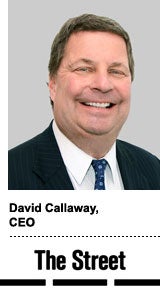
 The Street CEO David Callaway wants to transform the financial news and analysis publication into a “data-driven news business.”
Callaway, who was hired in June, says he will use a data trove assembled through recent acquisitions like BoardEx (a LinkedIn for company board members) to publish exclusive, high-value content for The Street and thus revive the aging brand.
The company is banking on such data-driven content to drive people to subscribe to its paid products, which account for the majority of The Street’s revenue.
In 2015, The Street, a public company, earned $12.5 million in media revenue and $55 million in subscription revenue. It averages 11.8 million unique visitors across its sites, according to comScore – relatively flat from the year before.
The publisher was born in the dot-com boom, going public just before the 2000 crash and hanging on after it. At the time, Callaway worked for The Street’s biggest competitor, MarketWatch.
While The Street decided to go the subscription route for its day trader audience, MarketWatch pursued massive reach monetized through advertising. Dow Jones paid $519 million for MarketWatch in 2004 on the strength of that decision.
Meanwhile, The Street’s stock has been flat for the past six years, with multiple leadership changes.

“There hadn’t been a push into mobile, social, video at the right time,” Callaway said.
A decision was made to broaden the publication’s reach to more casual investors and young people, much as MarketWatch did more than a decade ago.
“[The Street’s] reputation of being stock-focused could be expanded more into personal finance,” Callaway said. From there, it can “drive them down the funnel as we move into the more high-end audiences.”
Millennial-focused articles like “37% of Young U.S. Adults Have Absolutely No Money Saved for Retirement” are already popping up, as are stories about which stocks would perform well if Hillary Clinton were elected president.
Callaway also is improving how The Street promotes its stories on social platforms. “The Street got a late start in social,” he acknowledged.
To build up its social presence, The Street is “starting from scratch,” and has hired someone from CNN to build out strategies for Facebook, Twitter and LinkedIn. Callaway is most optimistic about LinkedIn, which he sees as a growing platform for content consumption, particularly around the topics The Street excels at covering.
Better content will likely boost advertising revenue. Callaway claims the business goal isn’t merely to increase page views, but to unlock bigger opportunities with advertisers such as by connecting standard display ads to something bigger, like a live event or native content.
Display alone “is not good enough for advertisers any more,” Callaway observed.