 “AdExchanger Politics” is a weekly column tracking developments in the 2016 political campaign cycle.
Today’s column is written by Will Margiloff, CEO at IgnitionOne.
It’s no secret that our society has become increasingly polarized, with people being more set in their ways and digging in further on their opinions.
At the same time, the rise of mobile and digital technology has allowed digital marketing to become increasingly targeted, providing consumers with custom-tailored messaging that directly reflects an individual’s wants, needs and behaviors. This further reinforces consumers’ perspectives and preferences through the thousands of impressions they receive daily.
While advanced segmentation and customized messaging has been incredible for efficiency and marketing ROI, could this lack of cross-pollination of ideas beyond an established, defined preference set be somehow curtailing the unification of ideology?

Increased Polarization
As an industry, the focus is on using past behavior to develop appropriate messages for individuals and audience segments. However, by looking exclusively at the past, we may be sacrificing the future.
Ideological polarization has grown since 2010, tracking closely with the increased adoption of smartphones and the ability to target individuals more effectively via hyper-refined marketing messages. Social media, while connecting us on a global level, has also neatly divided us into groups, followers and virtual tribes based on our ideologies and opinions. Online communities cater specifically to audiences based on their opinions, while Facebook algorithms are able to calculate our interests and serve content based exclusively on our activity.
People are quick to “defriend” those who do not share their opinions, equating differing views with “good person vs. bad person.” They’re also quick to pull support from a brand that does not echo their personal sentiments or beliefs.
This polarization is never more prevalent than during an election year. Americans’ values and basic beliefs are more polarized along partisan lines than at any point in the past 25 years, according to the Pew Research Center. The rise of the Internet and digital media gives us the ability to curate our own virtual and online experiences, allowing us to filter out information that disagrees with our own beliefs.
This trend, known as “confirmation bias,” was less common when the general public all got their news from the same sources, such as national TV news or local newspapers. Today the 24/7 cable news channels are unashamed of the bias of their coverage, fueled by market segment reach of media dollars veiled by a desire to “serve their audiences” – the goal of media and marketers alike.
It may seem as though this issue of polarization should be relegated to younger generations, the digital natives who grew up on the Internet vs. digital migrants who became acquainted with it as adults. And while young adults still flock to online communities like Facebook in the highest numbers (82%), 79% of those between 30 and 49 years old report using the site, and 64% of those aged 50 to 64 years old report usage.
Social media also spans a range of socioeconomic and educational environments. While higher-income households were most likely to use social media over the past decade, more than half (56%) of those in low-income households now use it as well. Social media also sees higher levels of use among those who have at least some college education, but since 2013, more than half of those with a high school diploma or less have joined social networks.
The bottom line is that polarization knows no age range, socioeconomic status or educational boundaries. It is something that affects almost every consumer today, but in what way does digital marketing strategy contribute to this? Should we as marketers be combatting polarization? If so, how?
Being Mindful
The trend of societal polarization is there, which means that we must both recognize it and take steps to ensure that messaging and content is balanced and doesn’t come across as overly degrading of other groups or ideologies.
Awareness of the trend is one place to start. One thing we can do is to practice “marketing mindfulness.” Technology can guide our messaging to the right audience at the right time, but we must also be aware of the context of that message within the consumer’s overall digital environment. Messaging can inspire loyalty and interest but can also incite further separation. Strategy should ultimately rest on the laurels of the service or product being marketed.
Marketing technology fueled by data offers tremendous opportunities to hypertarget consumers with specific messaging tailored to them, creating limited access to differing ideas, views and opinions. Perhaps the tight focus of a constant flow of messages based on past behaviors is numbing citizens to accepting with patience ideas that are outside their own view. Perhaps it’s our responsibility as influencers to be thoughtful of this.
While practicing marketing mindfulness may not reverse the devolution toward polarization, playing our cards right can benefit both marketers and consumers with a richer digital experience that slows the trend.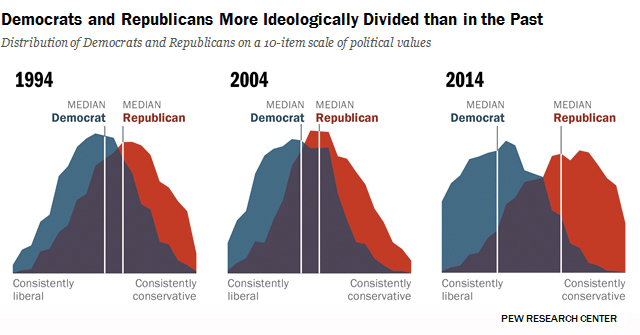
Follow Will Margiloff (@wmargiloff), IgnitionOne (@IgnitionOne) and AdExchanger (@adexchanger) on Twitter