Google updated its brand safety controls on Tuesday after a slew of companies pulled advertising spend from YouTube and Google Ad Exchange.
In response to the withdrawals, Google promised to develop tools to better police and remove ads from content that attacks people based on their race, gender, religion or “similar categories.”
To do so, Google will raise default brand safety levels, automatically omitting a broader range of content. It will also introduce account-level controls, so brands can carry over their safety settings from campaign to campaign. And safety controls on high-risk content on Google Display Network will now be available on YouTube as well, allowing for more unified management of brand safety.
Google will share reporting on individual videos and make it easier for brands to raise issues with the company should they run into brand safety problems on its platforms.
“We believe the combination of these new policies and controls will significantly strengthen our ability to help advertisers reach audiences at scale, while respecting their values,” Google Chief Business Officer Philip Schindler wrote in a blog post.
Google said these tools will roll out over the next couple of weeks. It will hire “significant numbers of people” to develop them. All the brand safety tools will be powered by artificial intelligence and machine learning.

The company’s push for heightened brand safety comes after marketers such as L’Oreal, the UK government, The Guardian, HSBC, Marks & Spencer, Toyota, McDonald’s and ad holding company Havas’ UK division pulled spend on Friday after finding their ads placed next to extremist content such as rape apologists, anti-Semites, banned hate preachers and American white nationalists. The Times of London first reported the story.
Google responded to the UK uproar with a note of apology on Friday, but brands continued to yank spend. Google urged marketers to recognize that policing the sheer volume of content on its platform while respecting free speech is a challenge that they “don’t always get right.”
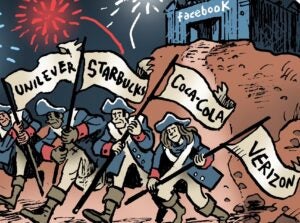
But brands are fed up with fake news, brand safety issues and a messy digital supply chain that leaves them buying inventory from a duopoly that grades its own homework.
In January, Procter & Gamble Chief Brand Officer Marc Pritchard corralled the ad industry to demand more transparency in the digital supply chain, and on Monday the ANA issued another rallying cry for third-party verification on walled gardens.
Agencies have to balance advertiser demands for brand safety and measurement with Google’s dominant position in the marketplace.
“Google requests much more trust than other inventory sellers,” said Adam Heimlich, SVP of programmatic at Horizon Media’s programmatic unit, HX. “This is true with regard to rates as well as safety and effectiveness. Advertisers vote with their dollars. It’s their trust that’s kept the walls up so far.”
Advertisers pulling spend from Google are concentrated in the UK, and so far Havas UK is the only major agency network to pull spend from Google for clients including Domino’s, BBC, Royal Mail, Hyundai and Kia. Other major ad buyers, including WPP, Publicis Groupe, IPG, Omnicom and Dentsu Aegis Network, have not paused spending on Google’s platforms.
Havas did not respond to interview requests about Google’s most recent updates. On Friday, Havas UK CEO Paul Frampton said in a statement that he had a “duty of care” to UK clients around brand safety.
Havas is owned by the Bolloré family, which also owns YouTube competitor Dailymotion.
Despite the vagueness of Google’s announcement, WPP’s GroupM said it will continue buying ads on Google and welcomes the commitments laid out in Schindler’s post.
“We look forward to the details about the tools and a sense of what improvement benchmarks we should expect,” the media-buying group said in a statement. “We also hope for quick delivery of the tools that can be deployed, as many thousands of campaigns are involved.”
Sarah Sluis contributed.