

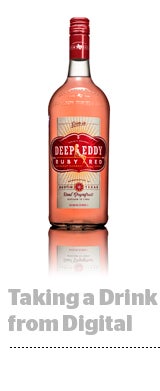
 One of the best things about Deep Eddy Vodka is the taste. At least that’s what Brandon Cason, VP of marketing, has to say about the 4-year-old spirits brand that’s based in Austin, Texas.
But prospects aren’t going to seek out a product they’ve never heard of. That’s one reason the brand, whose efforts are focused on “awareness and trial,” added digital to its marketing plan, Cason said.
Deep Eddy Vodka is in a competitive market and aims to extract as much as it can from every marketing dollar. “With any new CPG, you don’t have a lot of money on the front end,” said Cason.
Initially, the spirits manufacturer’s marketing strategy focused on out-of-home advertising, including billboards and sponsoring music festivals, but Cason wanted to branch into digital. “Any smart marketer is aware of the need to have a digital presence,” he said. “It’s more important than ever.”
With The Daily Dot, Cason created a native advertising campaign with stories built around Deep Eddy’s Ruby Red Vodka, which was available in 22 states at the time.
“They were instrumental in helping us understand it’s not just about digital display ads,” he said, “but content is king, and serving up fun content that’s interesting, relevant and shareable.” The two companies used to share a working space and already had a rapport and a degree of trust.
The Deep Eddy brand is “nostalgic and throwback-based,” so the teams collaborated on native content that would expand on that theme, a “longing for the nostalgic life, and looking back at the way things were,” Cason said.

One post, “10 Things Your Grandfather Did Cooler Than You,” performed particularly well, with nearly 6,000 shares. “Rarely do I see something on The Daily Dot eclipse that number,” Cason said. That and the six other posts in that theme, like“7 Top Tips For Your Digital Detox,” resulted in a 22% brand lift, as measured by Vizu.
That fit perfectly into the brand’s KPIs. “Right now it’s about driving awareness of brand,” he said. “On the digital side, we want people to know who we are, and the other KPI is watching how sales do. Ruby Red was a phenomenon, and as a brand we’ve grown 200% year over year.”
He also appreciated the additional metrics available in digital.
“In marketing, you’re wasting half your money, as they say,” Cason said. “At least on the digital front, you can track true clicks and impressions, and geographic information. You’re not flying blind.”
Cason is back for more with The Daily Dot. A campaign launching Sept. 22 will promote a blind taste test, The Deep Eddy Challenge. The social media-driven campaign encourages viewers to share videos and pictures of them conducting a blind taste test with Deep Eddy Vodka and competitors.
There will also be commercials on YouTube “where we crashed parties, conducted challenges with people there, filmed it and put it together in a comedic, fun way. We try to have a lot of humor in our marketing, so the commercials don’t come across as sales-y,” he described.
To supplement that campaign, Deep Eddy Vodka asked The Daily Dot to buy more media on its behalf, through a newly formed arm called The Daily Dot Media Group, “helping brands like me navigate the web’s spend potential,” Cason said. Native posts on The Daily Dot will be supplemented with a wider display campaign that The Daily Dot will execute.
The move came out of Cason’s deep dissatisfaction with other agencies he tried out for the job. Many assumed Deep Eddy had deep pockets.
“An exec at one of ad firms said to me, ‘In these 10 markets you’ll need this much money, and it will be gone before you know it.’ Spending a lot of money didn’t feel like a strategy to me,” Cason said. “We spend days in the streets fighting in a market that’s overrun with competitors with big marketers. Every piece of media we drill down as hard as we can. We buy smart and get things for a fraction of cost.”
From Cason’s perspective, the digital market can be hard to decipher, even when looking for publishers to buy media from. “Within the last year, I have been handed a hundred different digital proposals, from this website and that website – and every one tells you they are No. 1,” Cason remarked.
A high-performing campaign without confidence in the results doesn’t do much for Cason and his brand. The Daily Dot team “helps us not make assumptions about what will work or what won’t work. That far, it’s been fun and a positive experience,” and the results have been enough for Cason to reallocate more budget to digital for the second half of 2015.








