
“On TV And Video“ is a column exploring opportunities and challenges in advanced TV and video.
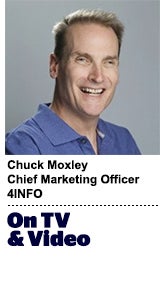
Today’s column is written by Chuck Moxley, chief marketing officer at 4INFO.
The good news: Today’s TV viewers are more reachable across more addressable channels than ever before, broadening how and where they consume media.
The bad news: Many agencies aren’t adapting their planning and buying processes to match the pace at which consumers are changing their media habits.
Based on my experience discussing the rapid TV and digital convergence taking place with agencies, many show a reluctance to adjust their strategies. But agencies will suffer if they don’t stay ahead of the fast-moving changes in consumer media consumption.
Media consumption in ‘The age of me TV’
Remember when your favorite TV show aired at 8 p.m. on Thursdays? By comparison, my 17-year-old daughter has no idea what day or time her favorite shows are on, nor does she need to. She watches whenever and wherever she wants via one of the half-dozen streaming devices and services in our statistically typical American home.
And she usually watches every episode of a single season or two before moving to a different program, since every show is available whenever she wants.

This is “the age of me TV.” Consumers control the day, time and screen.
Embrace TV-digital convergence or get burned?
With audiences diversifying their viewing habits, advertisers must find them wherever and whenever they are or lose them to competitors.
Remember how Netflix won and Blockbuster lost in the movie rental world? Blockbuster stuck with a tried-and-true business model; Netflix adapted to outmaneuver the firestorm of evolving consumer demand and burgeoning technology. It took risks to get ahead, and it survived. Blockbuster didn’t.
Is it digital or is it TV?
More than 14 million US households exclusively access TV via over-the-top (OTT) methods, streaming over myriad devices and are unreachable by broadcast TV or cable boxes. OTT’s targeting capabilities are more like digital media than traditional TV.
It’s the convergence of the digital and TV worlds that strikes dissonance with traditional agencies. At the surface:
Who should plan and buy the media? Agency planning and buying teams have a language and method for buying media that varies greatly between digital and TV. There’s confusion when a medium that looks like TV behaves like digital. Which team plans addressable or OTT? I’ve witnessed tension and occasional hands being thrown in the air over this.
How should the same audience be targeted across TV screens? When I talk to advertisers, they get excited about TV and digital synergism opportunities, including targeting ads just to those most likely to buy. Yet I see them using OTT and addressable television only as an extension of the linear TV campaign, which uses the adults 25-54 or similar demographic targeting. This is akin to my grandfather taking an incoming FaceTime by holding his smartphone to his ear, like a traditional phone call.
How do we align measurement across platforms? Most advertisers love digital’s ability to measure campaigns based on metrics that CEOs care about, such as whether the ads cause people to visit a store and buy. Yet I often hear agency teams mired over how to convert OTT impressions to their GRPs or TRPs. These traditional TV advertising measures merely reveal how many in the demographic target they had reached.
Not every agency struggles with these issues. Some see the value of advanced TV and embrace its commonalities with digital. But it seems most agencies swirl in a holding pattern, unable to embrace the digital and TV convergence. This is exactly how to get burned by the age-of-me-TV firestorm.
Which agencies will survive the convergence?
Companies frustrated with agencies because of a lack of transparency, costs or trust issues are switching or ditching. They’re switching to agencies that can help them better reach every target household’s decisionmaker and influencer on every screen and method, or they’re altogether ditching agencies to go in-house, developing their own media planning and buying capabilities.
Agencies also feel pressure from nimble consulting groups that thrive in the convergence. Likewise, big advertising platforms, happy to sell directly to advertisers and bypass agencies, increase the heat.
Agencies that adapt to the convergence and leverage their TV planning and buying expertise to reach consumers on every screen they use will survive and even thrive this age of me TV.
The rest will become Blockbusters in a Netflix world.
Follow 4INFO (@4INFO) and AdExchanger (@adexchanger) on Twitter.






