 Google’s betting the industry needs a hand making ads workable across devices.
On Monday, it unwrapped two mobile display formats and a handful of desktop tools that aim to help advertisers optimize ads across multiple screens. Google will release the tools piecemeal over the coming months across the Google Display Network, the AdMob Network and DoubleClick.
Shrinking desktop display ads created sub-par user experiences and many units couldn’t run on mobile devices, wrote Jonathan Alferness, Google’s director of product management for Mobile Display Ads, in a blog post about the announcements.
While many ad tech and companies tout mobile-first creation strategies, Google wants to account for both mobile and desktop environments.
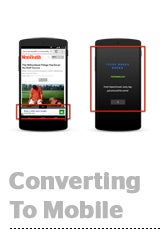
Its first format, Mobile Lightbox Engagement Ads, builds HTML5 dynamic display ads from existing brand assets. These spots resize automatically depending on screen size and advertisers will only pay for the ads when users engage.


Google’s second format is an extension of its YouTube TrueView ads (these are the pre-roll ads that are skippable after a few seconds as well as the thumbnail ads that show up as suggested videos based on YouTube search results) into the AdMob Network.

Google also is rolling out three tools to enable desktop-to-mobile ad conversion. The auto-resizing tool converts desktop display ads for smaller screens, the Flash-to-HTML5 conversion tool ensures mobile ad interactivity across mobile operating systems and Google’s ad template archive, DoubleClick Studio Layouts, will host 29 HTML5 and in-app formats.
While Google declined to speak, these developments could be an attempt to jumpstart brand investment in mobile. During Google’s Q1 in April, then-SVP and Chief Business Officer Nikesh Arora said mobile inventory pricing really needs to catch up with desktop pricing – that financially mobile, which offers better location and contextual awareness, should surpass desktop.
And in a recent Q&A with AdExchanger, Carat’s global chief digital officer, Anthony Rhind, also noted how little brands spend on mobile inventory relative to how much time consumers spend on their devices.
“Part of that is creating ad formats that are effective in mobile and I don’t think we’ve done a good job yet,” he said. “But I think video could be the inflection for that. Video is something that could work effectively in a handheld device format, much more so than a banner.”