

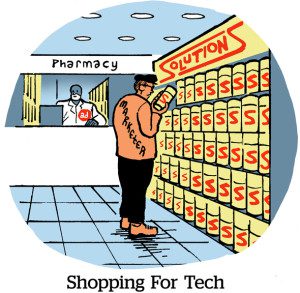
 When customers walk down a grocery aisle from Thanksgiving through the December holidays, they’re surrounded by Campbell’s products: soup cans and broth accompanied by in-store displays and sales tags.
When walking the grocery aisle means breezing a mobile feed of online grocery items and 10-foot-long shelves are squashed into a phone screen, how does a brand mimic that experience?
When a brand is speaking to a computer instead of directly to a person, “it requires us to build new capabilities as an organization,” said Michelle Morale, Campbell’s VP of digital commerce, omni shopper marketing and sales transformation. The brand is committed to winning its category, which means being first in line to test new shopper marketing tactics.
Campbell’s, which has been working directly with Instacart for a year, is piloting a free sample product.
The campaign placed a display ad offering a free broth or soup option to Instacart customers who Instacart knew purchased broth in the past, but whose cart didn’t contain a similar product and who previously purchased from a different brand.

The campaigns reached thousands of people, Morale said, though she did not share a specific number. The relatively small subset of soup-buyers can be retargeted and tracked over time within Instacart. Campbell Soup followed up with customers who claimed the freebie, sending an email offering recipe ideas and other products.
“This is where Instacart really partnered with us. They were able to then help us identify these shoppers and retarget them,” she said. The brand can deepen its understanding of how to convert customers become “’Swanson broth-believers,’” a term they use internally.
Brands are accustomed to working with retailers across both sales and marketing. But ecommerce has collapsed the distinctions between representing the brand in media (a.k.a. marketing) and selling products to retailers and making sure the inventory keeps moving (sales).
Morale’s career trajectory is one example. She came up through marketing at Pepperidge Farms and at Campbell Soup for eight years, until she was promoted into a leadership role in the sales organization this year.
The two disciplines have different functions, but in retail they’re becoming more closely aligned.
“The lines are starting to blur,” Morale said.








