 Deep-linking technology, which routes users to a specific page rather than a main landing page, is quickly gaining traction in the mobile app landscape.
But as this technology catches on – Facebook, Google, Twitter, Apple and a slew of startups are pushing the technology to publishers who are readily experimenting with it – it’s becoming increasingly necessary to develop standards around it.
Deep linking is a valuable feature because it provides immediate access to content. This is especially critical in mobile environments as this greatly impacts the ways people interact with content.
Dow Jones & Co., for example, works with the vendor AdTheorent to populate ads with breaking headlines that direct people to the specific section front on The Wall Street Journal’s app, provided it’s on the user’s handset.
The deep-linking feature is important for the app because it “provides a much more seamless experience for the consumer and ultimately helps combat user drop-off and drives engagement,” said Paul Plumeri, brand strategist at Dow Jones.
Deep linking content between separate apps has been challenging, however. To deep link content, publishers need to meta-tag their pages, essentially putting up a signal that guides users from a separate app.

Most vendors, including Google, Apple and Twitter, have proprietary procedures for adding meta tags to content. Facebook is a little different. Its AppLinks product is designed to let developers add a few open-sourced lines of code that expose deep links across different platforms.
Facebook is not the only company to introduce a deep-linking standard. The startup URX, for instance, this week unveiled its Open Deeplink Standard, which is designed to also let developers link to each other’s apps.
The difference is that Facebook is more likely to scale its deep-linking standard, admitted URX CEO John Milinovich. “Facebook did a good job in creating code that has the opportunity to be widely adopted by publishers and we’re excited by their efforts to get publishers to put more meta tags on (the publishers’) sites,” Milinovich said.
This is beneficial for URX, he added, since as more publishers make their apps deep-link friendly, it provides URX with a larger market for its implementation tools. One such tool is Omnilinks, which lets users open deep links from email, SMS, push notification or social media sites that “works with any way that people can expose their tags.”
There are also more opportunities to apply deep-linking technology to mobile devices and ads.
“It would be great to see deep linking bridge the digital and physical worlds,” Plumeri said. “Perhaps by even using some sort of NFC technology, walking by a beacon that unlocks a piece of content for someone, and then opening up our app and bringing them straight to the article of interest … that’s pretty rad.”
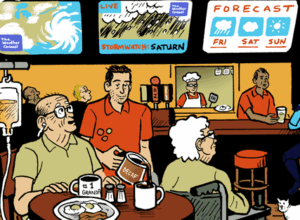
In addition, deep links could potentially direct users to different areas by layering other data such as the time of day, weather, previous clicks and location. Dynamically targeted deep linking in mobile has not been widely developed yet.
Facebook software engineer John Ketchpaw, for example, explained during an f8 breakout session that Facebook does not yet offer dynamic deep links and that developers must first collect data about the users they want to target with deep links.
As for whether app-to-app deep linking could hurt mobile Web vendors by cutting them out of the market, there will always be a need for a mobile Web, Milinovich argued.
“Because users don’t have every app on their phone, there’ll always be a place for the mobile Web,” he said. “Because it’s the one source that has access to all of the world’s information.”