

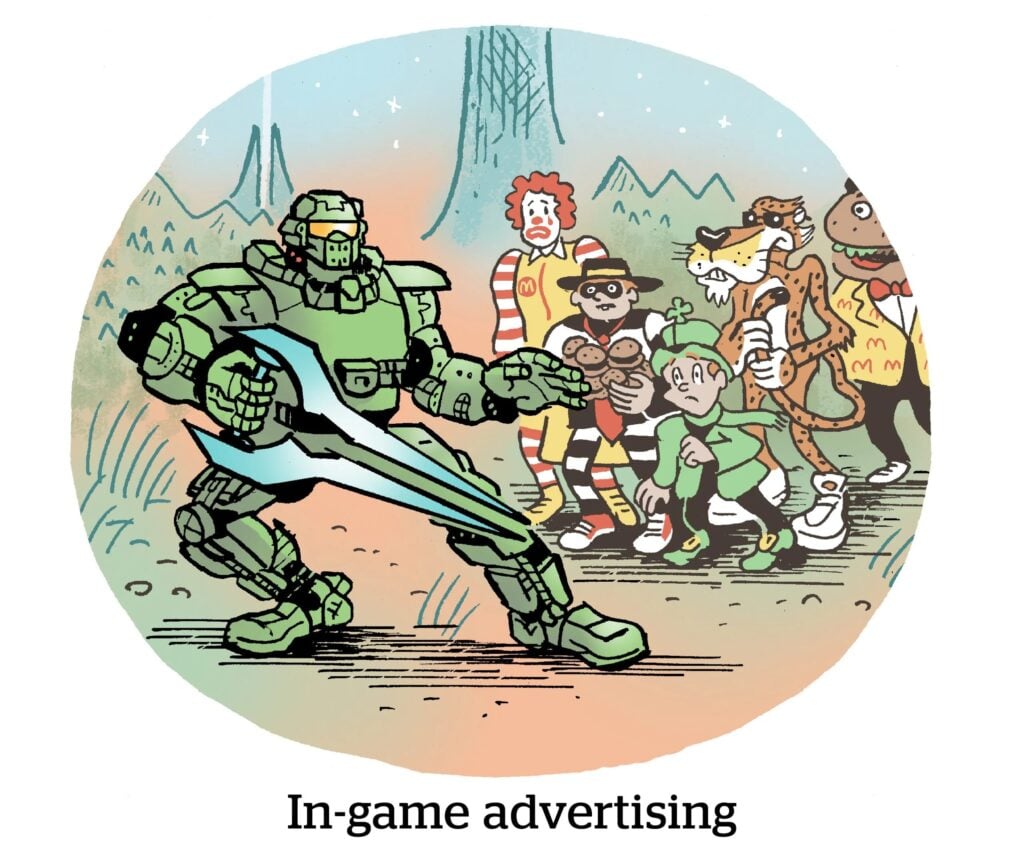
It is a rare occurrence for successful ad tech entrepreneurs to venture out of the B2B software landscape and into the consumer-facing world.
But the attempt is not unheard of.
The latest example came last month when André Swanston, co-founder and former CEO of Tru Optik – which sold to TransUnion in 2020 – raised $10 million to launch PHYND (pronounced “find”), a cloud-based gaming service that’s free to play and monetizes via ads.

Video games are ad tech’s next revolution, as Swanston put it to AdExchanger. Most streaming video subscription and audio subscription services have shifted their revenue models, because they can earn far more by layering in ads than from subscription and licensing payments alone, he said.
Video gaming is the only market where revenue is largely tied to the sales of consoles and ad-free subscription services.
As of now, according to Swanston, video games played on TV screens earn less than 10% of their revenue on average from ads. By comparison, video services streaming on the same devices earn 50% of their revenue from ads.
Ads in games?
But PHYND won’t be placing ads into the gameplay, for those who are wondering.
It’ll have a light touch, Swanston said.
To start, the ad inventory will be 15- or 30-second spots that run while a cloud-based game is loading. This is a logical placement, he said, since there is a natural pause as games load.
Also, attention and engagement scores will be through the roof, similar to pre-roll streaming video ads that run before a show or movie, he said.
But the difference between PHYND and pre-roll is that people often tune out the later or click play and then leave the room for a minute. Nobody is dipping out for 30 seconds during a 30-second pre-roll ad that plays before they drop into a live, multiplayer game. Those players are sitting there, controller in hand, waiting for the game to start.
Not that the temptation isn’t there to expand advertising into the game itself.
“What other people have unsuccessfully done in the past is try to interrupt the game and force ads, or have time limits to make sure people see more ads,” Swanston said.
Avoiding those types of formats will be critical for attracting game players to the platform, he added.
The pitch
Getting players on the service is the primary goal.
How many times have you heard “If you build it, they will come” and rolled your eyes?
The PHYND proposition makes sense for ad buyers, ad tech partners and game developers. The hard part is winning over new players and changing their ingrained behaviors.
Swanston is still assembling the pieces that PHYND will need to get up and running in a beta form sometime later this year. It’s a difficult, multisided development project.
For example, PHYND must package a variety of games, but the best-known titles will remain exclusive to their own services or other console brands with huge adoption.
Think Microsoft’s Xbox cloud gaming subscription, which has Halo, Fallout and numerous other hit game franchises that drive subscriptions. Halo may be available on Xbox and PlayStation, but getting it on PHYND will be a different matter.
“But we’ve also seen a tremendous opportunity for licensing of older or unmonetized content,” Swanston said.
Although Netflix is financing Hollywood-style productions, he said, there are FAST channels and ad-supported options that are unlocking huge opportunities for archived content. The same could be true of gaming, especially if there are players who are priced out by the cost of a subscription.
Coming from a programmatic background may also give Swanston a leg up on the consumer marketing side.
“That’s our secret sauce,” he said of PHYND’s plan to make the leap from an unfamiliar name, which sounds like it could be anything from an ad agency to a skincare brand, to a popular gaming portal.
“You’ll have to see how that unfolds over the next few months,” Swanston said. “But I think it’s going to be pretty cool.”








