

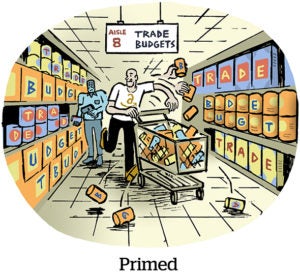
 The retail media craze kicked into hyperdrive in the past year.
Because of the pandemic, the number of people ordering groceries online for the first time skyrocketed, but the trend was already underway.
The rush of retailers into the programmatic platform business meant they tended to follow the playbook laid out by the by the big walled gardens. What works for Amazon and Instagram and Google must work for us, right?
Well, not so fast. As retailer media networks mature, they’re testing ways to open up, a departure from the walled garden approach, said Jennifer Pelino, EVP of global media for IRI, the retail advertising and analytics company that collect loyalty program sales data from retailers.
For example, Walmart Connect, the next-furthest along retail ad platform after Amazon, uses The Trade Desk as its tech, a partnership that could prove a milestone if other retailers follow suit and allow outside platforms to bid on their media using third-party IDs, Pelino said.
Attribution may also require an open approach. Brands may not accept retailer networks grading their homework, even as they begrudgingly do tolerate self-attribution from the likes of Google, Amazon and Meta. To prevent self-attribution from taking hold in retail media, they are taking stronger stances with retailers to influence them toward open measurement. Brands are collecting more data of their own now, and if retailers don’t let them use that hard-earned data on their networks, they’ll find someone else who will.
AdExchanger caught up with Pelino on the state of retail media in 2022.

AdExchanger: What do retailers need to do to break out of shopper marketing deals and get more general digital and programmatic budgets?
JENNIFER PELINO: Retailer media programs need to evolve. They need to figure out a way for brands to tap into retailer data to measure campaigns in a holistic, independent way. They can’t wall themselves off.
Some are in their infancy, and, to your point, they’re still mostly stuck in old ways of working with clients, where brands would provide a preset retail media budget or reinvest a certain percent of sales.
But it’s not just retailers. Brands drive that change too if they think about their food funnel more clearly, right? Marketers are thinking more about how they drive awareness and consideration.
The walled garden approach worked for social platforms, though, and does seem like the model for most retail ad platforms.
Yes, I know.
Retailers started out with that [approach] because the big platforms make it seem like the only approach. But if they continue to go down that path, brands will push harder not to replicate that model.
Brands are going to become more demanding within the retailer media programs. Brands want to choose their ad formats and placements. They want to choose their audience targeting, and then normalize that against national branded campaign.
There are examples already. Walmart Connect started lining up with The Trade Desk, and that has a much wider breadth of opportunity to activate and measure campaigns alongside other media and platforms.
Why is that important to the brand?
It’s important not just for campaign frequency controls, but also for brands understanding their customers over time.
If they have 200,000 to 500,000 customer records – accounts in their CRM essentially – they want to be able to append data to those records and understand customers over time. What are the demographics? How often do they purchase your product and what else do they buy? What types of other media do they engage with before buying?
Those are questions you could start to answer with an open platform approach.
What can brands do to bring more data to their retail media campaigns?
Factors like the cost of production and transportation and the costs of inflation have shrunk CPG margins. And with that, CPGs have to look where they can cut spending to help meet top line and bottom line numbers.
So advertising starts to come into play within these supply chain issues. Questions about driving awareness up-funnel and driving consumers to the shelf with a bottom-funnel retail media campaign are important now.
How do we incorporate supply-chain data that tells us where we don’t have the supply? We can save this margin on advertising, but does it potentially lose the customer to someone else?
These are large considerations we’re seeing within CPGs across the board. And this is where I think there’s a balance between the retailer media programs, national branded campaign programs and the supply-chain data.
Retail media programs are very much tied to the supply chain, because they target where specific inventory exists, and thus can be a lever more directly connected to the data and margin performance.
Will retailers sell their data to other ad platforms for attribution?
I do believe it’s in consideration. Kroger and Target’s Roundel have formed measurement deals with a CTV services, for instance. [Kroger has a partnership with Roku to attribute sales, as do Target and Disney.]
Not every retailer is going to have the same level of quality media programs, technology and resources to invest in an ad platform. But retailers that won’t become full-blown media network-type platforms still have valuable data. [Those] retailers can push the data to a place where advertisers already buy media. What slows that option down is privacy and regulation concerns, but the technology and processes for that already exist.
This interview has been edited and condensed.







