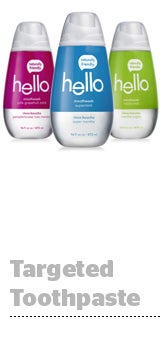
 As a CPG newbie that launched last March, Hello Products competes with household brands like Crest and Colgate.
In order to break into a $30 billion oral care market, the company first partnered with BMW Group’s agency DesignworksUSA to craft a visual identity around green living and innovative design.
But as Hello ramps up, it deployed video demand-side platform TubeMogul in August to begin programmatic video campaigns; the company liked the fact that TubeMogul had a unified dashboard where it could monitor completion rates and click throughs cross- platform.
“Our audience is anyone with a mouth, but we can send a message to this person who’s this age and fits this psychographic profile or set of interests,” said Craig Dubitsky, founder and CEO of Hello Products. He also cofounded natural lip balm brand EOS. The ability to identify its audience without involving multiple platforms or agency partners is “game changing,” Dubitsky said.
Instead of hiring an agency of record, Hello appointed an in-house creative director and head of marketing, Christi Botello, a former P&G brand manager and marketing director for Revlon.

Programmatic video, said Botello, lets the company tweak its ad targeting on a daily basis: “[It puts] a lot more control in our hands that we wouldn’t have through a traditional media buy.”
In its first campaign using TubeMogul, Hello worked toward 15 million impressions in the initial testing phase and the platform “significantly over-delivered what we expected to have.”
Deploying the platform in a nimble, startup environment helped Hello hit its targets faster, Botello said, since there was no added layer of approvals between its organization and an agency. Hello expects to increase its investment in the platform and noted that programmatic will be part of the activation process for a big product launch in Q1.
The extent to which Hello partners externally for its digital campaigns includes crowdsourced video assets from rich social media platform Tongal, as well as an account manager and planner the company works with through TubeMogul.
“I’m managing the planning and partnership with TubeMogul, and there’s weekly check in’s on reporting where we identify things we can optimize,” Botello said adding that as the company grows, it could possibly wean itself from TubeMogul’s managed services and go fully self-serve.
While Hello originally had print placements in magazines like Fast Company and live event sponsorships at the Sundance Film Festival, the company dabbled this summer in digital media across social, display and video.
Botello still appreciates traditional advertising methods like TV. She began in the industry in 2000, she said, during a TV-heavy time. And while TV still works to kick off a campaign, it doesn’t always provide the best value for one’s investment.
“That’s the biggest thing with digital video in general – so much of the waste you’d experience in broad awareness tactics are remedied through this type of media,” she added.
Brett Wilson, TubeMogul’s CEO, said Hello’s attention to the media selection process is becoming more common among brands.
“That doesn’t mean they take [the platform] in house, although some…do,” he said. “[Others] have a great relationship with their agency or use their agency’s existing trading desk. In most models, it’s still agency led, but brands are calling the shots more than we’ve seen previously.”