

Most people spent the majority of 2020 at home in their underwear.
But the founders of Smartify Media decided to start a company focused on in-person shopping.
Smartify launched in 2020 as a digital out-of-home platform to allow small businesses in Boston to share real-time updates with customers during the pandemic.
Now, the company is trying to create a retail media network with small businesses nationwide.
Smartify Media launched its Small Business Revenue+ program over the summer together with Samsung C&T, Samsung’s parent company, to support local mom-and-pop shops, such as bodegas, cafes and laundromats.

Participating retailers get free Samsung screens that display a mix of programmatically served ads, including for products or services that can be found in the store.
Smartify is working with 100 advertisers across 100 retailers in 11 cities, including Boston, New York City, Miami, Atlanta and Austin.
Open for business
The screens help generate foot traffic.
Since a monitor was installed in its windowfront, walk-ins increased for participating retailer Columbus Hardware, said Debbie Kavourias, who runs the local Manhattan shop.
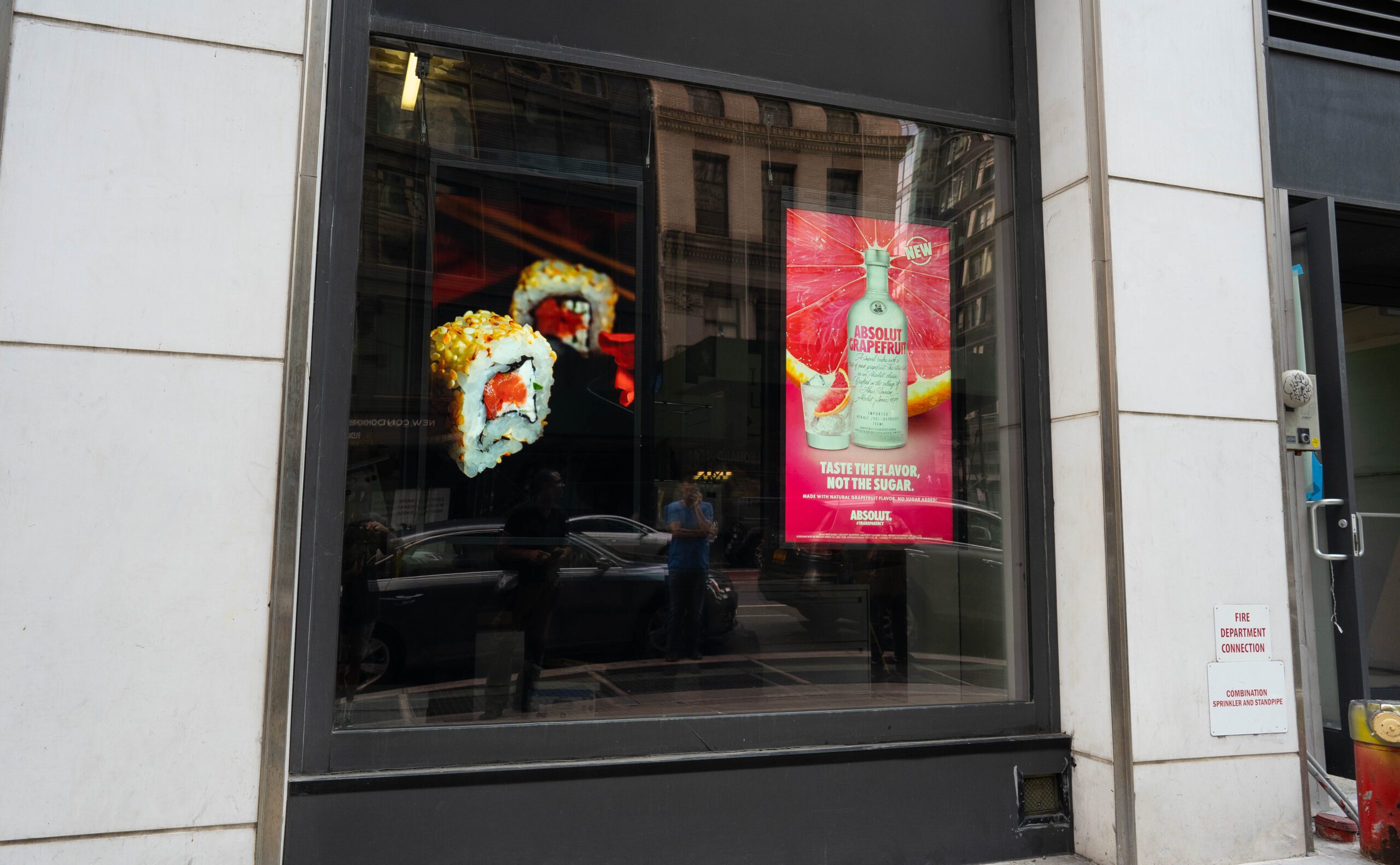
Programmatic ads are served via integrations with Samsung Ads and Vistar Media, and the host store gets a revenue share depending on sales growth while campaigns are in flight.
Typically, a participating retailer adds between $300 and $500 a month to their bottom line through the program.
Retailers can also include store messaging and house ads as part of the rotation, they just have to share the content with Smartify.
The goal is for these ads to continue to perform better over time, because Smartify Media uses impressions and sales data from past campaigns to inform future ones.
The underlying idea is not unlike Amazon’s Store Analytics, which the tech giant also rolled out earlier this summer to track DOOH campaigns and subsequent sales in stores that use Amazon Go checkout technology.
The difference is that Smartify Media’s direct client relationships include both small retailers as well as marketers, which gives the latter access to a localized audience.
“A lot of small businesses that sign up are surprised we’re more than just some ‘TV guys’ that install a screen in a storefront and leave,” said Oleg Vyadro, Smartify Media’s founder and president. “We also give them the tools to better communicate with the network that’s growing in their city.”
Gather, buyers
Local stores are often willing to pay more for impressions that target audiences within close proximity to their location.
In the case of Smartify’s retail media network, ads are served right at the point of sale.
Smartify Media analyzes location-based app usage to determine foot traffic, which it ties to impressions, sales, product lift and subsequent visits, as well as engagement online. It uses this data for measurement and to inform an advertiser’s future programmatic campaigns in participating stores.
It then uses that data to create local audience segments, which buyers can target in real time programmatically, said the company’s CEO, Joe Kunigonis.
“Each one of these locations, regardless of vertical, has a very defined [local] audience,” Kunigonis said. “Those audiences are what we’re trying to quantify for programmatic buyers.”
Smartify expects that buy-side demand will grow as it expands to new locations. Retailers are an already eager audience because there’s no cost or management required on their part, Kunigonis said, who noted that inbound leads and word of mouth have led to a lot of the company’s recent partnerships with new locations.
Eventually, Smartify Media plans to expand its audiences into cross-channel inventory, Kunigonis said.
Buyers will be able to add Smartify Media screens to their existing programmatic buys to reach audiences across channels, including CTV – for those still home in their underwear.









