
Here’s today’s AdExchanger.com news round-up… Want it by email? Sign up here.
Programmatic Grave Robbers
Caity Weaver, a New York Times Magazine writer, shined a light on a gross and morbid open web practice – death-related news as an online advertising funnel.
Weaver paid $900 to publish an obituary for her mother in her local paper. Which, because it was funny and well-written, was picked up by local news and aggregator sites, including the New York Post. The thing is, now these sites profit directly from that obituary, including original photographs taken by her father.
Some sites even include donation links that seem to be part of the family’s wishes – with language like “plant trees to honor her memory” – but actually just earn the site a commission (if they aren’t straight-up fraudulent).
Aggregator sites and programmatic death mills, as they could be called, have gained traction by scraping funeral home sites, the web and social media for news of deaths, just to create landing pages featuring names, copy-and-pasted obituaries … and a barrage of ad units.
These sites slip by brand safety tags (obituary language is mellow, not graphic) and invalid traffic detection because they get legit organic search traffic; often the first thing people do when they hear tragic news is Google a name.

Traversing The Amazon
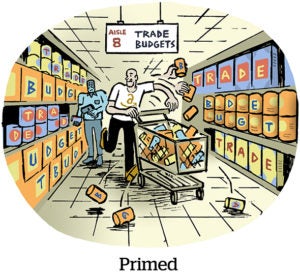
Amazon wants to apply its ecommerce data chops to in-person shopping.
Imagine if a marketer knew a shopper went so far as to pick up their product … before putting it back on the shelf. Or, if they bought a product online after looking at it in the store. With a new product dubbed Store Analytics, Amazon is sharing in-store performance data about brands’ products in Amazon Fresh stores and other stores with Amazon Go self-checkout tech.
Amazon uses a blend of AI and cameras and sensors throughout the store to determine how often items are taken off the shelf and how many have been purchased, in addition to helping customers skip the checkout line.
With better visibility into how products perform in stores (where the vast majority of CPG and beverage revenue is still made), brands can attribute and optimize channels like DOOH, CTV and web programmatic based on a metric that matters to that business. Amazon can also tell brands whether and how often their product was picked up and then purchased later on Amazon.com, TechCrunch reports.
But a whole lot of data is involved in closing that attribution loop, which Amazon claims is fully anonymized.
“The data brands receive about shoppers will never include [their] photos and videos, individual data or session details,” the blog post reads.
Clever As A Fox
Mozilla’s Firefox browser released a user control to strip URL tracking parameters.
Tracking parameters are how affiliate links, ads, newsletters, online audience platforms, etc., signify where a user came from and why.
Jump from WSJ.com to the Technology section, and the URL ends with the tag: “?mod=nav_top_section” (URL tracking parameter text follows a question mark, usually). In this case, the parameter signifies internally that the reader navigated directly to the section via the homepage. Facebook loves tracking parameters because it gets credit for sending users to news articles or shopping sites.
Cory Underwood, an analytics engineer at the data services consultancy Search Discovery, cites Facebook, Marketo, HubSpot, Vero, Drip and Olytics (each a social platform or analytics tech provider) as among the companies that, at a minimum, will be “adversely impacted” on attribution.
CafeMedia Chief Strategy Officer Paul Bannister and others speculate whether Firefox will strip Google parameters, since Mozilla’s main revenue is a Google search licensing deal. (Google might respond by mailing checks to “Mozilla.org” and expecting them to figure it out.)
DuckDuckGo was dinged recently because it strips tracking parameters except for Microsoft and Linkedin … and has a search deal with Microsoft search engine Bing.
But Wait, There’s More!
The iPhone at 15: an inside look at how the Apple device transformed a generation. [WSJ]
Facebook Groups are being revamped to look like Discord. [The Verge]
More than half of advertisers will increase their CTV ad spend over the next 12 months. [B+C]
Snapchat is experimenting with a subscription service, Snapchat+. [Axios]
Surviving the mobile marketing winter: the flight to quality. [Mobile Dev Memo]
Royal Bank of Canada and Enthusiast Gaming work on campaign targeting marketing industry career opportunities. [MediaPost]
You’re Hired!
Google Commerce leader Bill Ready joins Pinterest as CEO. [tweet]
TV monetization platform Viamedia promotes two executives to SVP. [blog]
Audit agency BPA Worldwide names a new CEO. [MediaPost]
Firework brings on former TikTok exec Meg Siegel as VP of brand marketing. [release]







