
 The Hispanic community is the fastest growing cohort of consumers in the United States and are prominent purchasers of CPGs.
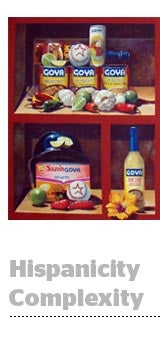
Yet many companies view this community as a single demographic when it can be segmented into multiple smaller groups, each with distinct characteristics. But brands like the family-run Goya Foods knew this wasn’t good enough.
“We can actually segment [the Hispanic market] and give them a profile of the product mix that would be best suited for a particular store or particular geographic area,” said company SVP Joseph Perez, adding that not all Hispanics have the same lifestyle, and thus segmentation is critical for delivering relevant advertisements, coupons and products.
The company began using analytics tools from Geoscape to break down the Hispanic market with more granularity than it had in the past.
Goya had used US Census data to predict buying behavior, which quickly became outdated. The company also collected data through conducting surveys in various neighborhoods, which Perez described as “very exhausting.”

“Previously [data collection] was primarily grassroots,” he explained. “[It involved] visiting markets, conversations with sales brokers, store owners and even family contacts where people were moving to. Geoscape allowed us to not only validate the basics we knew and discovered but gave us more precise details: population numbers, zip code, economic indicators, etc.”
Among the findings, according to Geoscape CEO César Melgoza: Mexican Americans are more apt to purchase pinto beans while Cuban Americans have an affinity for black beans. Puerto Ricans and Dominican Americans often seek pink beans. Given the range of preferences among Goya’s customers, delivering culturally customized products to stores is crucial for optimizing sales results.
The reason the Hispanic community is so rich, said Melgoza, is that Hispanics often don’t want to abandon their original cultures but instead want to acquire a new culture that includes elements of both American and Hispanic culture. “The idea is: I can be both, and it’s actually a lot of fun to be both. It makes me more valuable as a person, it increases my enjoyment, it increases my understanding, and it’s a value that’s more strongly held today than it’s ever been,” he said. “We transform that concept into mathematics and data.”
To segment the customer-base, Geoscape applies acculturation codes to consumers to determine which products they are most likely to buy. These codes measure “Hispanicity,” or how Hispanic a person is.
The system is intricate, using data based on a consumer’s country of origin, birthplace, primary language, occupation, length of stay in the US, media behavior etc. to determine the consumer’s acculturation code.
For example, a consumer may earn a code of Cuban HA5 (Hispanic Acculturation 5), meaning that he or she arrived in the US recently, accesses exclusively Spanish media, is dependent on Spanish, and is potentially unfamiliar with the fundamentals of the US government or nuances of American culture.
Another example: a Puerto Rican HA2 consumer is likely a second- or third-generation American, speaks more English than Spanish, but embraces Hispanic culture, food, music, holidays, and sports despite being born in the States. The codes range from levels HA1 to HA5, with HA1 having the lowest degree of “Hispanicity,” HA5 having the highest, and HA3 signifying biculturalism.
The method is not limited to the Hispanic segment, Melgoza explained. Geoscape has been able to measure acculturation levels in other communities as well such as Asian American and African American segments.
While Goya uses Geoscape solely to analyze data about Hispanic consumers, Perez said, and the service has led them to encounter new groups of Hispanic customers in areas that they were not previously aware of. The data is also beneficial when exploring areas for expansion, and Goya is currently looking into increasing sales in Georgia, Oklahoma, and North Carolina, Perez said.
“[We want to understand] the nuances for each market,” he said. “Tailoring our product mix based on the Hispanic demographics of an area.”









