 “Data-Driven Thinking” is written by members of the media community and contains fresh ideas on the digital revolution in media.
Today’s column is written by Josef Mandelbaum, CEO at Perion Network.
In 1930, Kroger Grocery & Bakery Co. store manager Michael Cullen came up with the idea for the model that would become the modern supermarket.
Instead of making daily trips to the grocer, baker, butcher and milkman, Cullen envisioned a “one-stop shop” for meat, milk, cheese, produce and bread that was almost entirely a “self-service” operation.
Stocking large quantities of food items would reduce prices, attract more shoppers and produce a stronger bottom line, he argued. When Kroger’s ignored him, Cullen opened the first King Kullen Grocery Co. in Queens, N.Y., followed by an additional eight stores that generated more than $6 million a year in revenue (nearly $100 million in 2014 dollars).
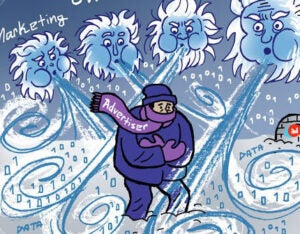
Similar to the pre-Kullen’s shopping experience, the mobile app advertising industry is a broken, fragmented and complex ecosystem that makes it difficult for even the largest industry players to successfully execute a media-buying campaign.

I see three primary systems contributing to the fragmentation and adding to the complexity in the industry: connectivity to traffic sources, ineffective media-buying measurement and a lack of sophisticated targeting and retargeting mobile tools. The mobile app industry must solve these challenges and reimagine the ways media buyers and app developers can best understand which traffic sources perform best for their individual companies, as well as reveal valuable insights into why those sources are effective.
Connectivity To Traffic Sources
Each mobile advertising traffic source has its own features, benefits and procedures, leaving media buyers unsure of which traffic sources to work with. Evaluating the targeting abilities of each source and determining those that are the most effective for each campaign can be impractical. Further complicating the landscape, media buyers must also determine which of Facebook’s marketing partners and Twitter’s preferred marketing developers will deliver the highest value for their respective businesses.
There are also administrative processes and billing operations that can be time- and resource-consuming due to the large number of contracts required. User-acquisition managers from big gaming companies are regularly tasked with the hassle of copy-pasting and formatting Excel sheets that are involved in trying to manage multiple traffic sources, significantly inhibiting productivity.
Ineffective Media-Buying Measurement
Getting an accurate measurement of media-buying activity is a difficult process. Much like food shopping before King Kullen’s, data about cost, campaign performance, usage and revenue can only be found on different, disparate systems. Additionally, aggregated data is not available in real time, making it extremely challenging to generate timely, actionable insights that can be used to deliver advertising value and campaign optimization. When working with numerous traffic sources, it is complicated to analyze and match campaign data from in-app and in-game events, such as installs, opens or first-time deposits, in order to determine which programs are delivering long-term value and ROI.
Lack Of Sophisticated Retargeting Tools
Re-engaging former users is critical to mobile marketing success. However, achieving good results through real-time bidding (RTB), as well as easily scaling up RTB buying, is difficult due to the algorithmic processes, technology and learning curve required to carry out high-risk buying in scale.
Additionally, updating specific user segments for retargeting can be especially complicated due to the lack of cookies in mobile apps, as well as the lack of a cross-platform retargeting system. Finally, with mobile users spending significantly more time on apps than in mobile browsers, retargeting only within their mobile browsers means that mobile advertising reach is inherently constrained.
In 1929, the idea that you could buy lettuce, milk and bread under the same roof was not only unheard of, but was laughed at. Much like Cullen changed the way people shop for food and household items, the mobile app advertising market is going to have to fundamentally change the way media buyers and app developers access, understand and act on both the inherent opportunities, as well as insights, that mobile media buying can provide.
As the chief food shopper in my family, I appreciate Michael Cullen’s forward thinking, and I look forward to the day when buying mobile advertising space is as easy as shopping for dinner.
Follow Perion (@perionnetwork) and AdExchanger (@adexchanger) on Twitter.