“Data-Driven Thinking” is written by members of the media community and contains fresh ideas on the digital revolution in media.
Today’s column is written by Bruno Gralpois, co-founder and principal at Agency Mania Solutions.
We are all too familiar with the chain reaction produced when one event sets off a series of inevitable events.
Today’s economic crisis and COVID-19 pandemic has also set in motion several events in our industry that will profoundly change the landscape for years to come.
The COVID-19 crisis has created four major pressure points for budgets, talent, productivity and relationships.
Domino effect No. 1: budget pressure
The uncertain economic outlook requires advertisers to take a conservative approach to financial management. They must walk a fine line between cutting budgets, which may hamper their growth, and reducing ordinary spending, which might prove to be risky.

Naturally, we should expect every expense category to be revisited and evaluated, then if justified, reprioritized. This financial pressure may lead advertisers to apply more pressure on agency fees by renegotiating contracts and commitments. We should expect advertisers to be increasingly less flexible on payment terms, putting many small agencies at risk from a cash-flow perspective. Advertisers are also likely to increasingly favor project-based relationships over large committed retainers for part of the work.
Advertisers are also likely to bid for large projects and look for efficiency measures with agencies to eliminate waste as they squeeze every dollar from their marketing budgets.
Domino effect No. 2: talent pressure
The slowing down and in some instances, complete standstill of the economy has resulted in sizable layoffs in the advertising industry as it copes with the financial implications of the pandemic. Agencies are looking for ways to limit the lasting impact these decisions may have on their resources and, frankly, their viability.
If they haven’t already, agencies are likely to favor the use of freelance resources to reduce the financial burden. And yet, as talent in the advertising industry seek new opportunities, this will create significant gaps in some areas. Top talent will be harder to secure. The pressure will extend to the way we manage talent, with fewer face-to-face interactions, in-person meetings and less business travel, even after economies reopen.
The work-from-home phenomenon has whetted appetites for smaller travel budgets and more remote meetings. One of the long-term psychological effects on talent will be even less company loyalty and a willingness to move jobs more frequently.
Domino effect No. 3: productivity pressure
Productivity has become a necessity of this new economic reality. The traditional ways of working are obsolete, and we are now learning new methods to accomplish more. We should expect to see increasingly more tasks being automated. Processes are also being streamlined to take less time and effort. Decision-making is simplified to allow organizations to be more agile and opportunistic.
And yet, to drive significant productivity gains, complete goal alignment and a common set of KPIs are essential to moving faster and in concert with internal and external teams, including agency partners. The expectations have never been greater on both ends of the relationship spectrum. Being productive means being accountable to each other.
Domino effect No. 4: relationship pressure
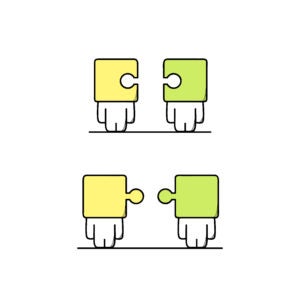
Relationships between advertisers and their agencies will not be exempted from this cascading effect. The pressure will manifest itself with a stronger desire for mutual accountability. (You’ve got my back and I’ve got yours.) Process rigor and quality control will become a central part of the relationship, as mistakes or missteps are simply too costly.
Some advertisers may leverage this opportunity to reevaluate their needs, conduct account reviews and change agencies. We may see some client and agency relationships shrink in scale and longevity as a result. But the process to do this will be significantly simplified and accelerated. Selecting a new agency will likely happen in a matter of weeks, not months.
Although I refer to a domino effect metaphorically, the current situation feels more like a snowball effect where trends that have played out slowly eventually grow and speed up disastrously.
Who knows how long this snow-covered slope will be? And what is the grade of the hill? What we do know is that under pressure the worst, but also the best, of people and relationships will emerge.
Follow Bruno Gralpois (@gralpois), Agency Mania Solutions (@agencymania) and AdExchanger (@adexchanger) on Twitter.