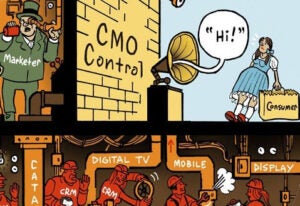

Brands have spent years and serious money building a direct understanding of their customers within analytics platforms, CDPs, loyalty programs, consent frameworks and CRM systems. And yet, when it comes time to make a media buy, they still hand the process over to algorithms shaped by someone else’s data.
In 2011, AdExchanger asked me to give my perspective on programmatic and trading desks. The agenda then was clear: Build the stack, develop the data market and educate clients on the true potential of their first-party data. Fourteen years later, the stack has been built. The data market has been developed. But the first-party intelligence piece got left behind.
Ask most brands how they’re using first-party data in media, and the answer is some version of the same thing: retargeting and suppression. Retargeting treats first-party data as a list of people a brand already knows. Suppression helps brands avoid talking to the wrong people. Both have their place, but neither answers the more interesting questions: What do a brand’s best customers have in common? And where can the brand find more of them?
Retargeting and suppression should be treated as the floor, not the ceiling, when it comes to first-party data. The deeper value of available intelligence is still sitting unlocked.

First-party data is the media intelligence advertisers already own
Most DSP models learn from ad-exposed conversions: the users who saw ads and then converted. That sounds reasonable until one considers that those users typically represent less than 5% of total conversions. The other 95% are people who converted via organic search, direct, email or any channel that didn’t involve a served impression. Models are optimizing around a small, self-selected slice of a brand’s actual customer base.
First-party data changes that picture. When an advertiser trains a model on its full organic converter base, not just the 5% who were ad-exposed, it can better identify the patterns that distinguish a casual browser from someone close to buying. It can then build an audience model that reflects actual customers.
A recent prospecting campaign run through the Adobe Advertising platform used a precision audience built from organic converter patterns. This audience represented about 72 million users (roughly half the size of a broad segment-based audience of 148 million). The advertiser found 24% more converters at a 2.6x higher conversion rate. Just 13.7% of users drove 57.7% of conversions, while the bottom 51% delivered only 8.4%. The conversion rate gap between the highest- and lowest-propensity users was 26x.
If an advertiser flat-bids across an entire audience, it can waste more than half of its budget on users who were never likely to convert. A comprehensive approach to first-party data enables brands to focus more of their spend on high-propensity users. Adjusting spend toward high-propensity users can drive more customers and save more than any amount of audience exclusion or suppression.
This matters more as external signals get noisier and more expensive. Third-party data should fill in the blanks, not do the job that a brand’s data should be doing. Competitors can buy the same inventory, tools and most external data sets. They can’t buy another brand’s customer intelligence.
The brand that builds its models on its own data gets progressively better CPAs and lower data costs over time. The brand that doesn’t is running the same race as everyone else.
“Data-Driven Thinking” is written by members of the media community and contains fresh ideas on the digital revolution in media.
Follow Adobe Advertising and AdExchanger on LinkedIn.