“Data-Driven Thinking” is written by members of the media community and contains fresh ideas on the digital revolution in media.
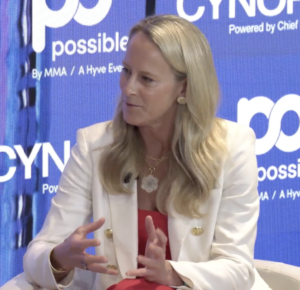
Today’s column is written by Lizzy Foo Kune, VP and analyst at Gartner, Inc.
Foo Kune will present additional approaches to customer data collection during AdExchanger’s Industry Preview event on February 7 in New York City. Click here to register.
Marketing leaders are under constant pressure to improve their organizations’ ability to collect, manage and deploy first-party customer data amid increasing privacy restrictions and declining third-party cookies.
When considering how to collect data with the intent of analyzing and orchestrating customer experience, two approaches come to the forefront: the 360-degree view of the customer and the digital twin of the customer (DToC).
Most marketers are familiar with the idea of a 360-degree view of the customer, although the value created from pursuing it isn’t always worth it, and it’s beyond the reach of most organizations.
But DToC is a more flexible approach to anticipating customer behavior. And a probabilistic and iterative model like DToC may be more useful during uncertain times, when customer behavior becomes harder to predict based on historical data.

Why only 14% of marketers achieve a 360-degree view
A 360-degree view of the customer is the output of a consolidated, integrated, exhaustive set of data relevant to a company’s relationship with its customers or prospects. Such data includes customer profiles, transactions, preferences and relationships.
Developing a 360-degree view requires multiple tools and partners to collect a variety of data types, including behavioral and attribute data. Because of the added complexity and expense, only 14% of organizations have actually achieved a 360-degree view, according to our research.
Achieving customer data integration doesn’t actually result in value creation. Forty-one percent of respondents who’ve achieved full customer data integration indicated they were still unable to prove the value of marketing, according to Gartner’s 2022 Marketing Data & Analytics Survey.
Besides, extensive data collection in pursuit of a 360-degree view risks violating privacy regulations, cements dependencies on soon-to-be-obsolete tracking methods and obliterates customer trust.
So, what should organizations do instead?
Meet the digital twin of a customer, the marketer’s new best friend
CMOs aspire to orchestrate contextually relevant experiences across the full customer journey. To do this, many CMOs are prioritizing first-party data capture and seeking opportunities for personalized engagement throughout the end-to-end customer journey.
This is where the digital twin of a customer comes in.
A DToC is a dynamic, virtual representation of a customer that simulates their behavior and learns to emulate and anticipate it. Customers can be individuals, personas, groups of people or machines. The goal is to provide customers with better experiences, which result in increased revenue and lasting customer relationships.
To understand what a DToC might look like in action, consider a retail organization. Entire stores can be replicated via digital twins, and virtual customers walking on the shop floor can be analyzed based on their behavior and the interactions they have on the floor. The retailer can generate insights to better understand their customers, create a shopper journey map and design an improved interactive shop floor.
Taking a flexible approach to anticipating a customer’s state of mind is especially important in periods of upheaval, such as emerging from pandemic restrictions or periods of high inflation.
When faced with uncertainty, customers’ habits change significantly, rendering legacy data unreliable. DToCs can simulate how specific cohorts will respond before a customer journey is defined, saving time and money spent on testing underperforming journey interventions.
DToC is still a nascent technology. Still, marketers should incorporate the concept of digital twins when they design their long-term plans around customer data collection and use. Organizations should apply DToC across ad targeting, customer journey orchestration and experience optimization.
Advertisers can incorporate DToC in their customer data collection approaches by:
- Working across customer functions (e.g., sales, customer service and support) to identify and create ideal buyer persona profiles. They can build their profiles by using historical data of individual personas and enterprise customers derived from the current customer base.
- Staying abreast of technology development. Note how analytical models evolve to ingest data and produce events, which increases situational awareness of how a customer might operate. Monitor how software components evolve to support actions based on the output of these analytical models.
- Exploring existing use cases for digital twins of an asset or supply chain. Partner with internal subject matter experts and adapt the logic and process for customer group representations.
- Mitigating privacy and compliance risks by using methods such as synthetic data to protect the potentially identifiable data required to create and manage DToC models. Explore how to allow individuals to access, correct, amend and otherwise control the elements known about them and how they’re used.
Follow Gartner (@Gartner_inc) and AdExchanger (@AdExchanger) on Twitter.
For more articles featuring Lizzy Foo Kune, click here.