The Interest From Pinterest
The Google Search DOJ trial held a higher profile. Everyone knows search and Chrome.
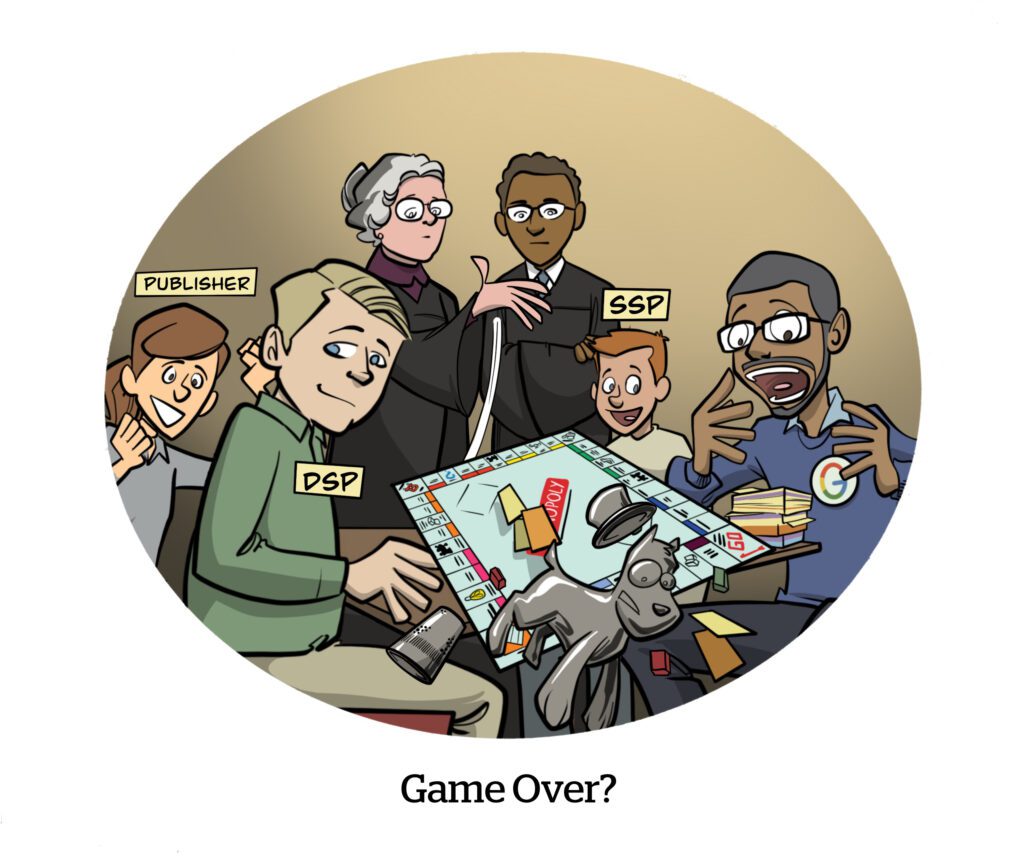
“However, there’s another equally consequential remedies decision before the court,” writes Pinterest CEO Bill Ready at The Information about Google’s publisher ad tech antitrust conviction.

Ready, a former president of Google’s Payment and Commerce group, is against any Google ad tech divestiture.
Also, at Pinterest, Ready built more bridges to Google. He signed strategic deals to increase Google’s targeting into Pinterest supply. Oh, and Google’s search rankings update last year suddenly defaulted more recipe search traffic to Pinterest.
Ready argues that a Google divestiture is risky, since the repercussions cannot be forecasted. Nor can the judge know how Google’s supply-side tech might be used by a potential acquirer.
There isn’t more to the argument than that.
Leaving the tech in Google’s hands, with restrictions on tying the ad exchange to Google demand and rules prohibiting Google’s first-look and last-look advantages, is “how we restore integrity to ad auctions, confidence for advertisers and fair value for publishers like Pinterest without rolling the dice on a risky structural reshuffle,” Ready writes.
Feeling Spent
The economy isn’t exactly in tip-top shape at the moment. But don’t worry – the highest earners, for now at least, are making up for the depressed spending among everyone else.
Americans in the top 10% income bracket made up 49.2% of consumer spending in Q2, Morning Brew reports, a slight uptick from 48.5% in Q1.
Accounting for inflation, spending from households making less than $175,000 annually is flat since the pandemic, meaning that most of the “real growth,” as Morning Brew puts it, now happens at the top.
But this doesn’t mean advertisers should give up hope. Spending at US retailers jumped 0.6% month over month, compared to economists’ expectations of 0.2%. This was true across the majority of categories, especially online shopping and restaurants and bars.
The advertising market can also still grow even when prices are up and profit margins are squeezed. But it will be tough for lower-end brand names, which are being squeezed in both directions. Retailer private labels can undercut them on price, since they don’t need to advertise, while higher-priced products target higher earners unaffected by inflation.
Sephoras Are Now Battlefields
Kids pretending to be adults is a trope as old as time, both in terms of childhood development (playing dress up) and pop culture (anybody else watching “Alien: Earth?”).
But thanks to social media advertising, influencer culture and some good ol’ fashioned peer pressure, the impulse to approximate adulthood has now become intensely commodified, if not downright harmful.
The Guardian reports that high-end beauty stores like Sephora and Ulta Beauty are increasingly popular among pre-teen kids, who come in demanding expensive lip glosses and harsh, skin-burning retinols.
Presumably, no anti-aging skin care brands are actually trying to advertise to this audience. (Based on the name alone, you could argue that Drunk Elephant, for example, never expected to be trendy among tweens.) But the kids are seeing the ads on TikTok anyway – or, more likely, they’re seeing content creators talk about and promote the products on their own channels.
This phenomenon of “Sephora Kids” poses a problem to brands that could face reputational damage as a result. More importantly, it ties into ongoing concerns about child safety on the internet – one that age or ID verification, which has become the default tactic for lawmakers lately, is not necessarily equipped to solve.
But Wait! There’s More!
Jerry Greenfield of Ben & Jerry’s quits, saying that parent company Unilever is interfering with the brand’s ability to speak up on social issues. [Fortune]
ChatGPT might soon require ID-based age verification. [Ars Technica]
AI agents are bringing headless browsing back. [Digiday]
Future Today partnered with 9 Story Media Group and Scholastic to launch a new AVOD service. [Hollywood Reporter]
Google’s new Agent Payments Protocol allows AI agents to make purchases on behalf of users in specific situations. [The Information]
How the rise of generative AI technology is impacting professional artists. [Blood in the Machine]
Business Insider says journalists can use ChatGPT to write first drafts of stories without disclosing that to readers. [Status]
Markup AI raised a $27.5 million Series A and rebrands from Acrolinx. [Axios]
You’re Hired!
Paramount Skydance adds Scale AI CFO Dennis Cinelli to its board of directors. [Variety]