Brand Unbuilding
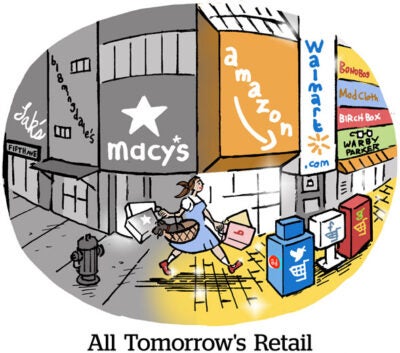
The first wave of retail media budgets came straight for trade marketing activity, such as paper coupons and store deals that were intuitively moving online.
The second wave, which has probably already begun, is about retail media platforms winning incremental new dollars.
But from where?
Mark Ritson, a marketing analyst and academic, argues at Adweek that marketers should not be sacrificing brand-building budgets in favor of additional retail media platform spend.
Retail media may be new, but it comes from a long lineage of retail promo marketing where savvy interlocutors take advantage of being right at the point of sale. The archetypal example: One person travels the city recruiting potential customers with coupons to try a new shop elsewhere, compared to someone distributing coupons to people as they enter the shop.
Retargeting received the same criticism, and it’s true, too, of algorithmic AI-based products, such as Google’s Performance Max and Meta Advantage+ Shopping Campaigns.
Now, it is particularly true of retail media.
“The store business is mostly flat. The ad business is not,” Ritson writes.
Don’t forget it.
Better Out Than In
Marketers are running full steam ahead into a field full of traps and pits. But they’re avowedly doing so with their eyes open and knowing full well the foreseeable consequences.
That’s the short version of Validity’s “State of CRM Data Report 2026,” as covered by MarTech.
Nine out of every 10 marketers surveyed said data readiness is critical for AI adoption, and practically everyone is pushing forward with AI solutions at work. Almost half – 45% – say they’re already using agentic solutions to act without human review, while two-thirds report pressure to adopt such tools.
But only 21% of respondents consider their first-party CRM data as well prepared for use in AI solutions. Marketers gave their own CRM data standards and adequacy a low score.
Sixty-two percent say poor data quality resulted in their businesses “probably or definitely losing revenue due to issues such as missed renewals, inaccurate forecasts, lost deals, and misdirected campaigns.” So it’s not a hypothetical problem.
Interestingly, the higher up the corporate chain are the respondents – right up to the C-suite – the greater is the self-reported likelihood that they acted on AI recommendations that turned out later to be based on faulty data.
At What Cost?
The trouble with new markets is that there are no standards to fall back on – which is why the creator economy is currently a pricing free-for-all.
Until the IAB or a similar entity sets pricing recommendations, marketers will continue to struggle with determining creator budgets and predicting costs.
“Imagine the real estate market where you could never look up what a house on your street sold for,” James Nord, founder of predictive creator-marketing platform Fohr, tells Digiday.
Although some tools exist that allow marketers to plug in a proposed offer amount, the deliverables they’ll need and the creator they want to work with, such tools aren’t always accurate and often don’t account for time-sensitive spikes in a creator’s popularity (like if they’re currently starring on a new season of a TV show).
Standardized benchmarks will also benefit creators, some of whom – particularly POC creators – are underpriced compared to others with comparable engagement rates, says Osman Badat, a financial advisor and manager for creators, as well as a creator himself under the name The Social Accountant.
Badat adds, “There needs to be a place where people could go and say, ‘Wait a second. This was the benchmark.’”
But Wait! There’s More!
The New York Post forays into TV, film, streaming and documentary work through its new partnership with Crazy Legs Productions. [Hollywood Reporter]
A major turnaround plan is underway at The Trade Desk. Can Jeff Green pull it off? [Adweek]
Social media is having its “Big Tobacco” moment. Are people getting it right? [NYT] Eric Seufert has his thoughts on the matter [Mobile Dev Memo]
Here’s a new one: Streaming platforms are now competing to be the first to broadcast ads. Rockstar published an extended preview – basically a 27-minute commercial – for its highly anticipated game, Grand Theft Auto VI, exclusively on Netflix before uploading the video to its own website, YouTube and other platforms. [The Verge]