From Zero To Sixty
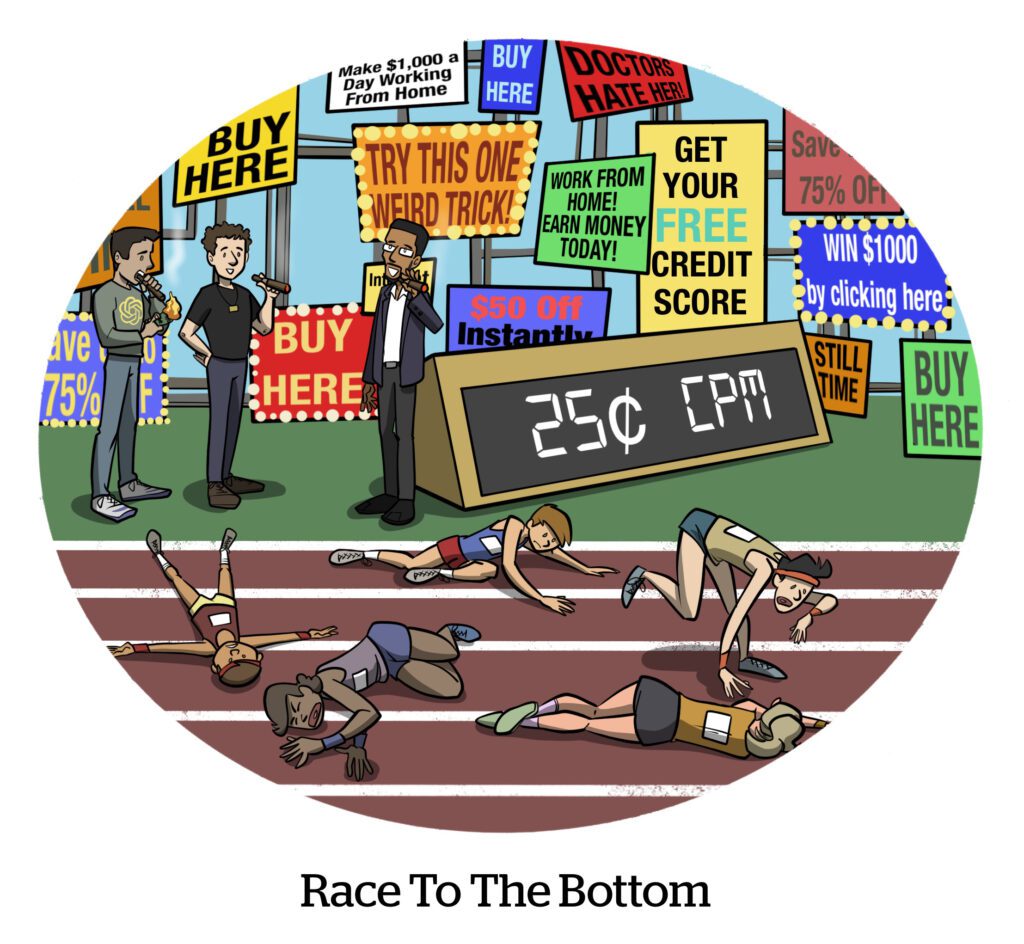
Splashy new programmatic media sellers always seem to want an outlandish $60 CPM.
The AI search engine Perplexity touched $60 CPMs when it launched, while Netflix defended a $60 CPM floor in its first months of programmatic sales. ChatGPT CPMs are in the same rarified $60 air.
For now, marketers will stomach $60 CPMs while flying blind and getting a piddly number of impressions with next to no direct conversions. But they’ll only tolerate the high price tag while they’re also getting brand cred as an early advertiser and possibly some earned media or organic word of mouth when people see a ChatGPT ad for the first time.
The trick is for new ad platforms to maintain that high price floor once the novelty wears off for consumers – and for advertisers.
But advertisers are already pushing back on ChatGPT’s high CPMs, Adweek reports. And they’re successfully pressing for new features, like negative contextual controls (to assign words, topics or conversations the brand does not want to appear along).
“If ChatGPT is going to take on more of the targeting decision,” says search agency founder Kevin Roy, “it also has to take on more responsibility for getting the context right, or at least build in some negative levers until it does.”
The Sixth Pillar
Speaking of ChatGPT ads … ChatGPT doesn’t seem to have nailed down its ideal advertiser just yet.
Consider that, in the example above, Adweek spoke with an SEO buyer when looking for comment on ChatGPT CPMs.
Sure, search marketers are a natural fit for ChatGPT ads, since there’s now a whole new marketing discipline, dubbed AEO or GEO, for promoting products or brands through generative AI searches. But search advertisers don’t really buy on a CPM basis. And it wasn’t until April that ChatGPT began rolling out an option for advertisers to buy on a cost-per-click model, which is the native mode for search.
Meanwhile, there’s a case to be made for ChatGPT’s ad opportunity falling more into the commerce and retail media bucket.
Eric Seufert of Mobile Dev Memo splits the digital marketing ecosystem into five categories (search, social feeds, retail media, open web and mobile publisher inventory, and streaming/CTV). And he believes AI chatbots and conversational assistants constitute a new category.
“Chatbot advertising has the potential to marry the commercial characteristics of social media display and search,” Seufert writes. “It can present an ad that’s relevant to context when that context is motivated by commercial intent, and it can revert to the off-platform behavioral data […] when a conversation isn’t commercially grounded.”
Show-Level Me The Money
Show-level transparency … is it finally here?
Gracenote, Nielsen’s content intelligence arm, announced on Thursday a new tie-up with The Trade Desk to make detailed information about TV and video content more accessible to marketers.
Program-level transparency is one of the top demands on CTV marketers’ wish lists. They lament the absence of show-level signals they were used to having in the heyday of broadcast and cable TV. And some marketers insist, if they had that same show-level transparency for streaming, they would ramp up their CTV spending.
The Trade Desk integration is Gracenote’s first time inking a show-level transparency deal with a demand-side platform. But it’s not alone in meeting advertisers’ demands for more information about the inventory they’re buying.
Contextual ad platform Peer39 recently tested an integration with InterMedia and Pontiac Intelligence’s DSP to surface more program-level reporting. And Spectrum Reach has spent months touting its own strides in providing show-level data.
It looks like money talks – even if the industry takes its time listening.
But Wait! There’s More!
The open web is splitting into two markets: one that caters to humans and one for AI bots. [Digiday]
Meta paid $18 billion to settle its federal child endangerment lawsuit, but it’s not the only legal challenge the company and its Big Tech peers have to face in the coming months. What are the implications for social media as we know it? [Bloomberg]
The Democratic Party won a Fourth Circuit Court of Appeals suit ruling that blocks political parties from receiving the bargain-bin TV ad rates reserved for individual political candidates. [NYT]
Businesses are going viral by advertising with handwritten signs as part of a larger movement against AI ad creative. [404 Media]