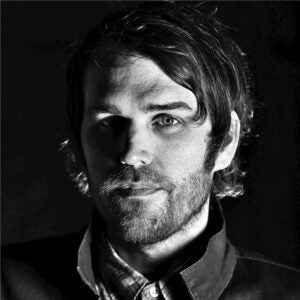
Last week, I was eager to do a call with Dustin Hinz, CMO of Firestone Walker Brewing, a Los Angeles-based beer maker that just launched its first non-alcoholic beer line, “8ZERO5.” I was curious about the beer-brand perspective on non-alcoholic drinks.
There are many natural brand collaborations: Jack Daniels and Coca-Cola, Absolut Vodka and Ocean Spray juices. There are beer brands like Heineken and Bud that launched “zero” lines – recognizable beer, but without alcohol. And that’s not to mention the likes of Liquid Death, which puts still water in what looks like a beer can.
Where does Firestone Walker see its non-alcoholic beer on this spectrum?
I was also interested in how Hinz, a career-long music marketing exec, had ended up in the insular world of booze and brewing.

AdExchanger: To start, how did you end up the CMO of a brewery?
DUSTIN HINZ: I met David Walker (Firestone co-founder and CEO) five and a half years ago, and he convinced me to come join the beer business. So I began less than six months before COVID, which was a wild era in the beer business and in the world. And ever since.
It seems like an unusual jump, because often people in beer and spirits are in that category, like it can be with travel or pharma.
You are right. There are not a lot of people like me in the beer business. Mostly they’re either lifers, and they maybe even grew up in the beer business, or they’ve spent their entire career here.
Which is what I did in the music business.
Today, though, contemporaries of mine at other breweries, will come from big CPGs, such as Johnson & Johnson, a snack, diaper or other CPG brand.
Would you partner with a CPG brand? Non-alcoholic brands like Coke, Pepsi and Ocean Spray seem to be linking up with breweries or booze companies.
Not for us.
We are still nascent in the scheme of things. We’re a 10th the age of Budweiser.
But since I’ve been here, and before that, the kernel of each idea has been to invest in our own legend. So we don’t partner with other CPG brands, but we do partner with other lifestyle brands like Florence Marine (a maker of surf gear and apparel), Fasthouse (moto and biking gear) and the World Surf League.
What’s your paid media mix like?
I would say we’re split pretty evenly across out-of-home, digital and CTV or programmatic TV. We’re buying wherever we can target effectively.
The beer business is very David versus Goliath. There are more than 9,000 breweries in the US, and three of them are something like $140 billion in total market cap.
We can’t spray and pray. We can’t buy up massive partnerships and corner out the competition. What we have to do is find the things that resonate with our audience.
That’s a lot of out-of-home, it seems, at roughly a third.
The brand was born on out-of-home, back when budgets were small. It was an easy way to get your billboard up and to seem big.
We continue to use it in California, especially. In western California, people spend a lot of time in their cars. And there is a lot of awareness and visual eyeballs that go along with billboards. You’re driving down the road in LA, and it’s a Netflix billboard, an Amazon billboard, and then you can have an 805 Billboard. (“805” is a reference to Firestone Walker’s beer brand name.) It allows you to punch way above your weight class to reach consumers.
I don’t want to forget about the non-alcoholic brand launch, ostensibly the reason for the interview. How do you approach this new product launch?
There are numerous ways to tackle it.
To start, more than 90% of non-alcoholic beer drinkers also drink beer. I think that’s the rationale for Heineken 0.0 and Bud Zero. There’s the realization of the chance to win existing share of fridge and drinking occasions with their existing drinkers.
Then you’ve got the sober drinker who purely drinks non-alc (brewery jargon). A brand like Athletic Brewing has done a really good job of building this idea of a brewery that is non-alc. And I don’t know the makeup of Athletic’s customers, how many of them also drink beer, but I would bet there’s a nice split of those who do and don’t. And I think the 805 non-alc gives that customer and that drinker an opportunity to be a part of the 805 world.
Was it something current drinkers pressed for?
Some. And personalities we’ve worked with over the years have said to us that they love 805, but they aren’t drinking right now or anymore. And now that we have a non-alcoholic beer, it’s opened up a lot of these conversations with different musicians and different athletes.
We have X-games athletes, top UFC fighters, former Olympic boxers, surfers, and they may be drinking very moderately or not at all.
Tyler Bereman (an X Games motocross gold medalist) may not drink for some time leading up to an event, and then he has a beer on the podium.
The non-alcoholic brand gives 805 the chance to be a part of this.
This story has been edited and condensed.