


For women, finding health care treatment relating to sex is hard. But if you’re looking for “seggs,” that’s easy.
Direct-to-consumer (DTC) brands in the women’s health vertical are still stuck relying on algospeak to skirt around social platforms taking down their ads.
As if marketing health care products and supplements for women wasn’t hard enough.
Happy V manufactures dietary supplements to promote vaginal, urinary and gut health for women. Even though Happy V doesn’t deal in STD treatment or contraceptives (which come with added hoops for brands to jump through), the stigmatization of women’s health means Happy V deals with the same brand safety obstacles as those that do.
The company was actually founded by a woman who couldn’t find treatment for bacterial vaginosis in 2017, CMO Tatiana McDaniel said. Gynecologists kept prescribing the Happy V founder antibiotics, which didn’t help because they eliminate all bacteria, including the probiotics or good bacteria women need to maintain a healthy vaginal pH level.

TikTok on the clock
TikTok is by far the brand’s highest performing outlet, both in terms of awareness and engagement.
Happy V pins about 10% of its total media spend on TikTok, yet the channel drives between 25% to 30% of the company’s sales, McDaniel said.
TikTok also does double duty as a brand-building vehicle. One of Happy V’s TikTok videos went viral in July, garnering 8 million views in three days.
For Happy V, brand building and engagement are very closely intertwined, especially on social.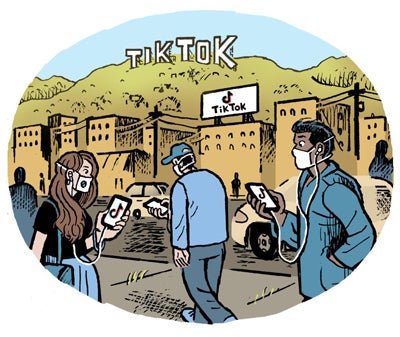
“The best impact TikTok had on our KPIs was our customer acquisition costs,” McDaniel said. Because TikTok is channeling in so many new customers, Happy V is able to make even more revenue per user compared with marketing costs.
“Our CAC to lifetime value ratio is well above the 3:1 standard” used by DTC brands, she added.
TikTok is also known for its powerful influencers, but Happy V hasn’t jumped on the creator hype train yet. Most of the company’s creative is produced in-house. (“Not a lot of influencers want to talk about their vaginas,” McDaniel added.)
Taboo
Social platforms also differ in their approach to censorship.
“Facebook is number one in censoring paid ads,” McDaniel said, which requires a lot of back-and-forth appeals through reps to get the ads back up. (Happy V isn’t alone there.)
But TikTok isn’t innocent either.
“TikTok will actually flag and take down anything that has the word ‘sex’ or ‘vagina’ in it,” McDaniel said. “We’ve experienced it tons of times.” Hence, “seggs” over “sex.”
What the doctor ordered
Before reaching a larger audience on social media, Happy V started out with paid search marketing on Google and Amazon in 2019 to build brand awareness. Happy V aligned itself with the medical conditions people were Googling.
“The dietary supplement vertical doesn’t consist of products people stumble upon and impulse buy – this is something that takes a lot of research,” McDaniel said. Search provides a natural entry point to reach people at the “research” stage.
Based on users’ online engagement with Happy V after the initial search ad, the brand retargets users across both search and social with more specific information on products or treatments that apply to them.
Specifically, Happy V creates audience segments that group users into two buckets for retargeting: stage of life and symptoms.
“Stage of life” refers to more demographically based targeting, whereas symptom-based targeting is more about consumer lifestyle. Happy V is more likely to advertise menopausal treatments to middle-aged women than Gen Zers, for example, but specific symptoms, like UTIs, can hit at any age, which means the brand needs to target those products based on user information.
Happy V only uses first-party data for retargeting, including email addresses, user surveys, purchase data and behavioral information based on how customers interact with the brand’s website.
Happy V keeps all its user data internal, but it still has to adhere to state-specific data privacy laws, McDaniel said. For example, the brand is based in Florida, which has stringent protections against marketing using cellphone data, so Happy V avoids SMS messaging altogether.
Either way, DTC brands might just have to continue dancing around the subject of women’s sexual health for the time being in order to eventually change the narrative.








