
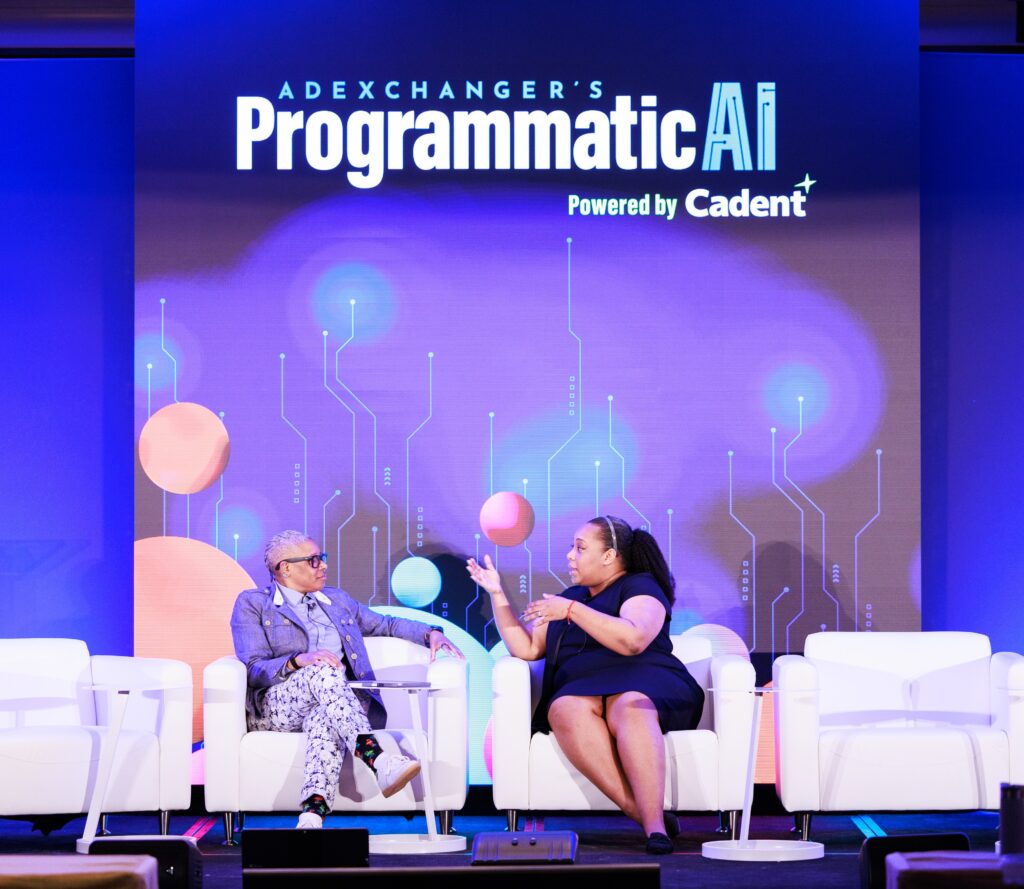
Hot take: Sometimes, having more guardrails isn’t a limitation.
Instead, the added responsibilities can actually make automation easier, according to Melissa Bonnick, EVP, head of programmatic for JPMorgan Chase.
As a financial services company, JPMorgan Chase is beholden to stricter rules than brands in most other verticals. But those restrictions make it easy to communicate to an agent exactly what kind of targeting, messaging and language are permitted (or not), said Bonnick.
Clear restrictions are a way of saying to the machine, “Here is your box, stay in [the] box,” Bonnick quipped during a session on Wednesday at Programmatic AI in Las Vegas. “And as long as you do those things within the box, it’s right.”
Leading the pack
Marketers are so accustomed to the added work and complications embedded in campaign planning and optimization, Bonnick said, that inefficiencies, slow campaign processes and unnecessarily large teams can feel like “just the way we do things.”
Automation can often simplify and speed up the process, she said, with fewer hands on deck.
But the word “layoffs” was conspicuously absent from the conversation. Which is largely due to Bonnick’s adamant stance that some tasks should always be done in-house with human oversight.
Since finance is such a privacy-centric vertical with particular marketing restrictions, the ability to approve – or revise – a campaign before it goes live is crucial for JPMorgan Chase.
Maybe other organizations are comfortable allowing an agent to plan a campaign, create its content and then optimize the results, said Bonnick. But good marketing demands both “heart and science,” she said, and the “heart” part of the equation isn’t going to come from a robot.
Humans need to discuss not just how to automate certain tasks, Bonnick said, but which processes ought to be automated and why. The tasks that people want to remove from their plates are ones that take the longest and demand the most manual labor, leading to stress, exhaustion and struggles to strike a work-life balance, she added.
The conversations need to revolve around developing scalable and lasting agentic solutions, rather than just saying “we can solve it with AI, it’s magic,” she said.
Strong campaigns won’t just have a “human in the loop,” according to Bonnick, “but a human in the lead.”