
Here’s today’s AdExchanger.com news round-up… Want it by email? Sign up here.
The 1% (No, Not That 1%)
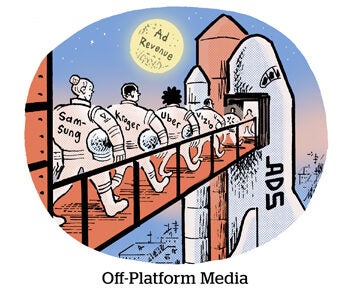
Hotel and travel companies are following in the footsteps of others that have embraced advertising revenue, including buy-now-pay-later companies, retailers and delivery startups … not to mention stores that have started repurposing any old surface as a distribution channel using digital screens. (Ads on pharmacy fridge doors, anyone?)
The latest is the hotel operator Marriott, which launched an ad network on Monday backed by Yahoo ad tech to target its own inventory using first-party site and loyalty program data, The Wall Street Journal reports.
Marriott, like grocery and retailer-based ad networks, is constrained in terms of where it will serve ads or apply first-party data. It’s starting with site ads and will later roll out video ads for hotel room TVs, which is a nice edge compared with retail (until Best Buy’s new ad business starts running spots on in-store demo TVs).
Companies are tripping merrily into the ads biz because it’s low and, well, low: low-margin and low-hanging fruit. Instacart can easily scale ad revenue but also must hire more delivery people to grow the app.
“As the market gets bigger, if you can get one percentage point of the digital retail media market, that’s almost half a billion dollars in revenue,” Insider Intelligence Analyst Andrew Lipsman tells the Journal.
Sounds feasible. But let’s be honest: Most of these fledgling ad platforms will never reach 1%.

‘C’ It To Believe It
As CTV advertising grows up, its shadow grows long.
DoubleVerify’s annual Global Insights Report shows steady improvement for CTV and video viewability, attention, measurement and prebid ad verification. But there’s still one blemish on CTV’s report card: fraud.
The overall number of ad fraud schemes spiked by 70% year-over-year between 2020 and 2021 – and an “unprecedented amount” of those schemes targeted CTV and streaming video inventory, which together accounted for $140 million in worse-than-wasted spend.
It makes sense why CTV is more susceptible to fraud than other digital channels. For one thing, the proliferation of streaming services and content publishers has thrown a wrench into tracking and transparency. (How can publishers filter out bad ads when they’re still struggling to count who even watched them?) Tack on sky-high CPMs for premium video inventory and you have a fraud petri dish.
“The good news is that verification is working,” says DV CEO Mark Zagorski. “But media quality is table stakes.”
In other words, running legit ads requires more than just viewability verification.
Your Base Are Belong To Us
One big challenge for many social platforms is siloed fan bases. It can take years to build up an audience on one platform, even for adept creators or professional influencers.
Meta has an easier time with this because Facebook, Instagram and its family of apps can easily port contacts and follower lists from one service to another. TikTok has some natural immunity because, unlike Snap, Twitter, Twitch and YouTube, et al., it doesn’t rely on connections between friends or followers. So much of TikTok is strangers talking to strangers.
But, The Washington Post reports, creators believe the platforms are monitoring whether they promote their presence on rival services – like a TikToker telling her fan base to also follow on YouTube and Instagram – and that doing so will get them downranked by the home platform. (Many creators use “algospeak” code phrases in order to slip by the almighty algorithms and create in peace.)
Smaller players, like a social network for photographers called Dispo, stand to gain the most from cross-promotion across platforms. If professionals can parlay strong audience numbers on Instagram, TikTok, YouTube or Snapchat into a consolidated following across platforms, it would be a major boon to creators and an easy leg up for smaller social nets to help them reach scale.
But Wait, There’s More!
Mobile analyst Eric Seufert launches a $10 million fund to invest in mobile ad and gaming startups. [Insider]
TikTok is boosting brand recall on TV. [Morning Brew]
Ads who? Netflix might already be shifting its focus onto livestreaming. [Deadline]
The case for an audiobook service in the subscription economy. [Vox]
Forget the metaverse, gaming is the “real advertising opportunity.” [The Drum]
You’re Hired!
Former 4A’s CEO Nancy Hill to lead Cleveland-based ad agency Marcus Thomas. [MediaPost]









