
 Here’s today’s AdExchanger.com news round-up… Want it by email? Sign-up here.
Liberté, Égalité, Right To Be Forgotten
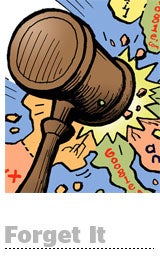
Regulations from the EU aimed at US tech firms are at an all-time high, and tensions heightened Friday when France’s data protection regulator ordered Google to apply Europe’s right to be forgotten globally. “For delisting to be effective, it must be worldwide,” explained Isabelle Falque-Pierrotin. “It is a question of principle. Google must respect the rights of European citizens.” The order echoes a broader battle between the EU and US tech firms Facebook, Google and Amazon over anti-competition violations, taxes and tracking. More via the WSJ.

Twitchy Launch
Google unveiled “YouTube Gaming” on Friday, a direct confrontation with Twitch, which unearthed a sizable market in streaming video chat rooms and services for gamers. It’s worth remembering Google was reportedly near a deal to acquire Twitch when Amazon scooped it up for just under $1 billion. The Verge reports, “You can monetize the streams through ads (including midroll ads) and fan funding.” It remains to be seen if Google can emulate the user loyalty Twitch has garnered in the difficult young, male demo. More.
Agency Review Maelstrom
Morgan Stanley estimates the flurry of media agency reviews this summer means as much as $26 billion in global spend is up for grabs. The WSJ says there is “more money hanging in the balance than the amount under review during the last three years combined.” On the upside for agencies, the jaw-dropping sum is still a small fraction of overall spending and revenue, and agencies will be pushing for higher volume and spending targeted on high-impact channels, to make up for deflated margins. Read on.
Condé Nast On Native
Condé Nast’s Pat Connolly, VP of marketing solutions, talked with eMarketer about the publisher’s branded content studio, 23 Stories. According to Connolly, the uses of native are limited but powerful. “There will never be a shortage of inventory [and] there will never be a shortage of exposure or contact points,” Connally said. There is, however, a shortage of attention. The challenge for advertisers is to make sponsored content that’s as or more compelling than the content it competes with. Read more.
You’re Hired!
But Wait, There’s More!
- Convirza Lands $20M To Sift What You Say On The Phone To Brands – VentureBeat
- Global Ad Spending Will Be Up an Average 4.2% Next Year – Ad Age
- LUMA’s State Of The State 2015 At DMS 15 – Slides from the Digital Media Summit
- Programmatic Buying Comes To TV Via A MCN And AOL Platform – CMO
- Twitter’s Growth Problem, And Why It’s Losing To Facebook – Seeking Alpha
- Reinventing Mobile Video Ads For Millennials – Mobile Commerce Daily
- News Feed FYI: Taking Into Account Time Spent On Stories – Facebook Blog
- Unilever Ties With Tesco To Mobilise Its ‘biggest’ iBeacons Trial – The Drum









