Can I Speak To The Ad Manager?
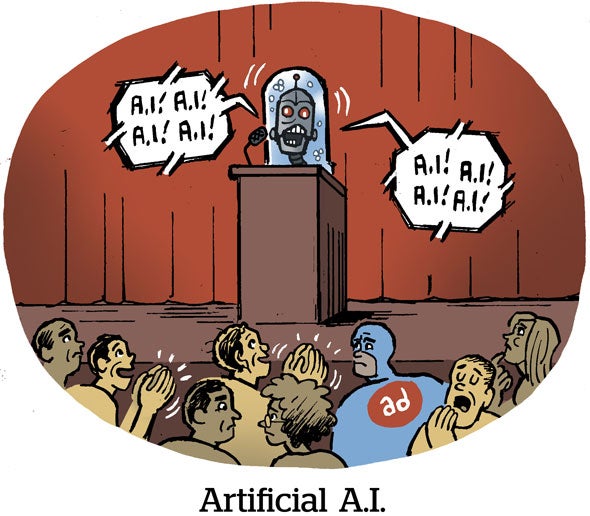
With minimal pomp and even less circumstance, OpenAI recently launched the ad manager it began testing in March.
Thus far, it’s only available to a select handful of advertisers, allowing them to track performance and optimize in real time.

The ad manager launch is one in a series of recent moves by OpenAI indicating that the AI behemoth is ready to double down on its ads business. Earlier this month, an exec participating in the ads pilot told Digiday that OpenAI has lowered its minimum threshold to $50,000, down from between $200,000 and $250,000.
Lowering the cost makes buy-in accessible to a wider array of advertisers – although OpenAI shows no signs of lowering its $60 CPM. Based on snippets of code reviewed by Adweek, it also appears the company is planning to implement click and conversion-based campaigns for ChatGPT.
OpenAI will have to hit the ground running if it wants to stay true to its projection that its ad revenue will surpass $100 billion by 2030.
In order to achieve the “dramatic revenue growth” it’s aiming for, Open AI will need to “convince advertisers to shift billions in ad spend,” according to Debra Aho Williamson, chief analyst at Sonata Insights. Sam Altman and crowd will also have to demonstrate “quantifiable results” that aren’t just on par with, but actually surpass, search and social, Williamson told AdExchanger.
Booked And Bamboozled
A hotel booking that started with a simple Google search has exposed a familiar problem in digital advertising whereby search ads surface intermediaries that look like official brand sites.
Elvira Schadlow, who was planning a vacation, did a search for the Grand Hotel Majestic in Bologna and clicked on what she thought to be the hotel’s official site, The New York Times reports. She intended to book an eight-night stay that should have cost under $5,000.
In actuality, she landed on a page operated by Guest Reservations, a third-party booking service that purchases large volumes of Google ads to appear above organic results. The booking service ultimately charged Schadlow $16,000 by including thousands of dollars worth of added fees.
Guest Reservations sources inventory through Priceline Partner Solutions, part of Booking Holdings, and distributes ads through an advertising partner that helps it secure prominent placement in Google search results.
Third-party travel and booking companies often use paid placements to intercept high-intent users searching for airlines and hotels. The practice can create confusion about who the consumer is actually dealing with.
Despite years of complaints and scrutiny, similar patterns continue to surface, with Google maintaining that it can’t do anything, because such ads comply with its policies.
Ads Or Else
YouTube is asking viewers to pay up – again.
One of the world’s most watched streaming platforms is raising the price of its ad-free Premium tier by $2, jumping to $15.99 per month, with similar bumps across its subscription service. Family plans are now $26.99, Premium lite is up to $8.99 and YouTube Music hit $11.99. The price hikes are all a part of the broader industry’s push for more revenue per user, according to Forbes.
YouTube framed the increase as necessary to continue delivering a high-quality experience that supports creators and artists.
However, this price hike comes after a successful early start to the year. YouTube captured 12.5% of US TV viewing in January, having outpaced every other streamer for nearly a year.
In short, YouTube is using its streaming dominance to give itself pricing power, mirroring similar tactics by Netflix, Disney+, Hulu and Spotify.
Meanwhile, YouTube is pushing back on claims, which went viral, that it’s testing 90-second unskippable ads. It insists that no such format exists. Still, the perception alone highlights a growing tension: As ads feel more intrusive, subscriptions become more expensive.
But Wait! There’s More!
What happens when tech products, like AI, intersect with religion? Workers might start citing religious exemption to not have to use them, that’s what. [Bloomberg Law]
Intuit is shutting down its ad network for small businesses. [Adweek]
Meta’s Superintelligence Labs launches its first generative AI model, Muse Spark – which gives terrible health advice, apparently. [Wired]
You’re Hired!
Publicis Groupe alum Nicole Souza joins Stagwell as its new chief growth officer for North America. [Adweek]
WPP Media appoints Anne-Isabelle Choueiri as chief transformation officer. [release]