 “Data Driven Thinking” is written by members of the media community and contains fresh ideas on the digital revolution in media.
Today’s column is written by Jessica Luterman Naeve, Managing Director at DeSilva & Phillips Media Investment Bankers.
2012 was a big year for social media – big multiples and headline deals – a testament to the extraordinary penetration of social media across an increasing variety of industries, roles and functions.
Notably, Oracle acquired Vitrue in May for $300 million, Collective Intellect in June, and Involver in July. Salesforce.com acquired social media marketing platform Buddy Media (with a $25M run rate) for $689 million in cash and stock. In concert with Radian6, the acquisition allows Salesforce.com to deliver a comprehensive marketing cloud allowing customers to listen, engage, gain insight, publish, advertise and measure social marketing programs.
Microsoft acquired Yammer, an enterprise social networking portal operator for $1.2 billion. Microsoft intends to accelerate the adoption of Yammer’s standalone service and enhance the social capabilities in Microsoft’s communications. And, of course, Facebook went public.

The deals demonstrated confidence about the future relevance of social media. In addition to Oracle and Salesforce, PWC, IBM, and SAP also made moves in the space. They also sparked a consolidation of the social media marketing space, creating a social business intelligence industry.
There are a few reasons I believe social will remain hot for M&A in 2013, and could potentially eclipse 2012 in the size of deals.
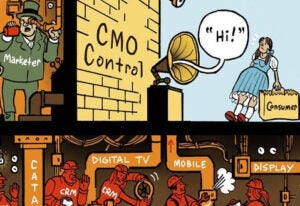
First, social media still presents a huge opportunity for growth in its adoption, especially by enterprises. Gartner recently announced research citing that CMOs will spend more on technology in the next five years than CIOs. This bodes well for the 1st and 2nd waves of social media transactions. The 1st Wave was dominated by social media marketing and basic analytics (BuzzMetrics, Big Fuel) and the second wave (Radian6, Buddy Media, Involver, Visible) tended to be characterized by DIY simplicity, dashboards, and customer scale. We believe these waves are still viable industry growth engines.
However, we also predict a 3rd wave of transactions that will reflect the maturation of the social media industry, where Social becomes integrated across all major business decisions, internally and externally, not just marketing. Yammer as a social productivity tool is a good example of how social can be integrated into the enterprise.
Strategics dominated social media M&A activity in 2012, but private equity companies are likely to step up in 2013 as they relax their restrictive size and cash flow requirements and move away from highly leveraged models.
In 2012, technology-based social media companies dominated deals, but 2012 raise-ups reflect a shift to niche capabilities and very specific audience mastery. In summary, look for the following trends to dominate social this year:
- Social’s share of general ad spending will increase. According to Zenith Optimedia, social media advertising spend is projected to grow 35% in 2013. Those buyers of social media advertising have set a new bar for the use of data and the accuracy of their targeting on social. Companies in these spaces will win out as analytics and ROI will continue to be attractive. Keep an eye on Tracx, Socialrithmic, ListenLogic, Prosodic, and Converseon.
- Companies looking to invest or make an acquisition in any of the social spaces will be primarily focused on either talent or technology. Neither acquisition type will be based on cash flow.
- Top trends in social acquisitions will be social niches — i.e. very specific niche sites whose communities require specificity and functionality beyond Facebook. Behance, which provides community and functionality to creative professionals, was acquired by Adobe at the end of 2012. Kenexa, which brings social to HR, was acquired by IBM in 2012.
Follow DeSilva & Phillips (@mediabankers) and AdExchanger (@adexchanger) on Twitter.